


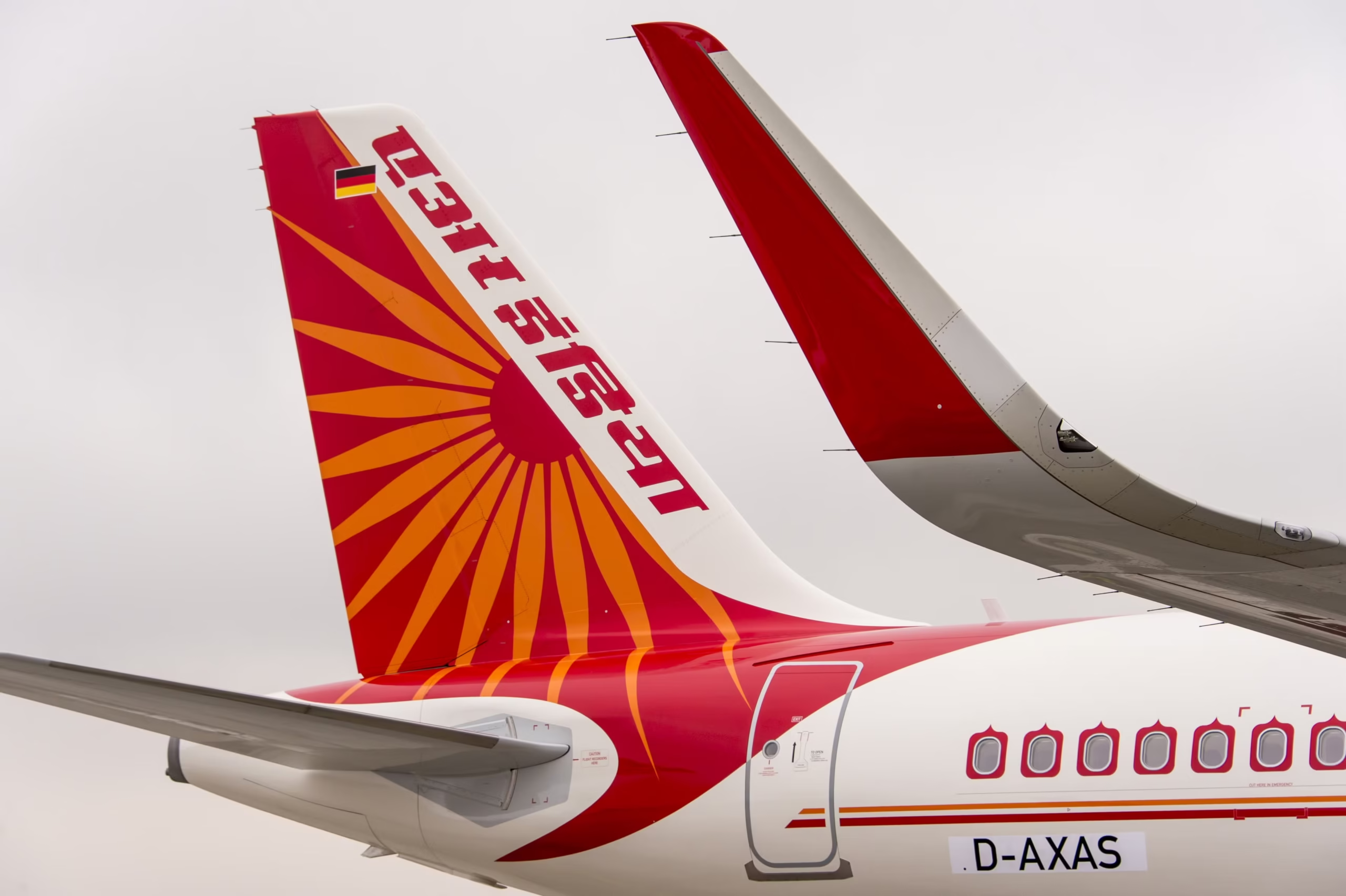
Just days before the tragic June 12 Ahmedabad crash, India’s aviation regulator—the Directorate General of Civil Aviation (DGCA)—had issued a stern warning to Air India over serious safety violations in its Airbus fleet. According to government documents reviewed by Reuters, three of the airline’s Airbus aircraft were flown despite missing mandatory inspections on critical emergency equipment.
DGCA Investigation Exposes Overdue Safety Checks
The DGCA report, which surfaced through official warning notices and an internal investigation, revealed that three Airbus planes were operated without timely inspections of their emergency escape slides. These safety checks are crucial for ensuring that the aircraft can be safely evacuated during emergencies.
One Airbus A320 had a safety inspection delay of over a month, with the check only completed on May 15. Despite this, the aircraft flew several international routes, including Dubai, Riyadh, and Jeddah. During the inspection lapse, as tracked by AirNav Radar.
Ahmedabad Crash Aircraft Not Involved
The investigation clarified that these specific safety lapses were not related to the aircraft involved in the June 12 Ahmedabad crash. Which was a Boeing 787-8 Dreamliner. However, the timing of the revelations has raised major concerns about Air India’s internal maintenance oversight. And the airline’s overall adherence to safety protocols.
Aviation experts have noted that while the crash and the Airbus violations are unrelated, they together signal a growing need for strict compliance and transparency in airline operations.
DGCA Issues Warning, Demands Accountability
According to the Reuters report, DGCA’s warning notices emphasised the non-negotiable nature of safety inspections. The agency highlighted that operating aircraft without these checks violates civil aviation norms. And could lead to serious consequences.
In response, the DGCA has asked Air India to submit a detailed corrective action plan and strengthen its maintenance and quality control measures. The regulatory body may also impose penalties or mandate stricter checks in the coming weeks.
Air India Faces Scrutiny
Air India, which was acquired by the Tata Group in 2022, is currently undergoing a major transformation process. However, these recent incidents are likely to intensify scrutiny from both regulators and the public, especially after the fatal crash that killed 57 people.
In a statement issued after the DGCA notice, Air India said it has taken the observations seriously and assured that the maintenance protocols will be reinforced. The airline added that the escape slide inspections have since been completed. And future delays will be prevented through “automated alerts and improved scheduling.”
Public Confidence at Risk
These back-to-back incidents—though technically unrelated—could damage public trust in Air India. Especially among frequent international fliers and corporate clients. Aviation safety analysts warn that any lapse in safety oversight, no matter how minor. But can trigger a chain reaction in high-stress flight environments.
“Safety violations, even if unrelated to a crash, show gaps in the airline’s culture of accountability. That’s dangerous,” said a senior aviation expert on condition of anonymity.
For more information on aviation safety standards, visit the DGCA official website.
Read related news on Air India safety updates.
Call to Action
As investigations continue and public concern grows, passengers are advised to stay informed. And check for updates on flight safety protocols. Regulators must maintain strict oversight while airlines must ensure zero compromises in their operations.
The DGCA’s warning acts as a wake-up call not just for Air India. But for the broader aviation sector in India. Passenger safety, after all, must always remain the top priority.