

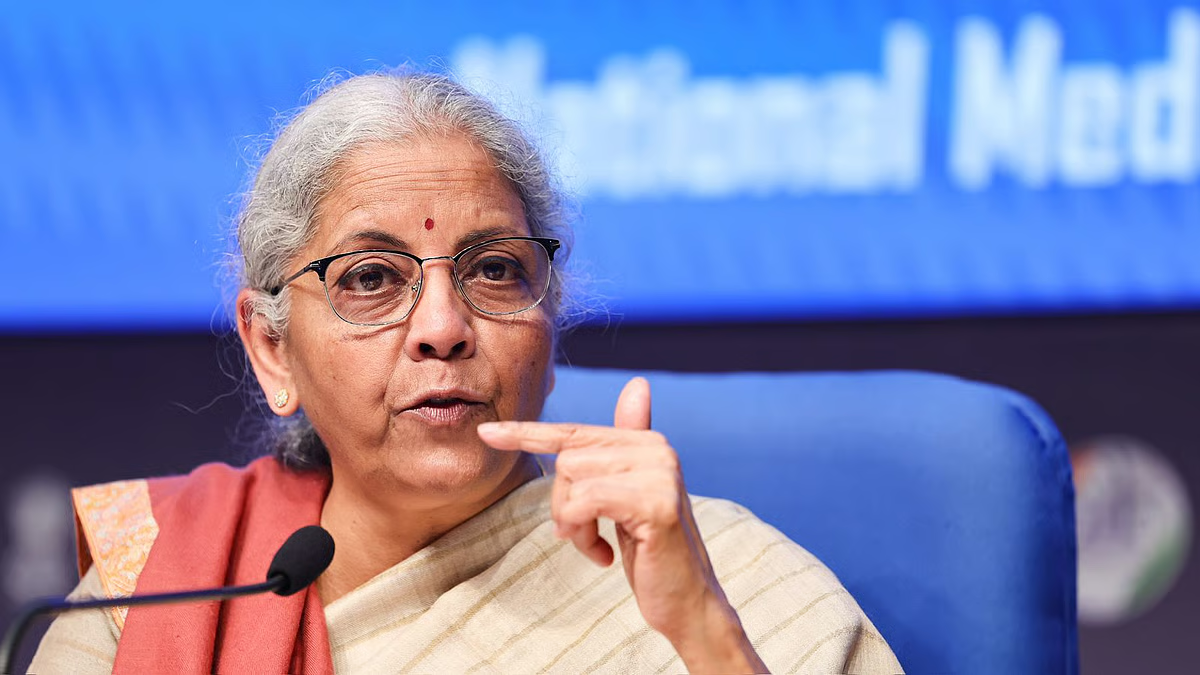
In a key statement on Indo-China relations, Finance Minister Nirmala Sitharaman said on Saturday that both countries are showing interest in increased economic engagement.
Speaking at the launch of the book A World in Flux: India’s Economic Priorities, the minister noted that while interactions between India and China are increasing, a “sense of caution” must guide this process.
She pointed out that though India is open to global opportunities, strategic concerns and economic security remain critical.
Press Note 3 and a Changing Landscape
India had restricted Chinese investments through Press Note 3 in April 2020. This was aimed at curbing opportunistic takeovers during the pandemic.
The decision led to increased scrutiny of Chinese FDI proposals, slowing economic engagements. However, recent relaxations in visa norms suggest a slow but deliberate thaw in the relationship.
Sitharaman said that not only India, but China too is interested in improving access. But she emphasized that it is still early to predict the outcome.
“One will have to wait and see how far this will go,” she remarked.
Focus on Economic Growth and Global Role
The Finance Minister reiterated that India’s priority is to sustain high economic growth. She also stressed on redefining India’s role in the Global South and global institutions.
Attracting foreign investment remains key to this goal.
India is committed to maintaining a friendly and open FDI regime, she added. “Our policies are geared to encourage more and more investments,” she said.
India wants to be seen as a dynamic player on the global stage—whether in the IMF, World Bank, or the BRICS.
This broader vision includes economic resilience and a calibrated foreign policy.
Importance of Cautious Engagement
While there is optimism about Indo-China economic ties, Sitharaman did not downplay concerns.
She said engagement must be accompanied by clear strategic thinking. India’s geopolitical position requires careful planning, especially given recent border tensions.
Security concerns cannot be ignored while opening economic channels. The Finance Ministry is working closely with other departments to balance openness with protection.
This means enhanced due diligence in sensitive sectors like technology, infrastructure, and critical digital assets.
What’s Next for Indo-China Economic Relations?
There has been a marked increase in high-level dialogues and easing of restrictions since late 2023.
While investments from China are still under scrutiny, more business delegations and trade interactions are taking place.
Some industry leaders have welcomed the shift, hoping for smoother logistics and fewer trade barriers. At the same time, policymakers stress the need for consistent oversight.
The Ministry of Commerce is reportedly evaluating sector-wise openings for bilateral investments.
Some experts suggest pilot programs to test deeper cooperation in non-sensitive sectors like green energy and e-commerce.
Balancing Growth with Strategy
India’s approach to China now appears to be based on strategic economics.
Rather than completely closing or opening doors, the country aims to manage risks while boosting economic benefits. This aligns with India’s broader geopolitical stand of being a responsible global leader.
As the Finance Minister put it, “We are not turning away from opportunities, but we are staying alert.”
With global economies increasingly interlinked, complete isolation is neither possible nor beneficial. But for India, the focus is clear—growth with caution, openness with strategy