

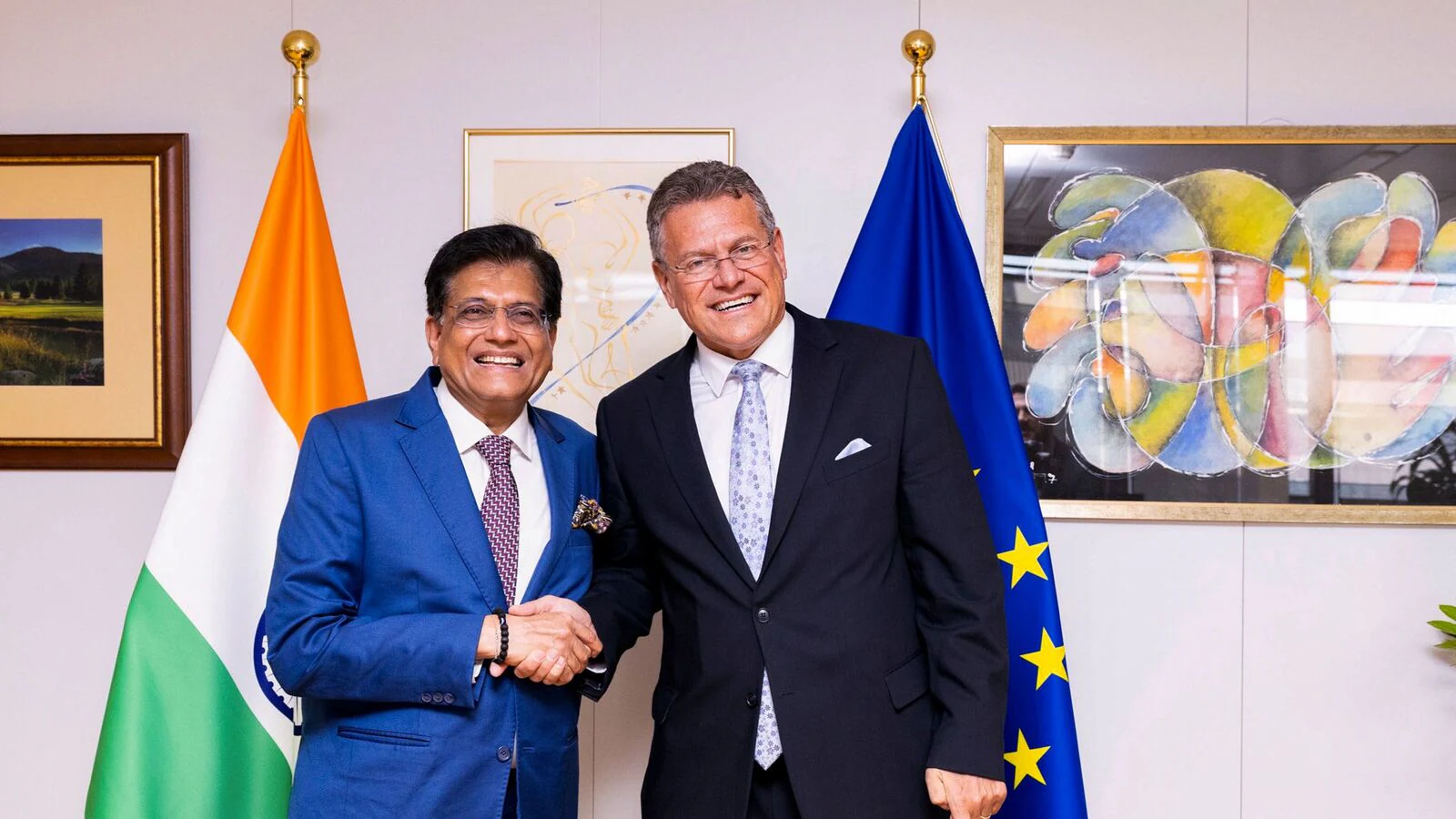
This is part of an ongoing trade negotiation with the European Union (EU).
According to sources, this is the first time India is considering such a move during Free Trade Agreement (FTA) discussions. The aim is to attract long-term foreign direct investment (FDI) from the EU.
India’s Move to Attract EU Investment
The proposed “new chapter” in the trade agreement focuses on giving regulatory clarity.
This would reassure European investors about stable and predictable policies in India’s manufacturing space. The offer comes at a crucial time.
India and the EU share growing concerns over China’s increasing global dominance in critical sectors.
This includes electronics, pharmaceuticals, and defence-related manufacturing. A parliamentary report last year revealed that the EU is worried about overdependence on China.
India’s proposed framework could serve as a safer alternative for EU businesses.
Concerns over Chinese Overcapacity
China’s large-scale production capabilities are creating global market imbalances.
Both India and the EU view this as a threat to their local industries. There is a fear that Chinese oversupply could push out domestic firms.
India hopes that its stable regulatory environment will encourage the EU to diversify investments away from China.
What’s in the “New Chapter”?
The new section of the trade deal is expected to include provisions for:
- Transparent approval processes
- Stable compliance frameworks
- Timelines for industrial permissions
- Clear dispute resolution mechanisms
This chapter aims to lower entry barriers and enhance ease of doing business for EU manufacturers.
India’s Position in Global Supply Chains
India has been trying to strengthen its place in global supply chains.
The government is pushing the “Make in India” initiative to increase local production. This initiative also seeks to reduce reliance on imports from nations like China. By aligning regulatory standards with those of the EU, India wants to create a mutually beneficial ecosystem.
India-EU Trade Talks: The Bigger Picture
Trade talks between India and the EU resumed in 2022 after a gap of nine years. Negotiations cover multiple areas including tariffs, digital trade, sustainability, and intellectual property.
So far, over 15 rounds of talks have taken place. Officials hope that the agreement could be finalized by the end of 2025.
The talks are part of India’s broader strategy to secure bilateral trade pacts. This includes similar agreements with the UK, Australia, and Canada.
EU’s Manufacturing Priorities
The EU wants to reduce risks in supply chains. It is also working on building resilience in sectors like green tech and medical devices. India’s large workforce and market offer a natural complement to EU’s technological expertise.
However, concerns over policy consistency have been a hurdle in the past. The new chapter in the FTA aims to address these concerns directly.
Government’s Push for FDI
India has been actively revising its FDI policies to make them more attractive. In 2020, India imposed stricter FDI norms for neighbouring countries, including China.
This move was aimed at preventing opportunistic takeovers during the pandemic. Now, India is positioning itself as a reliable partner for the EU.
By offering long-term policy stability, the country wants to deepen its trade and investment ties.
What’s Next?
Experts believe that regulatory certainty will be a game-changer. If accepted by the EU, this could pave the way for increased manufacturing collaborations.
It could also lead to technology transfer and job creation in India. The final terms of the agreement are still under negotiation.
But both sides have shown a willingness to move forward. India’s proposal to offer regulatory certainty in manufacturing marks a bold and strategic step. It addresses EU concerns, counters Chinese dominance, and opens up new investment channels.
As trade talks progress, the success of this offer will depend on how well it aligns with the EU’s expectations. If successful, this move could reshape India-EU trade relations and support India’s larger economic goals.