


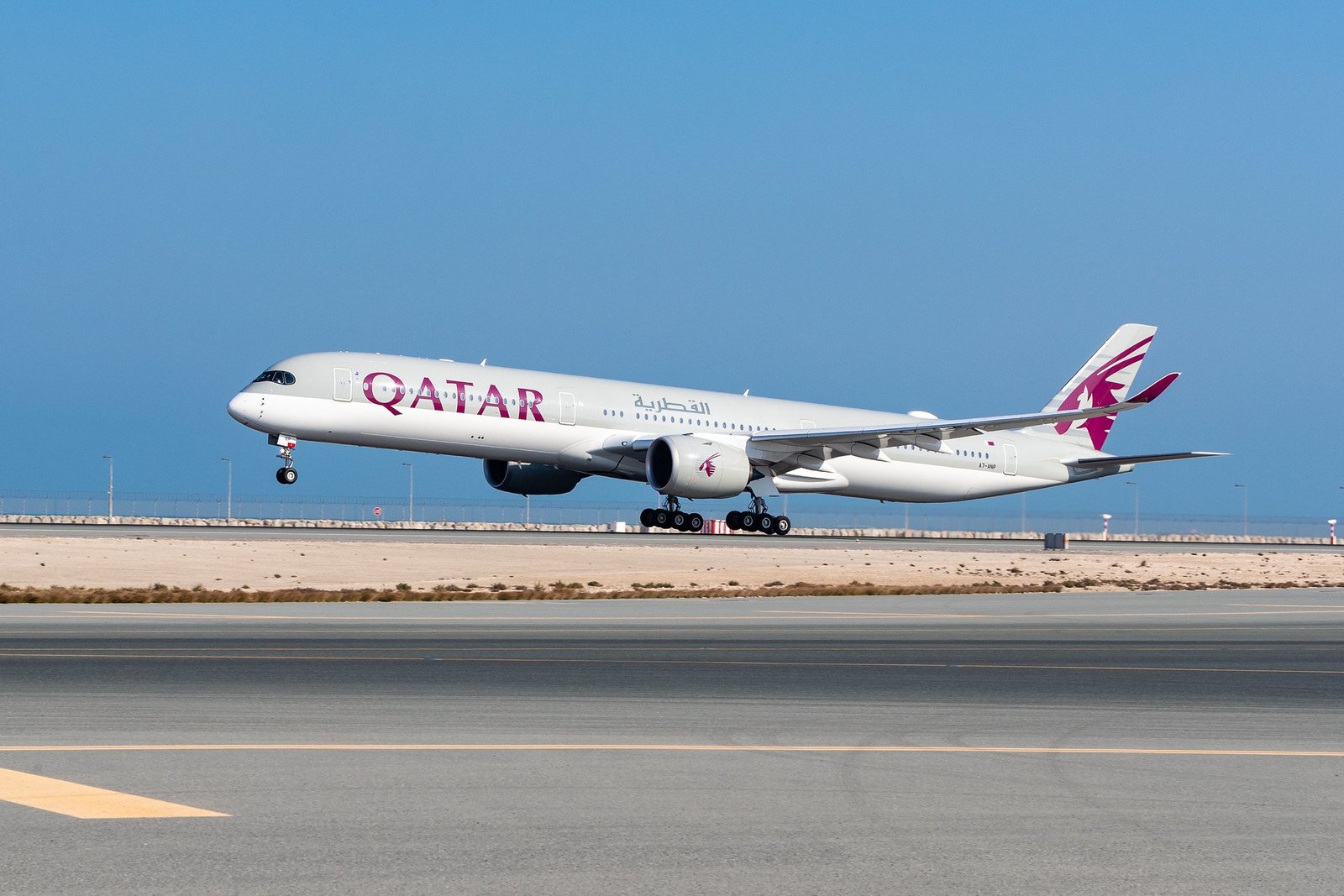
In the face of escalating tensions in the Gulf region, Qatar Airways successfully managed one of the most complex operational challenges in recent aviation history. Over 90 flights, carrying more than 20,000 passengers, were diverted following Iran’s missile launch targeting the US military base at Al Udeid in Qatar on Monday evening.
Crisis Unfolded Within Minutes
Shortly before the missiles were launched, Qatari authorities closed the country’s airspace. This decision forced Qatar Airways to take immediate action. Also, flights heading toward its hub in Doha had to be rerouted to several destinations, including 15 that landed in India.
Qatar Airways CEO Badr Mohammed Al Meer described the situation as “an operational crisis few airlines will ever encounter.” He said the incident tested the limits of a global airline’s ability to respond quickly to a high-risk geopolitical emergency.
Flights Diverted Across Regions
The diverted flights were rerouted to airports across the Middle East, South Asia, Europe, and Africa. The airline’s operations control centre swung into action to coordinate diversions with airport authorities, air traffic control, and ground staff in dozens of cities.
Passengers were kept informed through in-flight announcements, mobile alerts, and terminal updates. Emergency accommodation and rebooking arrangements were made swiftly.
Coordinated Global Effort
Al Meer, in a detailed letter addressed to passengers, praised the coordination between Qatar Airways teams across the globe.
“From pilots to ground handlers and customer care agents, every employee stepped up with professionalism. Furthermore, it was a 48-hour stretch that redefined operational excellence,” he wrote.
The airline also received assistance from civil aviation authorities in India, Turkey, and the UAE, where most of the diverted flights were temporarily grounded.
Safety Remained Top Priority
Despite the magnitude of the crisis, not a single safety breach was reported. Cabin crew remained calm, and passengers were provided meals, accommodation, and constant updates.
“We are grateful that no harm came to our passengers or crew,” Al Meer added. “Safety was our absolute priority.”
The airline also activated its Crisis Management Team (CMT). Also, which worked round-the-clock from Doha, monitoring every diverted aircraft in real-time.
Passenger Experience Handled With Care
Passengers praised the airline’s transparency. Many took to social media to thank the crew and staff for handling the situation with composure.
Nisha Verma, a flyer en route from Frankfurt to Bengaluru, said, “We were diverted to Muscat, but the staff ensured we were looked after. Moreover, we were rebooked quickly, and the hotel arrangements were smooth.”
Flights Normalising Slowly
By Wednesday afternoon, normal operations had resumed. Flights were gradually re-routed back to Doha, and a recovery schedule was implemented.
The airline confirmed that all passengers had either completed their journey or were in the process of reaching their final destinations.
Call for Greater Coordination
Qatar Airways has urged international aviation bodies to develop stronger frameworks for rapid airspace closure responses.
“We are reviewing our protocols and sharing learnings with IATA and ICAO,” Al Meer said. “Airlines must be better prepared for geopolitical flashpoints.”
Qatar Airways’ handling of the Iran missile crisis demonstrated the strength of global aviation coordination. While the event disrupted the journeys of thousands. Lastly, the airline’s calm and efficient response set a benchmark in emergency aviation management.
As tensions continue to rise in some parts of the world, this episode serves as a lesson for airlines and regulators alike: preparedness, clarity, and compassion are key.