


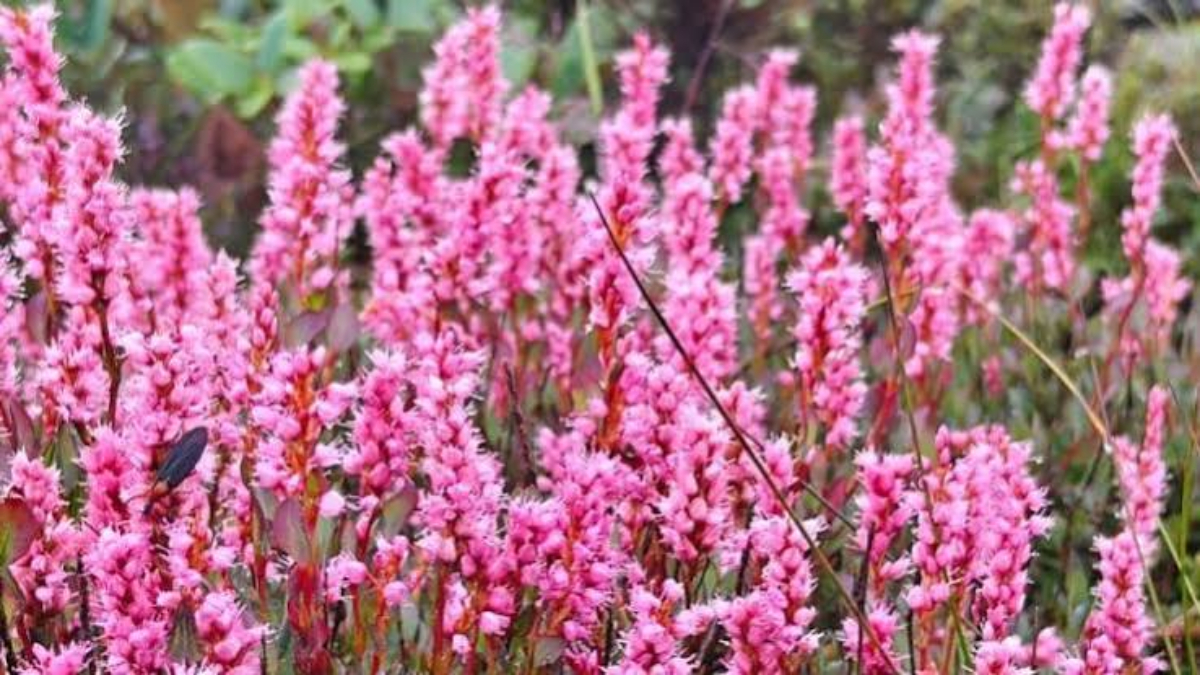
Himalayan flowers in Sikkim are drawing fresh attention to the high-altitude landscapes of East Sikkim, where the Kupup and Gnathang valleys have turned shades of pink during a brief seasonal bloom. The unusual sight has attracted tourists, photographers and social media content creators, offering visitors a striking view of a region usually associated with snow, rugged terrain and extreme cold.
Rare Himalayan flowers transform the high-altitude valleys
Located at around 13,000 to 13,500 feet above sea level, Kupup and Gnathang Valley experience harsh weather for much of the year. Snow and freezing temperatures dominate the landscape during winter. However, during the short period when the snow retreats, high-altitude plants emerge across the valleys.
This year’s bloom has covered parts of the terrain with vibrant pink flowers and other seasonal colours. The floral display provides a sharp contrast to the region’s usual snow-covered appearance and has quickly become a major attraction for visitors travelling through East Sikkim.
The flowering period is particularly notable because of its short duration. Once winter returns and snowfall begins, much of the vegetation is again covered by snow, bringing the colourful display to an end.
Himalayan flowers in Sikkim draw tourists and photographers
The seasonal transformation has increased tourist interest in Kupup and Gnathang Valley. Visitors from within Sikkim and other parts of the country are travelling to the area to experience the bloom and capture photographs.
Photographers have been especially drawn to the combination of flowers, mountain slopes, mist and changing weather. Social media creators are also documenting the scenery, helping bring greater attention to the high-altitude destinations.
Intermittent drizzle and mist have coincided with the flowering season, adding another visual element to the landscape. Low clouds moving through the valleys, combined with colourful vegetation, have created favourable conditions for landscape photography.
A different side of East Sikkim
Kupup and Gnathang are important stops along the Old Silk Route in East Sikkim. The area is known for high mountain landscapes, alpine meadows, lakes and historic attractions.
Kupup is situated at about 13,000 feet and is home to Kupup Lake, popularly known as Elephant Lake because of its distinctive shape. The nearby Yak Golf Course is also among the region’s well-known attractions. Gnathang Valley, meanwhile, is recognised for its broad high-altitude landscape and changing seasonal appearance.
The valleys can look dramatically different depending on the season. During warmer months, wildflowers and green meadows add colour to the landscape, while winter can turn the region into a snow-covered expanse. This seasonal contrast is one of the reasons the East Sikkim route remains popular among nature lovers and adventure travellers.
Short flowering season increases tourism appeal
The current bloom is also providing a temporary boost to tourism activity in the region. Visitors travelling to witness the flowers can contribute to local tourism-related businesses, including homestays, transport services, guides and other services operating along the route.
The appeal of the flowers is closely linked to their fleeting nature. Unlike permanent tourist attractions, the bloom is available only for a limited period before changing weather conditions alter the landscape.
The seasonal attraction therefore adds another dimension to East Sikkim’s tourism potential. The region is traditionally promoted for its mountain scenery, lakes, monasteries, snow and Silk Route heritage, but the flowering season offers visitors a different reason to explore the area.
Responsible tourism remains important
The increased attention also highlights the need to protect the fragile alpine environment. High-altitude vegetation can be particularly vulnerable to damage from heavy footfall. Visitors photographing the flowers should avoid stepping on flowering patches, picking plants or leaving waste behind.
Responsible tourism can help ensure that the valleys retain their natural beauty while allowing local communities to benefit from growing visitor interest. The short-lived nature of the bloom makes conservation especially important, as the same landscapes will eventually face winter conditions again.
For now, the pink floral display offers a rare seasonal spectacle in East Sikkim. The sight of Himalayan flowers in Sikkim against misty mountains and high-altitude meadows has given Kupup and Gnathang Valley a fresh tourism draw, bringing visitors to experience one of the region’s most fleeting natural transformations.