


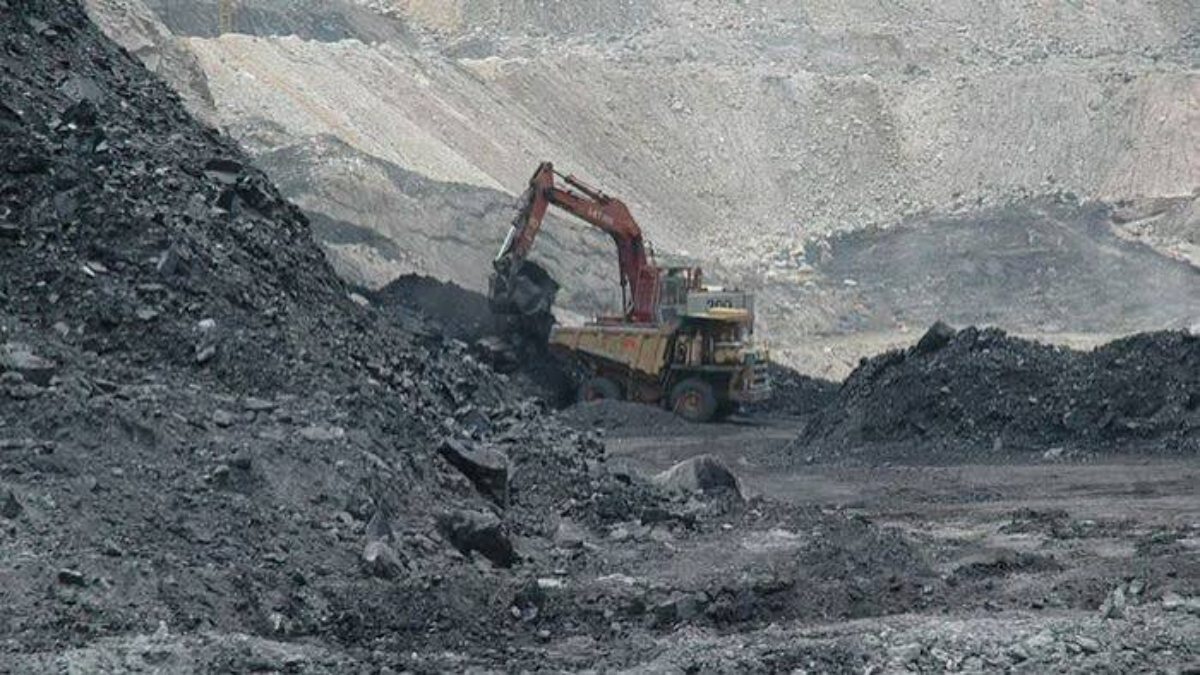
Meghalaya mining rules are at the centre of a fresh push by the state government, with Chief Minister Conrad K Sangma saying the Centre is examining a framework tailored to Meghalaya’s unique land, geological and mining conditions. Sangma made the statement in the Meghalaya Assembly on August 25 while responding to concerns over the difficulties faced by local miners in shifting from traditional practices to legally approved scientific mining.
Why Meghalaya needs a different mining framework
Sangma said the Union Coal Ministry has recognised that Meghalaya’s mining conditions are significantly different from those in many other parts of the country. The state has thin and steep coal seams, while coal-bearing land is often divided among individuals, clans and communities.
Meghalaya is also a Sixth Schedule state, where land and minerals beneath the land are traditionally held by individuals, clans or communities rather than by the state government. Sangma has argued that this ownership pattern makes large-scale mining models difficult to implement in many parts of the state.
The Chief Minister said these factors must be considered while framing Meghalaya mining rules so that legal extraction can continue without compromising worker safety or environmental safeguards.
Centre examining Meghalaya mining rules proposal
Sangma told the Assembly that he recently met Union Coal and Mines Minister G Kishan Reddy in New Delhi along with Sutnga-Saipung MLA Santa Mary Shylla. During the meeting, he raised the difficulties involved in implementing the existing scientific mining framework.
Following the meeting, the Union minister directed officials to examine the matter and work towards a practical solution. Sangma said the state has sought a time-bound response from the Centre.
The state had earlier requested the delegation of certain powers under Section 26 of the Mines and Minerals (Development and Regulation) Act, 1957. These include powers related to prior approval and the approval of mining plans for coal. The proposal is intended to make the approval process easier for small local coal holders.
100-hectare requirement remains a major hurdle
One of the key issues raised by Meghalaya is the minimum 100-hectare concession area required under the existing framework. Sangma said the requirement is difficult for small miners because large, continuous areas are uncommon in Meghalaya’s hill terrain.
The state has therefore asked the Centre to reduce the minimum area so that local mine owners can participate in legal mining while meeting safety and environmental requirements. A state committee has already been formed to pursue changes to the existing rules, with officials holding discussions with the Centre’s technical team.
Sangma said the committee met on July 31 and examined proposals including a reduction in the minimum concession area, delegation of certain approval powers and the creation of a Project Monitoring Unit. The state is also considering an alternative safety-focused mining technique proposed by a local coal association.
Ban on rat-hole mining shaped the debate
Coal mining in Meghalaya has remained controversial since the National Green Tribunal banned rat-hole mining in 2014 over environmental and safety concerns. The Supreme Court subsequently allowed scientific mining in 2019, subject to compliance with applicable laws and regulations.
The transition, however, has proved difficult for many local miners. Sangma said indigenous miners often lack the technical capacity and financial resources needed to adopt modern mining methods.
He also pointed to the scale of the challenge in East Jaintia Hills, where he said there are around 22,000 coal mines. Such a large number of sites makes regulatory monitoring difficult and increases the importance of a workable legal framework.
Meghalaya balances livelihoods and environmental safeguards
The state government has maintained that its objective is not to revive illegal mining but to create a regulated system that allows lawful extraction while protecting workers and the environment.
Recent discussions have also covered stone and sand mining. In August, mining stakeholders sought clarity on the proposed regulatory framework, while the government said it was examining questions raised by the Centre. Lawful quarrying remains permitted when operators have the required mining lease or quarry permit, environmental clearance and other mandatory approvals.
The government’s approach reflects the broader challenge of balancing Meghalaya’s traditional land ownership system, local livelihoods and environmental protection with national mining laws.
What happens next
The Centre’s examination of Meghalaya mining rules could determine whether small-scale miners receive a more practical route to legal mining. The state is seeking changes that recognise local geological and landholding conditions without weakening safety or environmental standards.
For Meghalaya, the immediate priority is to secure a framework that can replace illegal practices with regulated mining and give local communities a lawful economic opportunity. The outcome of discussions between the state and Centre will be closely watched by mining-dependent communities across the state.
Tripura Timeless Tales Book Gets Major Tourism Boost from Governor