


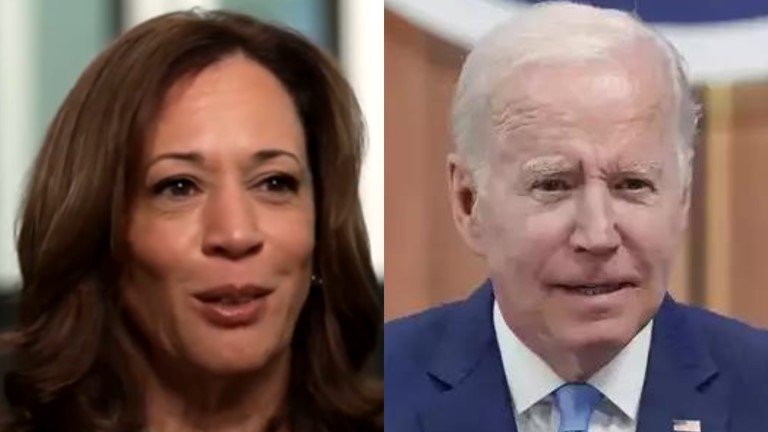
As the 2024 U.S. presidential election draws nearer, former President Donald Trump’s campaign has taken a dramatic turn with a series of controversial statements. In recent rallies and interviews, Trump has explicitly threatened to imprison his political opponents, including President Joe Biden, Vice President Kamala Harris, and House Speaker Nancy Pelosi, should he return to the White House in November. This bold rhetoric has stirred significant debate and concern, raising questions about the implications for American democracy and the electoral process.
Trump’s Stance and Statements
Donald Trump, who is running for re-election on a platform that continues to emphasize a strong stance against his political adversaries, has intensified his rhetoric. At several high-profile rallies and in media interviews, Trump has declared that he would use his presidential powers to investigate and potentially imprison Biden, Harris, and Pelosi. These statements mark a dramatic shift from traditional political discourse and have sparked both support and condemnation.
During a recent rally in Pennsylvania, Trump remarked, “If I am re-elected, we will hold these corrupt individuals accountable. We will investigate them thoroughly, and if necessary, they will face justice.” He referred to Biden, Harris, and Pelosi as “the corrupt trio” and accused them of numerous political and legal transgressions, including mishandling classified information, abuse of power, and election interference.
Legal and Constitutional Implications
Trump’s threats raise serious questions about their legal and constitutional implications. In the United States, the President does not have unilateral authority to imprison individuals without due process. The justice system operates independently of the executive branch, and any legal proceedings against individuals, including high-profile politicians, must follow established legal procedures and judicial oversight.
Legal experts argue that Trump’s statements undermine the principles of separation of powers and the rule of law. Dr. Laura McKenzie, a constitutional law professor, comments, “Threatening to imprison political opponents based on personal grievances is highly problematic. It undermines the foundational principles of democracy, which are based on fair and impartial justice rather than political retribution.”
Moreover, Trump’s rhetoric could be viewed as an attempt to use his political platform to intimidate opponents and influence the election outcome. Such actions may have broader implications for political norms and the health of democratic institutions in the United States.
Reactions from Political Figures and Analysts
The response to Trump’s statements has been swift and polarized. Democratic leaders have condemned the threats as dangerous and authoritarian. President Joe Biden’s spokesperson stated, “This kind of rhetoric is unbecoming of any leader, especially a former President seeking to return to office. It’s an attack on our democratic norms and institutions.”
House Speaker Nancy Pelosi, who has been a frequent target of Trump’s ire, described his threats as “an egregious abuse of power.” She added, “This is not just about personal attacks; it’s about undermining the very fabric of our democracy.”
On the other hand, Trump’s supporters have rallied behind him, viewing his statements as a bold stand against what they perceive as a corrupt political establishment. They argue that Trump’s promises are a necessary response to what they believe are serious abuses of power by his opponents.
The Impact on the 2024 Election
Trump’s controversial statements are likely to have a significant impact on the 2024 election. They have sparked intense debate among voters and have become a focal point in the campaign. While some see Trump’s rhetoric as a reflection of his commitment to challenging the status quo, others view it as a dangerous precedent that threatens democratic values.
As the election approaches, both sides of the political spectrum are mobilizing their supporters and shaping their strategies around these high-stakes issues. Trump’s campaign continues to leverage his confrontational stance to energize his base, while Biden and his allies are focusing on contrasting their vision for governance with Trump’s divisive rhetoric.
Donald Trump’s threats to imprison President Joe Biden, Vice President Kamala Harris, and House Speaker Nancy Pelosi if re-elected have ignited a heated and contentious debate about the future of American democracy. These statements challenge established norms and raise concerns about the potential implications for the rule of law and the integrity of the electoral process. As the 2024 election approaches, voters will need to consider the broader implications of such rhetoric and its impact on the nation’s democratic institutions. The outcome of this election could shape not only the future direction of U.S. politics but also the very principles that underpin American democracy.