


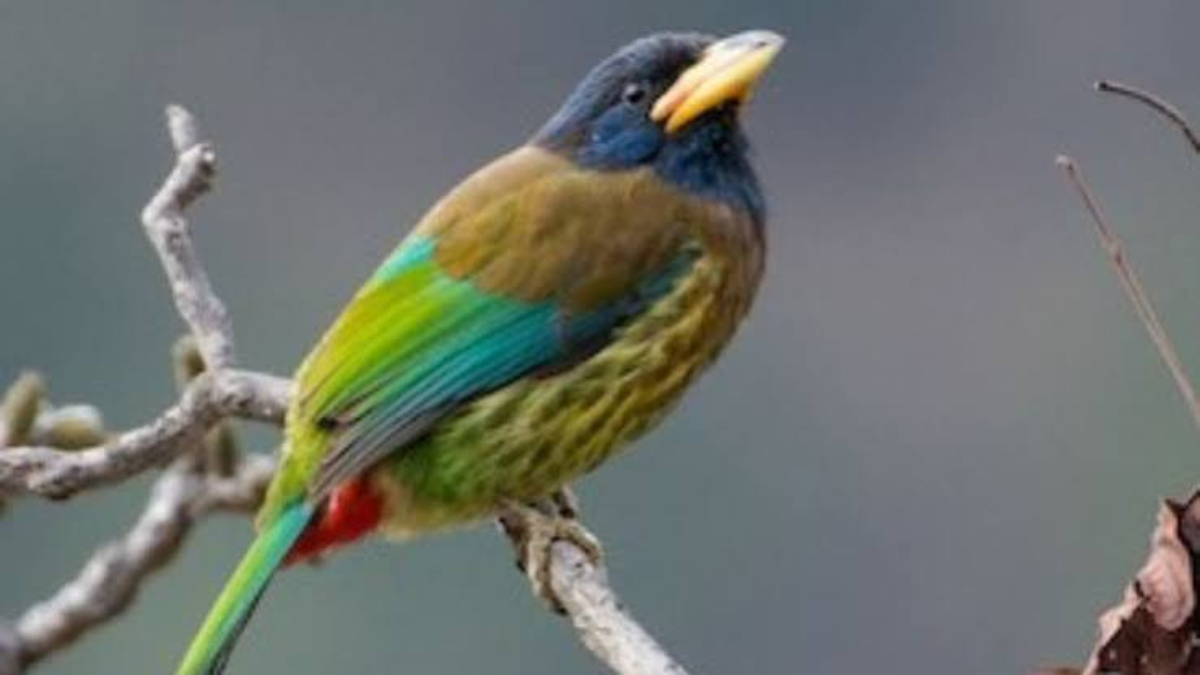
Great Barbet has returned to a village in Nagaland, prompting the Chakhesang youth body to renew its appeal for strict wildlife protection. The sighting has drawn attention to the need to safeguard the bird’s habitat and prevent hunting or capture of protected wildlife in the region.
Great Barbet sighting brings conservation focus
The return of the Great Barbet has been welcomed as an encouraging sign for local biodiversity. The bird is known for its distinctive calls, colourful plumage and presence in forested landscapes across parts of the Indian subcontinent and Southeast Asia.
Its appearance in a Nagaland village also highlights the ecological value of the state’s forests and community-managed landscapes. Nagaland has several areas where traditional community institutions play an important role in managing natural resources.
The latest development comes as the Chakhesang youth body has reiterated wildlife protection rules and urged residents to respect restrictions on hunting and the killing of wild animals and birds.
Chakhesang youth body reiterates wildlife rules
The youth organisation has used the Great Barbet sighting to reinforce existing community rules on wildlife protection. Such rules are particularly important in areas where customary institutions and village-level bodies regulate the use of forests and other natural resources.
The organisation has called on residents, particularly young people, to avoid hunting, trapping or disturbing protected birds. It has also stressed the need for greater awareness about the ecological importance of wildlife.
Community-based conservation has long played an important role in Nagaland. Village councils, youth organisations and other local groups often help enforce restrictions on hunting and the use of forest resources.
The renewed appeal seeks to ensure that the return of the bird does not lead to unwanted attention, capture or hunting.
Why the Great Barbet matters
The Great Barbet is a large forest bird with a strong association with wooded habitats. It feeds mainly on fruits, although its diet can also include other food sources. Like other fruit-eating birds, it can contribute to the movement of seeds through forest ecosystems.
The species is therefore part of a wider ecological system in which birds help maintain forest regeneration. Protecting such species can also help preserve the health of their habitats.
The bird’s presence in a village landscape may indicate that suitable vegetation and food sources remain available nearby. However, a single sighting does not by itself establish the long-term health of a local population.
Wildlife experts generally emphasise the importance of protecting habitats rather than focusing only on individual animals. Maintaining trees, forest patches and natural food sources can provide birds with places to feed, breed and shelter.
Community protection remains important
Nagaland’s community-led conservation practices have received attention for their role in protecting forests and wildlife. Local restrictions can be especially significant in areas where government enforcement resources are limited.
The Chakhesang youth body’s renewed emphasis on wildlife rules reflects this community-level approach. By encouraging residents to report violations and discourage hunting, local organisations can strengthen awareness of existing protections.
Such efforts can also help younger residents understand why traditional restrictions matter for biodiversity. Wildlife protection becomes more effective when communities treat conservation as a shared responsibility.
Awareness can support long-term conservation
The return of the Great Barbet also offers an opportunity to improve public awareness about Nagaland’s birdlife. Residents can play an important role by observing birds without disturbing them and by avoiding activities that damage nesting or feeding areas.
Photographs and responsible birdwatching can help document local biodiversity, while unnecessary handling or capturing of wild birds can cause stress and injury.
Local schools, youth groups and village institutions can further support conservation through awareness campaigns and discussions on native species. Such initiatives can help connect wildlife protection with broader concerns about forests, water sources and sustainable resource use.
The sighting has therefore become more than an isolated wildlife event. It has renewed attention on the rules and community responsibilities that can help protect Nagaland’s natural heritage.
For the village and the wider Chakhesang community, the return of the Great Barbet provides a timely reminder that wildlife protection depends on both formal laws and local cooperation. Continued respect for hunting restrictions and protection of forest habitats can help ensure that birds and other wildlife continue to find safe spaces across Nagaland.