


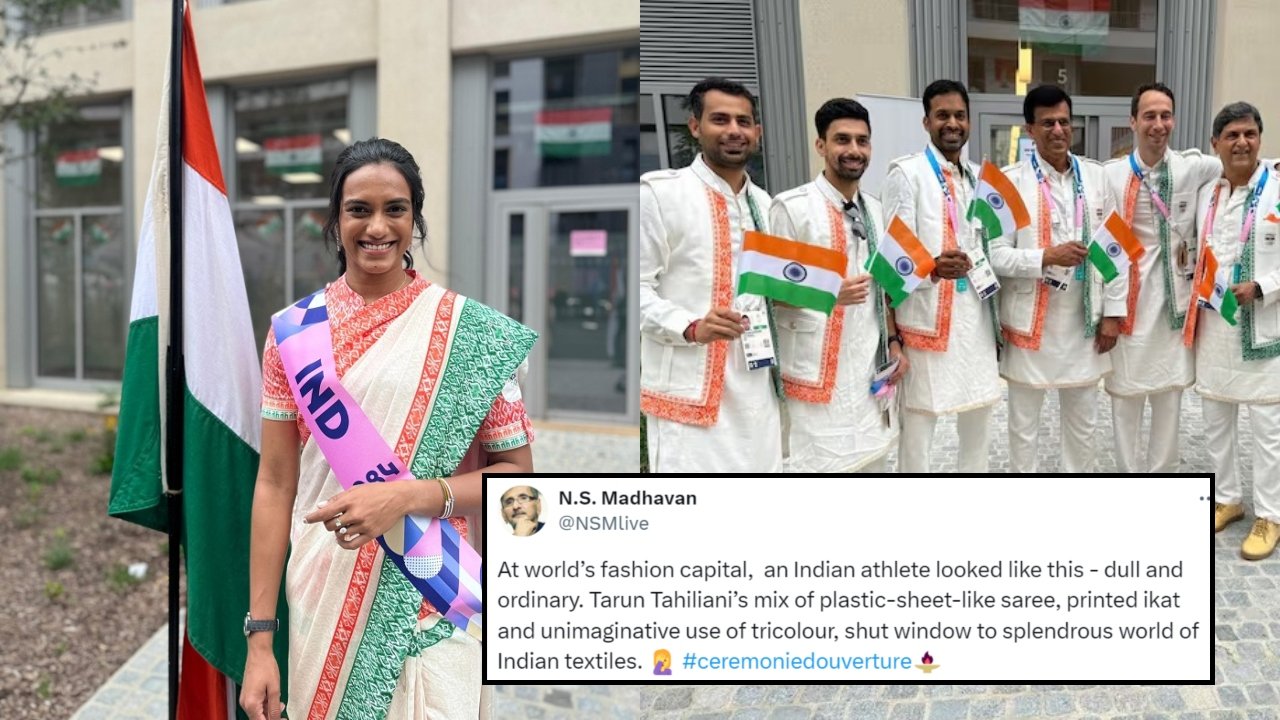
Fashion designer Tarun Tahiliani recently addressed the controversy surrounding the uniforms he designed for the Indian contingent at the Paris Olympics. Facing a wave of criticism on social media, Tahiliani defended his work, calling the uproar an “insane storm in a teacup.” He emphasized that the design went through a rigorous selection process before being finalized.
Tahiliani explained that he had submitted multiple sketches and options for the uniforms. These designs were carefully reviewed and selected by vetting committees, which included representatives from the Indian Olympic Association. “The final design was chosen after thorough consideration,” he stated, underscoring the collaborative nature of the selection process.
The designer, known for his fusion of traditional Indian aesthetics with contemporary styles, mentioned that the uniform had received positive feedback in Paris. “I stand by my design. It was appreciated in Paris, and I believe it represents a modern yet respectful interpretation of our national identity,” Tahiliani added.
Despite the backlash, which included comments on the uniforms’ style and suitability, Tahiliani remained unfazed. He urged the public to focus on supporting the athletes rather than critiquing their attire. “Let people say what they want,” he remarked, highlighting the importance of concentrating on the athletes’ performances and the spirit of the games.
Tahiliani’s response also touched on the broader issues of public perception and the challenges faced by designers in satisfying diverse tastes. He noted that while it is impossible to please everyone, the primary goal of the uniform was to provide comfort and functionality to the athletes while showcasing India’s rich cultural heritage in a contemporary format.
The controversy has sparked a larger conversation about the role of fashion in sports and how cultural representations are perceived on global platforms. As the debate continues, Tahiliani remains confident in his work and the choices made by the selection committees, advocating for a more supportive and unified approach to representing the country on the world stage.
Addressing the controversy further, Tarun Tahiliani elaborated on the inspiration behind the design, stating that it was meant to be a modern tribute to India’s rich cultural tapestry. The uniform’s elements were carefully chosen to balance traditional motifs with a sleek, contemporary silhouette, aimed at making the athletes feel both proud and comfortable. “The colors and patterns used were meant to symbolize unity and the vibrant spirit of India,” he noted, emphasizing the thoughtfulness that went into every detail.
Tahiliani also highlighted the practical considerations involved in designing the uniform. Given the rigorous physical demands faced by athletes, the materials were selected for their comfort, breathability, and ease of movement. “It’s not just about aesthetics; the functionality of the uniform is paramount,” he stressed, pointing out that the feedback from athletes themselves has been largely positive.
The designer acknowledged that criticism is an inherent part of the creative process, especially when it comes to representing a nation on an international stage. However, he expressed disappointment at the intensity of the backlash, noting that constructive criticism can often lead to better outcomes, whereas unbridled negativity can be counterproductive. “Constructive feedback is always welcome, but the level of vitriol was unexpected and disheartening,” he remarked.
Tahiliani’s comments have sparked a broader discussion about the pressures faced by designers in high-profile projects, where expectations are not only high but also varied. He emphasized the need for greater understanding and respect for the artistic process, as well as the collaborative effort required to bring such projects to fruition. “Every piece of criticism is a chance to learn, but it’s also important to acknowledge the hard work and thoughtfulness that go into these designs,” he said.
In light of the ongoing debate, many in the fashion and sports communities have come forward in support of Tahiliani, appreciating the cultural significance and modernity of the uniforms. As the conversation evolves, it highlights the intersection of fashion, national identity, and sportsmanship, urging a more nuanced appreciation of how these elements come together on the world stage.