

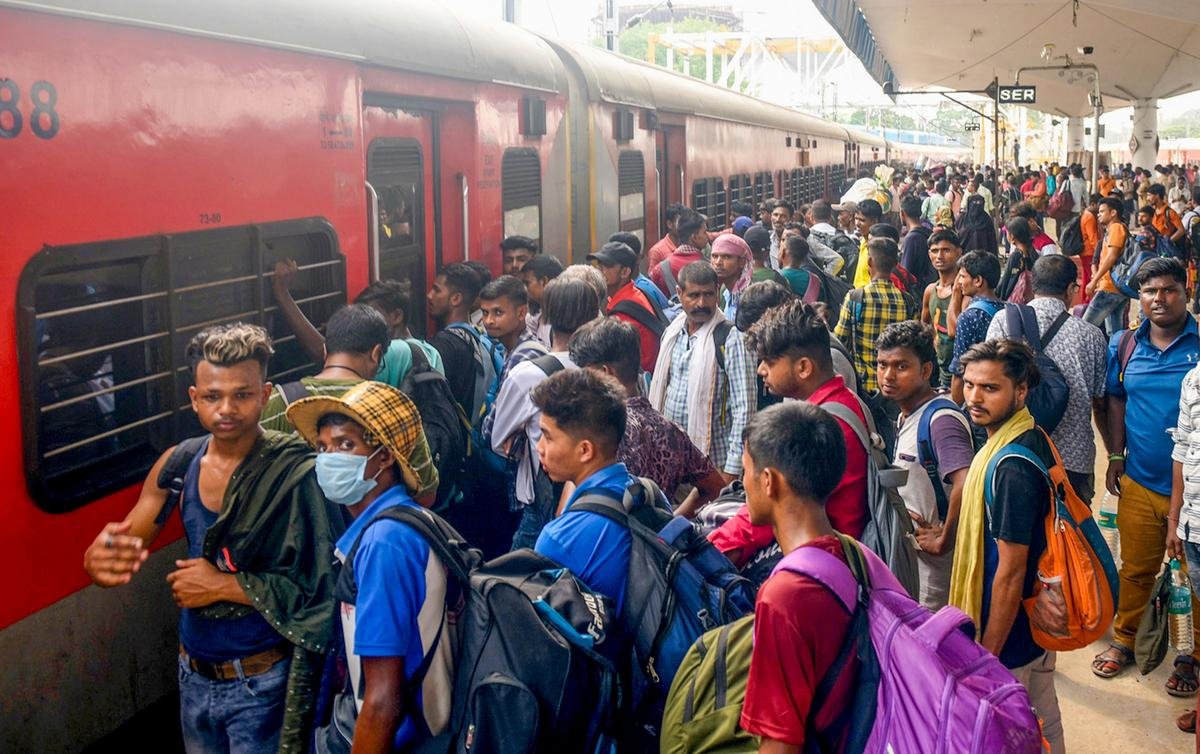
A new report by the Economic Advisory Council to the Prime Minister (EAC-PM) has highlighted emerging migration trends in India, with West Bengal and Rajasthan identified as new hotspots for migrant movements. According to the analysis of data from the Indian Railways, these two states have made their way into the top five regions where the highest number of general or second-class passengers from across the country are traveling. Uttar Pradesh, Maharashtra, and Madhya Pradesh complete the list of top five states.
The working paper, which draws insights from data on unreserved ticket sales for non-suburban passengers, reveals significant shifts in migration patterns. These trends suggest that while many states have experienced a reduction in the number of incoming passengers, West Bengal, Rajasthan, and Karnataka have seen the most substantial increases in migrant arrivals in recent years.
The increase in passengers to West Bengal and Rajasthan signifies a notable transformation in the country’s migration landscape. Historically, migrants have flocked to more traditional destinations like Uttar Pradesh, Maharashtra, and Madhya Pradesh, but the findings indicate that the social and economic dynamics of these states are now drawing more migrants, particularly those seeking employment or educational opportunities.
West Bengal, known for its rich cultural heritage and industrial base, is emerging as a key destination for individuals looking for work in both urban and rural areas. The state has been witnessing a steady influx of laborers, particularly in sectors such as construction, agriculture, and manufacturing. The increase in railway travel to the state can be attributed to growing opportunities in these fields, which are attracting workers from different parts of India, including economically backward regions.
Similarly, Rajasthan, traditionally known for its tourism and handicrafts, is now seeing an uptick in migrant arrivals. The state’s recent focus on infrastructure development, including the expansion of its industrial base, has made it a more attractive destination for migrants seeking jobs in various sectors. Rajasthan’s emphasis on improving education and healthcare has also contributed to its appeal, making it a sought-after destination for families and young professionals looking to settle and work.
While West Bengal and Rajasthan are gaining momentum as new migration destinations, Uttar Pradesh continues to dominate the migration charts. As the most populous state in India, Uttar Pradesh has long been a major source of migrants, primarily due to its large rural population seeking better prospects in urban centers. Despite a slight reduction in inward migration, the state remains at the top due to its sheer size and economic potential.
Maharashtra and Madhya Pradesh round out the top five, both of which have historically been magnets for migrant workers due to their robust economies, industrial hubs, and urban centers. While both states have seen a slight decline in the number of incoming passengers, they continue to offer significant opportunities in sectors like manufacturing, information technology, and services, which keep attracting workers from other regions.
The shift in migration trends reveals changing patterns in India’s labor market and the evolving dynamics of regional economies. It also points to a growing interdependence between states, as people from different parts of the country move to places that offer better prospects for livelihood and social welfare.
As the nation grapples with the challenges of urbanization, employment, and regional inequalities, the findings of the EAC-PM working paper underscore the importance of creating policies that address the needs of migrants. With states like West Bengal and Rajasthan emerging as new destinations, there is a need to ensure that infrastructure, services, and social welfare programs keep pace with the rising influx of migrants. Ensuring that these states are equipped to handle the demands of their new residents will be key to managing the social and economic impacts of this migration trend.
The rise of West Bengal and Rajasthan as new migrant hubs highlights the changing economic dynamics of these states. In the past, traditional migration destinations like Delhi, Mumbai, and Bengaluru dominated the landscape, with people flocking to the metropolises in search of employment and better living conditions. However, the current trends show that smaller states are increasingly emerging as centers for migration, offering new opportunities in industrial growth, infrastructure development, and improved social services.
West Bengal’s emphasis on boosting its industrial sector has paid off, attracting a large pool of workers, particularly from neighboring states and even other regions of India. Moreover, the state’s burgeoning IT and service sectors, in addition to agricultural opportunities, have made it an attractive choice for individuals seeking stability and growth. Urbanization in cities like Kolkata has also led to the development of new job opportunities in education, healthcare, and other services, further enhancing the state’s appeal to migrants.
Similarly, Rajasthan’s focus on developing its industrial infrastructure has led to greater job availability, especially in manufacturing, logistics, and construction. The state’s significant investments in urban development projects have opened new avenues for migration from rural areas and other states. Furthermore, Rajasthan’s growing tourism industry, driven by its rich cultural history and heritage, provides significant employment opportunities in sectors such as hospitality and entertainment. As more people seek jobs in these emerging industries, Rajasthan has become a key player in attracting migrants.
While migration to these emerging destinations is on the rise, the data also points to a decrease in inward migration to some of the larger cities, particularly in Maharashtra. In cities like Mumbai, where the cost of living is high and overcrowding is a major concern, many individuals are increasingly looking for alternative, more affordable destinations to settle in. As a result, states like West Bengal and Rajasthan are emerging as viable options for those looking for opportunities outside of traditional economic hubs.
In light of these shifts, state governments need to invest in improving local infrastructure, such as transportation, healthcare, education, and housing, to accommodate the growing migrant populations. Migrant workers often face significant challenges when it comes to access to basic services, and ensuring that these regions are prepared for increased demand is critical for sustaining their growth.
Additionally, as migration trends evolve, there is a growing need for comprehensive policies that address the integration of migrants into these new states. Many migrants come from economically disadvantaged backgrounds and may face challenges related to employment rights, social welfare, and access to legal support. State governments must prioritize policies that ensure equal opportunities for all residents, irrespective of their origin, while also offering support systems that can ease the transition for new migrants.