


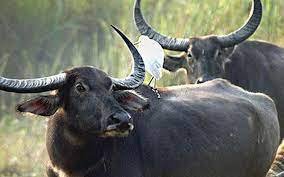
Days of fear and speculation ended in shock for Tezpur residents on Tuesday as the carcass of a wild buffalo. That had been roaming through the town was discovered near the Polo Field area. The decomposed body was found after locals alerted authorities about a foul smell in the vicinity.
The wild buffalo, believed to have strayed from nearby forest areas along the Brahmaputra riverbank. It had created panic across several Tezpur neighborhoods since last week. Multiple sightings, traffic disruptions, and social media videos of the large animal moving through human settlements had kept residents on edge.
Buffalo’s Presence Had Alarmed Locals
The presence of the buffalo in densely populated zones had led to several public safety alerts by the Forest Department. In the past few days, the animal was seen moving through areas like Mission Chariali, Dolabari, and Polo Field, triggering fear among pedestrians and commuters.
“We saw the animal near our gate on Sunday evening. It looked agitated and confused,” said Manju Deka, a resident of Dolabari. “The children were terrified, and no one dared to step outside.”
Authorities had launched a monitoring operation in collaboration with local police to safely guide the buffalo back to a forested region. However, repeated attempts to track and tranquilize it were unsuccessful due to its unpredictable movements. And the difficulty of operating in populated zones.
Carcass Discovered After Foul Smell Complaint
The animal’s remains were discovered on Tuesday morning near the Polo Field, following a complaint by locals who reported a strong odor. Also, a joint team of the Tezpur Forest Division and police launched a search. And located the buffalo’s body in a thicket.
“The carcass was found in a partially decomposed state, indicating that the animal may have died around two days ago,” said an official from the Forest Department. “There were no immediate signs of injury. Or foul play, but we have sent tissue samples for a post-mortem examination to determine the exact cause of death.”
Forest Officials Suspect Stress or Illness
While the final cause of death is yet to be confirmed, initial assessments suggest that the buffalo may have succumbed to heat stress, exhaustion, or an underlying illness worsened by urban exposure. The animal’s disoriented behavior, lack of feeding, and erratic movement patterns had already raised concerns among wildlife experts.
According to sources, the buffalo may have entered Tezpur after losing its way while attempting to cross the river during low tide. Such incidents are not uncommon in fringe areas of Assam. Where human-wildlife conflict has been rising due to shrinking habitats.
Concerns Over Human-Wildlife Encounters
The incident has reignited discussions on urban encroachment, habitat loss, and the increasing frequency of wild animals entering cities and towns in Assam. Also, conservationists have called for stronger mitigation strategies. Besides, better wildlife corridors to prevent such distressing outcomes.
“Wild buffaloes are Schedule I animals under the Wildlife Protection Act. Their protection should be a priority. We need stronger safeguards and clear buffer zones between human habitation and wildlife territory,” said a local environmental activist.
The Kaziranga National Park, a known habitat for wild buffaloes. It lies nearly 100 kilometers from Tezpur. Though smaller forest patches exist closer to the town.
Civic Measures and Cleanup
The Forest Department has coordinated with the Tezpur Municipal Board to safely dispose of the carcass and disinfect the area. Civic officials also urged residents to report any future sightings of wild animals immediately and avoid crowding such areas.
“We are committed to ensuring public safety while respecting the life of every wild animal,” said a Tezpur police officer at the site.
The death of the wild buffalo has ended days of anxiety in Tezpur but has also raised critical questions about urban-wildlife coexistence. While residents breathe a sigh of relief, the event serves as a reminder of the delicate balance between nature and human development.
Explore More: