

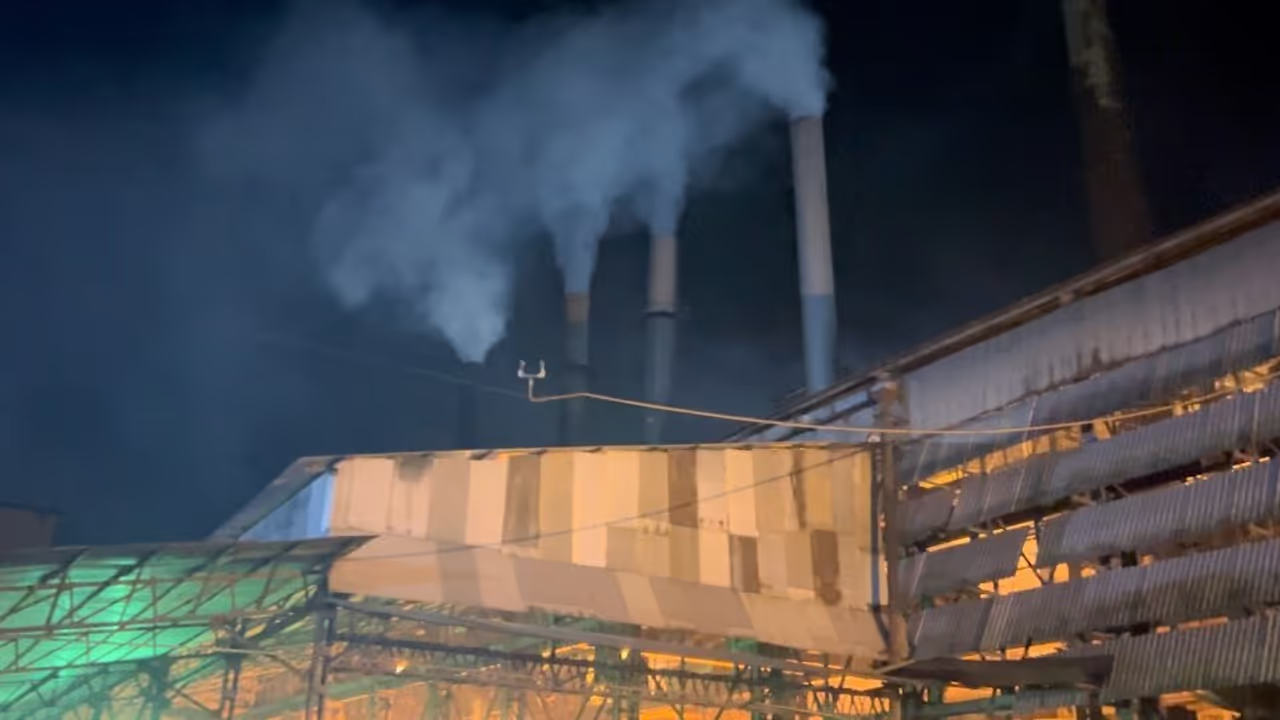
The Byrnihat Industrial Pollution issue has resurfaced after the State Health Ministry stated it would not initiate action against alleged industrial emissions based solely on claims circulating on social media. Officials emphasized the need for verified evidence and established regulatory procedures before taking enforcement measures.
The Byrnihat Industrial Pollution debate has gained renewed attention after the State Health Ministry clarified that it would not take action against alleged industrial emissions based strictly on social media claims. The ministry maintained that regulatory decisions should rely on verified evidence, official assessments, and established legal procedures. Moreover, the statement underscores the importance of evidence-based policymaking when addressing environmental and public health concerns.
Industrial pollution remains a significant public policy issue because emissions can affect environmental quality and public health. Therefore, authorities typically depend on scientific data, regulatory inspections, and official monitoring before determining whether enforcement action is necessary.
Next-Gen Governance Reforms Take Center Stage at Shillong Administrative Symposium
Byrnihat Industrial Pollution Response Centers on Verified Evidence
The State Health Ministry stated that allegations regarding Byrnihat Industrial Pollution cannot serve as the sole basis for regulatory action if they originate only from social media platforms. According to the ministry, government agencies must evaluate credible evidence before initiating investigations or enforcement measures.
Moreover, officials emphasized that regulatory decisions require documented findings obtained through established administrative and scientific processes. Consequently, the ministry reiterated its commitment to following applicable legal and institutional procedures when addressing environmental concerns.
The clarification aims to reinforce the principle that official action should be guided by verified information rather than unverified online content.
Evidence-Based Decision-Making in Environmental Governance
Environmental regulation generally relies on scientific assessments, inspections, and monitoring conducted by competent authorities. Furthermore, air quality evaluations often involve technical measurements, laboratory analysis, and compliance reviews before conclusions are reached.
The Byrnihat Industrial Pollution discussion highlights the importance of distinguishing between public allegations and officially verified findings. Therefore, regulatory agencies typically examine available evidence before determining whether environmental standards have been breached.
Moreover, evidence-based decision-making supports transparency and fairness by ensuring that enforcement actions follow established legal and administrative procedures.
Social Media Claims and Official Investigations
Social media platforms frequently bring public attention to environmental issues by enabling rapid sharing of information and community concerns. However, information circulating online may require independent verification before government authorities can rely upon it for regulatory purposes.
The State Health Ministry indicated that while public concerns are important, official action must remain grounded in credible evidence. Similarly, environmental complaints generally proceed through formal reporting mechanisms that allow competent agencies to conduct appropriate investigations.
Meanwhile, authorities may continue monitoring environmental conditions using established procedures whenever concerns are brought to their attention through recognized channels.
Byrnihat Industrial Pollution Highlights Need for Institutional Processes
The ongoing Byrnihat Industrial Pollution discussion reflects the broader importance of institutional mechanisms in environmental governance. Moreover, transparent investigative procedures help ensure that regulatory decisions are based on objective evidence rather than speculation.
Governments often balance public participation with scientific evaluation when responding to environmental concerns. Consequently, verified monitoring and official inspections remain central to maintaining credibility in environmental regulation.
The ministry’s position also reinforces the role of established administrative frameworks in protecting both public health and procedural fairness. As environmental issues continue to receive public attention, evidence-based governance remains an essential component of effective policymaking.
Conclusion
The Byrnihat Industrial Pollution issue has drawn renewed focus following the State Health Ministry’s statement that it will not act solely on social media claims regarding industrial emissions. The ministry emphasized that verified evidence and established regulatory procedures must guide official decisions involving environmental and public health matters.
Moreover, the clarification highlights the importance of scientific assessment, institutional accountability, and transparent decision-making in environmental governance. While public concerns contribute to policy discussions, enforcement actions require reliable information gathered through recognized processes.
Overall, the ministry’s position reinforces the principle that environmental regulation should remain evidence-driven. As authorities continue to monitor industrial activities through official mechanisms, verified data and legal procedures will remain central to future regulatory decisions.
FAQs
1. What is the Byrnihat Industrial Pollution issue?
The Byrnihat Industrial Pollution issue concerns allegations regarding industrial emissions in the Byrnihat region and the government’s response to those concerns.
2. What did the State Health Ministry announce?
The ministry stated that it would not initiate action based solely on claims circulating on social media without verified evidence.
3. Why is verified evidence important in environmental cases?
Verified evidence helps ensure that regulatory decisions are based on scientific assessments, official investigations, and established legal procedures.
4. Can social media posts trigger government action?
Social media posts may draw attention to public concerns, but authorities generally require independent verification and official assessments before taking enforcement action.
5. How are environmental complaints typically handled?
Environmental complaints are generally reviewed through formal reporting channels, inspections, scientific monitoring, and investigations conducted by the appropriate regulatory authorities.