

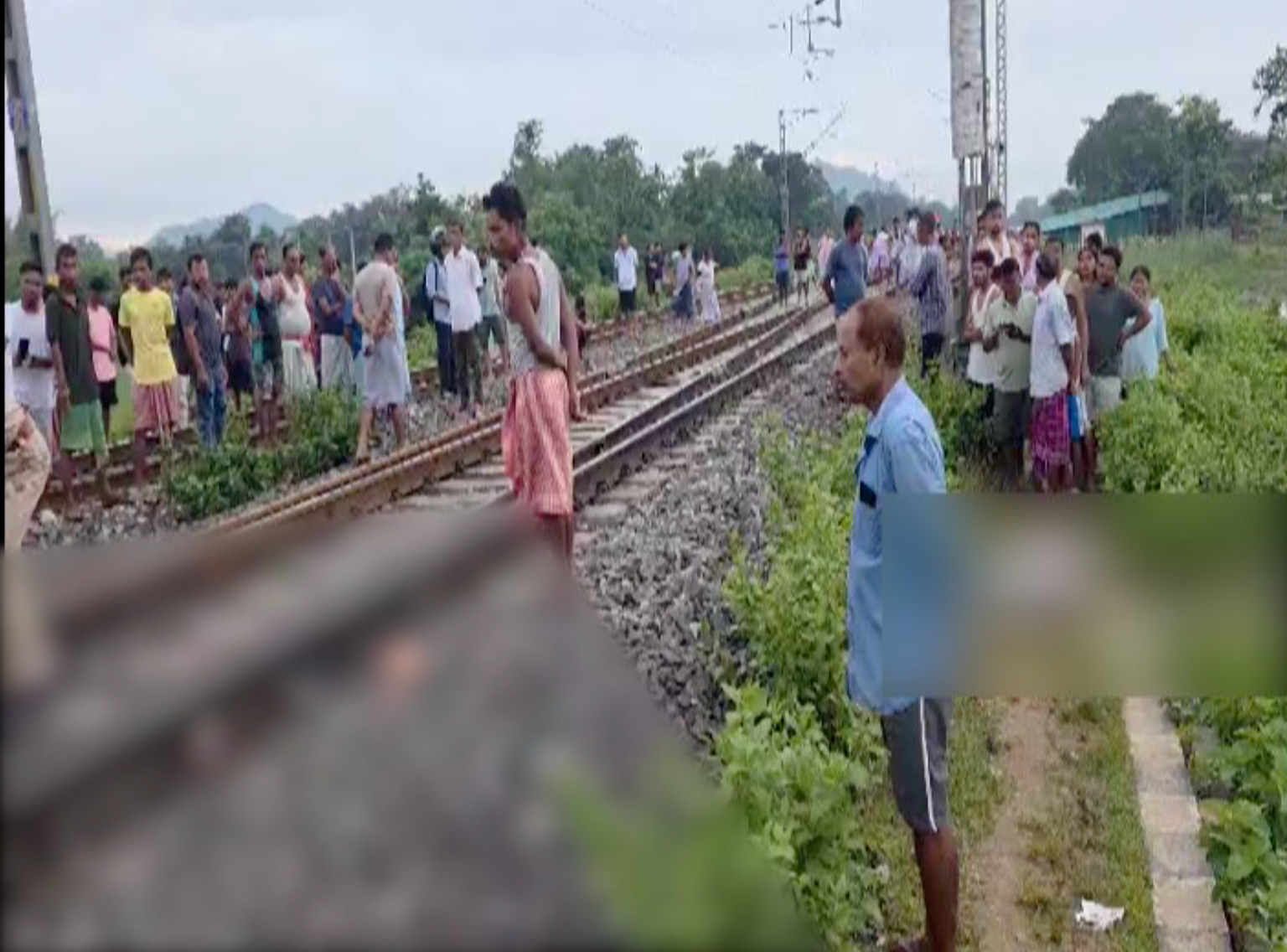
Bamunigaon train tragedy shocks Assam – three women killed while trying to cross near Bamunigaon Railway Station; urgent safety measures demanded.
Bamunigaon Train Tragedy – A Devastating Loss for Assam
The Bamunigaon train tragedy has left the people of Assam in shock and mourning. On a fateful Monday morning, three women—Uttara Das (50), Rumi Das (35), and Karabi Mali (35)—lost their lives after being hit by two trains simultaneously near the Bamunigaon Railway Station.
The victims, residents of No. 2 Satabari, were engaged in their daily morning walk. For them, this was a simple routine—a way to stay healthy and connected with their community. But on this day, tragedy struck when an NMG goods train and the Guwahati-bound Ujanimukha Puri Express crossed paths in opposite directions, leaving no chance of survival.
The Bamunigaon train tragedy isn’t just a news headline; it is a harrowing reminder of how unsafe railway tracks remain for pedestrians in Assam. Families were shattered, lives were cut short, and a community has been left grappling with grief and anger.
Why the Bamunigaon Train Tragedy Shocks the Community
Railways often symbolize progress and connectivity, but for the people near Bamunigaon Railway Station, this incident has shown the darker side of negligence.
Eyewitnesses describe the Bamunigaon train tragedy as horrifying. The women were caught completely off guard as trains thundered past from both directions. The lack of fencing, warning systems, or controlled crossings in the area made the incident almost inevitable.
Local residents say this is not the first time such a tragedy has occurred. Reports suggest that along the Kamakhya–Jogighopa railway line, at least 20 fatalities have been recorded in similar accidents. Each time, promises of improved safety measures are made, yet little changes on the ground.
The Human Cost of the Bamunigaon Train Tragedy
The three women killed were not strangers—they were mothers, wives, neighbors, and friends.
- Uttara Das (50): A mother of two, she was described as caring and deeply involved in her local community. Her sudden death has left her family broken.
- Rumi Das (35): Known for her cheerful personality, she often encouraged her friends to join her morning walks. Her absence now leaves a void in the lives of her young children.
- Karabi Mali (35): A hardworking woman who balanced family responsibilities with earning a livelihood. Her husband, devastated, said she had only gone for “a short walk” that turned fatal.
The Bamunigaon train tragedy is not only about statistics—it is about families robbed of their loved ones. It is about children who will grow up without mothers, and communities that will carry the weight of grief for years.
Public Outrage and Demands for Accountability
In the aftermath of the Bamunigaon train tragedy, the community is demanding urgent action. Villagers and local leaders have accused both the railway authorities and the state administration of gross negligence.
Their demands include:
- Fencing along high-risk tracks to prevent pedestrians from crossing directly.
- Dedicated pedestrian overpasses or underpasses near populated areas.
- Warning systems and signals that alert locals when trains are approaching.
- Regular safety awareness campaigns in villages near railway stations.
Boko Police quickly launched an investigation into the incident, but residents believe that inquiries alone will not prevent future tragedies. “We don’t need inquiries after deaths—we need preventive measures before lives are lost,” one villager said.
Historical Context – Accidents Along Assam’s Railway Lines
The Bamunigaon train tragedy is part of a troubling pattern. Assam’s railway network, while vital for trade and travel, has long been marred by safety issues.
- Along the Kamakhya–Jogighopa line, over 20 similar deaths have been recorded in recent years.
- Many railway stretches remain unfenced, despite being close to residential villages.
- Lack of public awareness and insufficient safety infrastructure contribute to repeated accidents.
The tragedy highlights an uncomfortable truth: while the railway network has modernized for faster trains and freight services, pedestrian safety has remained dangerously outdated.
Comparing Safety Measures Globally
Globally, countries with dense railway networks—like Japan and Germany—have significantly reduced track-related accidents through:
- Automated gates at crossings.
- Fenced tracks in populated regions.
- Public education campaigns about railway dangers.
If India, and Assam specifically, adopted these measures more consistently, tragedies like the Bamunigaon train tragedy could be prevented.
Emotional Impact of the Bamunigaon Train Tragedy
Beyond statistics, the emotional toll is overwhelming. Villagers who witnessed the incident described it as one of the most heart-wrenching sights they had ever seen.
Children and families were waiting at home, unaware that their loved ones would never return. Funerals were attended by hundreds, with tears, anger, and disbelief dominating the atmosphere.
The Bamunigaon train tragedy has become a symbol of vulnerability—a reminder that ordinary routines like morning walks can turn fatal when basic safety is ignored.
Government and Railway Response
After the incident, railway authorities expressed condolences, but their response has been criticized as too little, too late. Promises were made about reviewing safety measures near Bamunigaon Railway Station, but locals remain skeptical.
The state government of Assam has pledged to work with the Northeast Frontier Railway to implement new safety measures. Yet, villagers argue that they have heard similar promises before, after previous tragedies, without seeing lasting results.
The Broader Lessons from the Bamunigaon Train Tragedy
The Bamunigaon train tragedy underscores three critical lessons:
- Infrastructure must prioritize human lives. Development projects cannot ignore basic safety for the people living nearby.
- Community engagement is vital. Locals must be educated and included in planning safety improvements.
- Accountability is key. Without clear accountability, promises remain empty, and tragedies repeat.
A Call for Change
For Assam, the Bamunigaon train tragedy should not fade into memory like so many others. Instead, it must serve as a turning point—a wake-up call for stronger safety protocols, faster reforms, and greater accountability.
The people of Bamunigaon deserve better. Families across Assam deserve to know that their loved ones can walk safely in their own villages without the fear of a train accident.
Read More: Ex-ULFA Cadres Transitioning into Civilian Life in Assam