


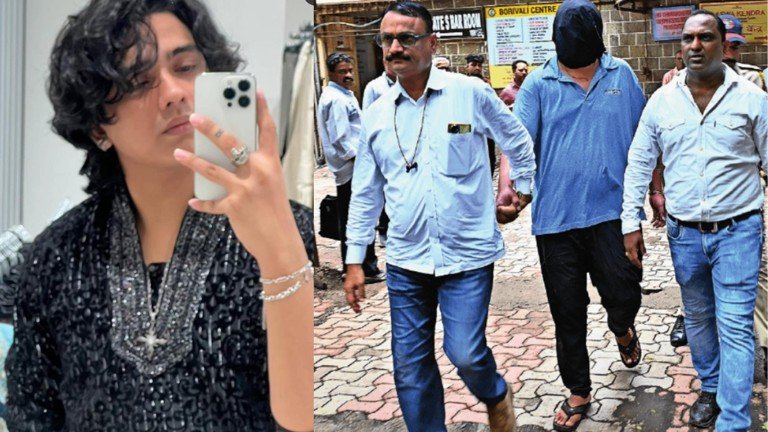
The family of the accused in the Mumbai local train murder case has expressed concern over what they describe as a “social media trial,” alleging that widespread online discussions and unverified claims are adversely affecting their personal lives, employment, and reputation even as the legal process remains underway.
Speaking about the challenges they have faced since the case gained widespread public attention, family members said they have become the subject of online criticism, abusive messages, and social stigma despite the matter still being under investigation and judicial consideration.
They urged people to allow the legal process to take its course and refrain from drawing conclusions before the courts determine the facts of the case.
Family Says Employment and Daily Life Have Been Affected
According to the family, the extensive circulation of information and opinions on social media has had consequences beyond the criminal investigation itself. They claimed that several family members have experienced difficulties at their workplaces, while others have faced social isolation within their neighbourhoods and communities.
The family stated that online commentary has resulted in reputational damage that affects individuals who are not directly involved in the alleged offence.
They also expressed concern that misinformation and speculative content circulating on digital platforms have intensified public reactions.
While acknowledging the seriousness of the criminal allegations, they appealed for fairness and restraint until judicial proceedings are completed.
Case Remains Before the Legal System
The Mumbai local murder case continues to be investigated by law enforcement authorities, with legal proceedings progressing in accordance with established judicial procedures.
Police officials have been collecting evidence, recording witness statements, examining forensic material, and following due legal processes as part of the investigation.
The accused is entitled to legal representation, while the prosecution is responsible for presenting evidence before the competent court.
Authorities have not announced any final judicial outcome, and the matter remains sub judice.
The eventual determination of guilt or innocence will rest with the courts after examining all evidence presented during the trial.
Growing Debate Over ‘Social Media Trials’
The family’s statement has once again brought attention to the broader issue commonly referred to as a “social media trial,” where public opinion regarding criminal cases develops rapidly on digital platforms before judicial proceedings conclude.
Legal experts have frequently observed that while public discussion of important criminal cases is natural, excessive speculation or the circulation of unverified claims may influence public perception and affect those connected to the case.
The increasing influence of social media has transformed how information about criminal investigations spreads, often reaching millions of users within a short period.
This has generated ongoing discussions about balancing freedom of expression with the principles of fairness and due process.
Importance of Presumption of Innocence
India’s criminal justice system operates on the fundamental legal principle that every accused person is presumed innocent until proven guilty in a court of law.
The burden of proving criminal charges lies with the prosecution, while the accused is entitled to defend themselves through the judicial process.
Legal professionals have consistently emphasised that public opinion should not substitute for judicial determination based on admissible evidence.
The family of the accused reiterated this principle, stating that they hope the matter will ultimately be decided solely on the basis of facts examined in court.
They urged the public to distinguish between allegations, investigation, and final judicial findings.
Impact of Digital Platforms
Social media platforms have become important sources of news and public discussion, particularly during high-profile criminal investigations. However, experts note that rapid information sharing can sometimes result in incomplete, inaccurate, or misleading narratives being widely circulated.
Content shared online often includes opinions, speculation, edited videos, and unverified claims that may not reflect the complete facts of an ongoing investigation.
Digital communication has therefore created new challenges for individuals connected to criminal cases, including victims, witnesses, investigators, lawyers, and families of both complainants and accused persons.
The present case has renewed discussion regarding responsible use of digital platforms.
Need for Responsible Public Discourse
Legal commentators have repeatedly encouraged responsible public discussion of ongoing criminal matters. While citizens have the right to express opinions, experts caution against making definitive conclusions before completion of judicial proceedings.
Responsible reporting and informed public discourse help preserve confidence in the legal system while reducing the risk of misinformation.
Authorities have also advised citizens to rely on verified information released through official channels instead of forwarding rumours or unconfirmed claims circulating online.
The family’s appeal similarly emphasised the importance of allowing courts to determine the outcome based on evidence.
Investigation Continues
Law enforcement agencies continue to pursue the investigation in accordance with legal procedures. Officials are examining available evidence and coordinating with forensic experts wherever necessary.
The prosecution and defence will each have the opportunity to present their respective cases before the court during the trial process.
The judiciary will independently evaluate witness testimony, documentary evidence, forensic findings, and legal submissions before delivering any judgment.
Officials have not commented on issues raised by the accused’s family regarding social media discussions, maintaining that the investigation remains focused on evidence.
Balancing Public Interest and Fair Trial
High-profile criminal cases often attract widespread public attention because of their seriousness and broader social implications. However, legal experts note that maintaining the integrity of judicial proceedings requires balancing legitimate public interest with the constitutional right to a fair trial.
The justice system depends upon impartial investigation, objective evaluation of evidence, and independent judicial decision-making rather than public sentiment.
Observers have pointed out that both victims’ families and families of accused individuals can experience significant emotional and social consequences during prolonged criminal proceedings.
Ensuring fairness remains central to the legal process.
Judicial Process Will Determine the Outcome
The concerns expressed by the family of the accused in the Mumbai local murder case regarding an alleged “social media trial” have added another dimension to an already high-profile criminal investigation. While they claim that online discussions have negatively affected their livelihoods, reputation, and personal lives, the criminal proceedings themselves continue through the established judicial system.
As the investigation and subsequent legal process move forward, the final determination of the case will rest with the competent court after examining all relevant evidence and legal arguments. The situation also serves as a reminder of the growing influence of digital platforms in shaping public opinion and the importance of distinguishing between allegations, ongoing investigations, and judicial findings. Ultimately, the principles of due process, presumption of innocence, and fair trial remain fundamental to the administration of justice in every criminal case.