


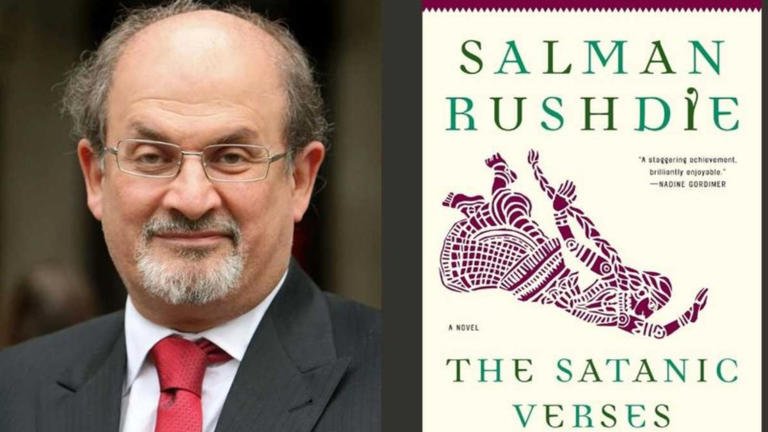
In a fresh wave of controversy surrounding Salman Rushdie’s novel The Satanic Verses, several Muslim organizations in Mumbai have called for the reimposition of the ban on the book after the Delhi High Court lifted import restrictions on it. The 1988 novel, which has long been a flashpoint for debates over free speech, religious sensitivity, and censorship, continues to stir strong reactions in India, especially in its Muslim community.
The Controversy Surrounding ‘The Satanic Verses’
Salman Rushdie’s The Satanic Verses has been a subject of intense criticism since its publication due to its portrayal of Islamic themes and its controversial depiction of Prophet Muhammad. The novel, which blends magical realism with themes of faith, identity, and migration, sparked outrage among Muslims around the world, leading to widespread protests and calls for its ban in various countries, including India.
The Indian government initially banned the book in 1989, citing concerns that it could incite communal tensions and hurt religious sentiments. The ban has remained in place for decades, with The Satanic Verses remaining unavailable for sale or import into the country. However, in a recent ruling, the Delhi High Court lifted the import restrictions, a decision that has reignited the debate over the book’s place in Indian society.
Muslim Groups React: A Call for the Reimposition of the Ban
Following the Delhi HC’s decision, several Muslim groups in Mumbai, including organizations like the All India Muslim Personal Law Board (AIMPLB) and the Maharashtra State Sunni Ulema Board, have raised their voices in protest. They argue that allowing The Satanic Verses back into the country, even in limited forms, is a direct affront to the religious feelings of Muslims and should not be tolerated.
In a joint statement, these groups called on the Indian government to reimpose a ban on the book, stressing that it could lead to communal disharmony and incite violence. They argue that while free speech is a fundamental right, it must be exercised responsibly, especially when it comes to content that can deeply offend religious sentiments. The groups are also urging for mass protests and public demonstrations to express their opposition to the book’s availability in the country.
The call for the reimposition of the ban has resonated with many who view The Satanic Verses as an attack on their faith. Leaders of these Muslim organizations have emphasized that the novel’s depiction of religious themes is offensive and irreverent, causing harm to the Muslim community’s image and values. They have expressed concerns that reintroducing the book into public discourse could stoke religious tensions and disrupt peace in a multi-faith society like India.
Legal and Political Responses
The Delhi High Court’s ruling, which lifted the restrictions on the import of The Satanic Verses, was based on the principle of free speech and the belief that the book should not be censored due to its controversial content. The court argued that the banning of books should not be done lightly and that censorship must meet a high threshold, especially in a democracy that prides itself on the freedom of expression.
However, the decision has sparked significant backlash from conservative groups, especially in states like Maharashtra, where Mumbai is located. Political leaders from different parties, including the Shiv Sena and the Bharatiya Janata Party (BJP), have distanced themselves from the issue, stating that the matter should be left to the judiciary. Still, some politicians have expressed sympathy with the sentiments of those protesting the novel’s reintroduction.
At the same time, human rights activists and free speech advocates have backed the Delhi High Court’s ruling, arguing that censorship should not be used as a tool to suppress controversial ideas or limit intellectual discourse. They contend that literature, even if it challenges religious norms, should be allowed to exist and be critiqued in a free society.
The Role of Religion and Politics in Censorship
The debate over The Satanic Verses reflects a broader tension between freedom of expression and respect for religious sensitivities in India. While the Constitution of India guarantees the right to free speech, it also imposes limitations on speech that can incite violence, hatred, or disturb public order. This delicate balance has often been tested by books, films, and artworks that challenge or critique religious beliefs.
For many in the Muslim community, Rushdie’s novel is seen as a deliberate provocation, with the potential to inflame communal tensions. In a country where religious identities play a significant role in political and social life, the publication of controversial works often carries broader implications beyond the realm of art or literature. As a result, the controversy surrounding The Satanic Verses has become entangled with questions of religious tolerance, political power, and the role of the state in regulating speech.
Public Sentiment and the Future of the Book in India
The lifting of the import ban on The Satanic Verses has not only reopened old wounds but has also created a new wave of activism around the book’s content. While some intellectuals argue that the book should be allowed to be sold and discussed, others believe that its reintroduction could exacerbate religious tensions in an already volatile environment.
It remains to be seen whether the Indian government will take any further action on the issue. While the judiciary has ruled in favor of free expression, the calls from Muslim groups for a reimposition of the ban may put pressure on the government to act. Whether or not The Satanic Verses becomes widely available in India again, the controversy surrounding it is likely to remain a point of contention for years to come.
The lifting of the import ban on Salman Rushdie’s The Satanic Verses by the Delhi High Court has sparked a renewed debate over free speech and religious sensitivity in India. As Muslim groups in Mumbai demand the reimposition of the ban, the controversy highlights the ongoing tension between artistic expression and the protection of religious sentiments. While the issue has legal and political implications, it also raises fundamental questions about the role of literature, the boundaries of free speech, and the responsibility of the state in safeguarding public order. As the debate continues, The Satanic Verses remains a powerful symbol of the complex intersection of culture, politics, and religion in modern India.