

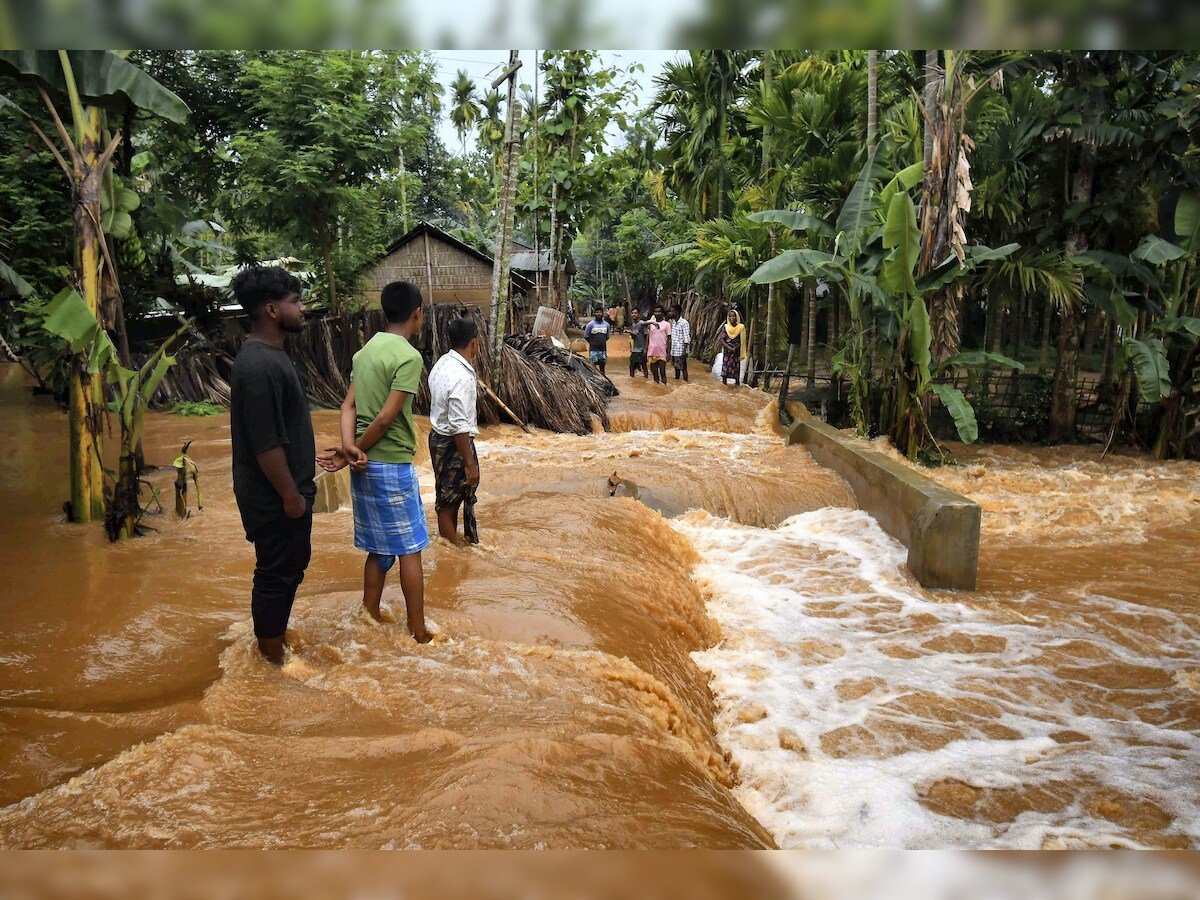
The ongoing monsoon wave has caused severe flooding across multiple districts of Assam, leaving more than 16,000 residents displaced from vulnerable areas in Dhemaji, Lakhimpur, and Dibrugarh. Authorities have reported extensive inundation of residential areas, agricultural land, and public infrastructure as rivers continue to swell following persistent rainfall. Moreover, emergency response agencies have intensified relief and rescue operations to support affected communities. The situation highlights the growing impact of monsoon-related disasters across the northeastern region.
Fixed-Time Artificial Yak Insemination Breakthrough Achieved at Dirang Research Centre
CoTU Ultimatum Demands Open Highways
Widespread Flooding Forces Thousands from Their Homes
Six districts heavily inundated by the current monsoon spell have witnessed significant displacement of residents living in low-lying and riverine areas. Consequently, thousands of families have been relocated to temporary relief camps and safer locations.
The districts of Dhemaji, Lakhimpur, and Dibrugarh remain among the worst affected, with floodwaters submerging villages, roads, and agricultural fields. Moreover, continuous rainfall and rising river levels have complicated rescue and relief efforts. Therefore, authorities have maintained high-alert status across affected regions.
Officials emphasized that protecting lives remains the top priority. Furthermore, local administrations have mobilized emergency teams to assist stranded populations. As a result, evacuation and relief operations continue on an urgent basis.
Meanwhile, authorities are closely monitoring water levels and weather forecasts. Consequently, additional precautionary measures may be implemented if conditions worsen.
Relief and Rescue Operations Intensified
Six districts heavily inundated due to the ongoing monsoon wave have prompted extensive deployment of disaster response personnel and emergency resources. Moreover, rescue teams are working continuously to reach isolated communities. Therefore, coordination among various agencies has been strengthened.
Temporary relief camps have been established to provide shelter, food, drinking water, and medical assistance to displaced families. Consequently, essential services are being prioritized in affected areas. Such interventions are crucial during large-scale flood emergencies.
Furthermore, district authorities are assessing the immediate requirements of vulnerable populations. As a result, relief materials and emergency supplies are being distributed systematically.
Meanwhile, healthcare teams have been deployed to prevent outbreaks of waterborne diseases. Similarly, sanitation and public health measures are being reinforced.
Agriculture and Infrastructure Suffer Major Damage
The extensive flooding has also caused substantial damage to agricultural land and public infrastructure across the affected districts. Moreover, submerged farmlands threaten crop production and rural livelihoods. Therefore, economic impacts are expected to be significant.
Officials stated that roads, bridges, and public utilities have experienced varying levels of disruption due to floodwaters. Consequently, transportation and communication networks have been affected in several areas. Such disruptions present additional challenges for relief operations.
Furthermore, assessment teams have been deployed to evaluate the extent of damage. As a result, authorities will be able to plan rehabilitation and restoration efforts more effectively.
Meanwhile, local administrations continue to monitor critical infrastructure systems. Similarly, emergency repair teams remain on standby.
Authorities Maintain High Alert Amid Continuing Monsoon Threat
Authorities have maintained a high level of preparedness as forecasts indicate the possibility of continued rainfall across parts of Assam. Moreover, changing weather patterns may further aggravate flood conditions. Therefore, continuous monitoring remains essential.
Officials urged residents living in vulnerable areas to remain alert and follow official advisories. Consequently, disaster management agencies continue to disseminate safety information through multiple channels. Such measures help improve community preparedness.
Furthermore, coordination between state agencies and local administrations has been intensified. As a result, emergency response mechanisms remain operational around the clock.
Meanwhile, flood monitoring systems are being updated continuously. Similarly, relief and evacuation plans remain active across affected districts.
Conclusion
The severe flooding affecting six districts of Assam has displaced more than 16,000 residents and highlighted the devastating impact of the ongoing monsoon wave. Moreover, extensive inundation across Dhemaji, Lakhimpur, and Dibrugarh has intensified the need for coordinated relief and disaster response efforts.
The situation underscores the importance of preparedness, rapid response, and sustained support for affected communities. Therefore, authorities continue to prioritize rescue operations, public safety, and rehabilitation measures.
As monsoon conditions persist across the region, disaster management agencies remain focused on minimizing loss of life and supporting flood-affected populations.
FAQs
1. How many people have been displaced by the floods?
More than 16,000 residents have been displaced.
2. Which districts are among the worst affected?
Dhemaji, Lakhimpur, and Dibrugarh are among the most severely affected districts.
3. What caused the flooding?
Persistent monsoon rainfall and rising river levels.
4. What assistance is being provided to affected residents?
Authorities are providing relief camps, food, drinking water, medical support, and rescue services.
5. Are emergency operations still ongoing?
Yes, rescue, relief, and monitoring operations continue across the affected districts.