


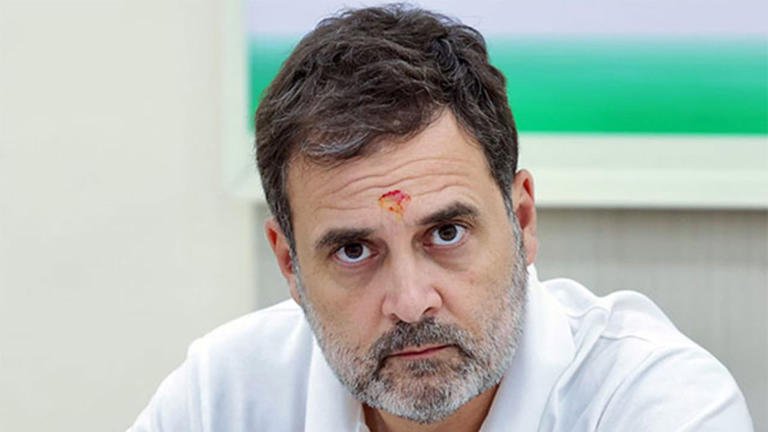
Senior Congress leader Rahul Gandhi has triggered a major political controversy by alleging that the Bharatiya Janata Party “stole” the election results in Assam and West Bengal with the help of the Election Commission. His remarks came amid ongoing political debates following recent electoral outcomes in both states.
Speaking publicly, Gandhi questioned the integrity of the election process. He suggested that the BJP benefited from institutional support, raising concerns about fairness and transparency. The statement has quickly gained attention across the political spectrum, prompting reactions from multiple parties.
Read More: Who Will Be Next West Bengal CM? Key Contenders Revealed
Moreover, his allegations have added to a broader narrative being advanced by sections of the opposition regarding electoral practices. As a result, the issue has become a focal point of political discussion.
Claims target role of Election Commission
In his statement, Rahul Gandhi specifically pointed to the role of the Election Commission of India. He alleged that the institution did not function independently during the elections in Assam and West Bengal.
According to him, the conduct of the polls raised serious questions about neutrality. He argued that the Election Commission’s actions favoured the ruling party, thereby influencing the outcome.
Furthermore, Gandhi called for greater accountability and transparency in the functioning of electoral institutions. He emphasized that public trust in democracy depends on the impartiality of such bodies.
These claims have intensified scrutiny over the role of institutions in the electoral process.
BJP rejects allegations, calls them baseless
The Bharatiya Janata Party strongly rejected Rahul Gandhi’s allegations, describing them as baseless and politically motivated. Party leaders stated that such claims are often made by opposition parties after electoral setbacks.
They argued that the election process in both Assam and West Bengal was conducted in accordance with established rules. According to BJP representatives, the results reflect the will of the people and should be respected.
Additionally, party leaders accused the Congress of attempting to undermine democratic institutions. They stated that repeated allegations without evidence could erode public confidence in the system.
The BJP’s response reflects its effort to defend both its electoral performance and the credibility of the process.
Election Commission reiterates commitment to fairness
In response to the controversy, the Election Commission reiterated its commitment to conducting free and fair elections. Officials emphasized that the institution operates independently and follows strict guidelines to ensure transparency.
They highlighted the multiple safeguards in place during elections, including monitoring by observers and the use of technology. These measures, they said, are designed to prevent irregularities.
Furthermore, the Commission stated that any complaints or concerns would be addressed through proper channels. This clarification aimed to reassure stakeholders about the integrity of the process.
Opposition leaders echo concerns on electoral integrity
Rahul Gandhi’s remarks have found support among several opposition leaders. Many have echoed his concerns about electoral transparency and institutional independence.
Leaders from different parties argued that raising such issues is necessary to strengthen democracy. They called for a thorough review of election procedures to address potential gaps.
At the same time, some opposition figures emphasized the importance of evidence-based claims. They suggested that credible documentation is essential for substantiating allegations.
This mix of support and caution reflects the complexity of the issue.
Debate over politicisation of institutions
The controversy has reignited a broader debate on the politicisation of institutions in India. Critics argue that frequent allegations against bodies like the Election Commission can weaken public trust.
On the other hand, supporters of Gandhi’s statement contend that questioning institutions is part of democratic accountability. They believe that transparency can only be achieved through open discussion.
This debate highlights the delicate balance between criticism and confidence in institutional frameworks. Maintaining this balance is crucial for the health of democracy.
Political implications ahead of future elections
The allegations made by Rahul Gandhi are likely to have significant political implications. As elections approach in various states, such statements could influence campaign narratives.
For the Congress, raising concerns about electoral integrity may become a key strategy. It allows the party to challenge the BJP on issues beyond governance and policy.
Meanwhile, the BJP is expected to continue defending its record and highlighting its electoral successes. The clash of narratives is likely to intensify political competition.
Analysts believe that these developments could shape voter perceptions in the coming months.
Public reaction and ongoing discourse
Public reaction to the controversy has been mixed. While some individuals support Gandhi’s claims, others view them as politically driven. This divergence reflects the broader polarization in Indian politics.
The discussion has also gained traction on social media, where users are actively debating the issue. Such engagement underscores the importance of elections in shaping public discourse.
Experts, however, caution against drawing conclusions without thorough investigation. They stress the need for factual clarity and responsible communication.
Conclusion
Rahul Gandhi’s allegation that the BJP “stole” the elections in Assam and West Bengal with the help of the Election Commission has sparked a major political debate. The claims have drawn strong reactions from the BJP, the Election Commission, and other political leaders.
While the BJP has dismissed the allegations as baseless, the opposition continues to raise concerns about electoral transparency. The controversy highlights the ongoing tensions in India’s political landscape.
As discussions continue, the focus will remain on ensuring the credibility of the electoral process. The outcome of this debate may have lasting implications for political discourse and public trust in democratic institutions.
Read More: Abhishek Banerjee Denied Entry to South Kolkata Counting Centre