

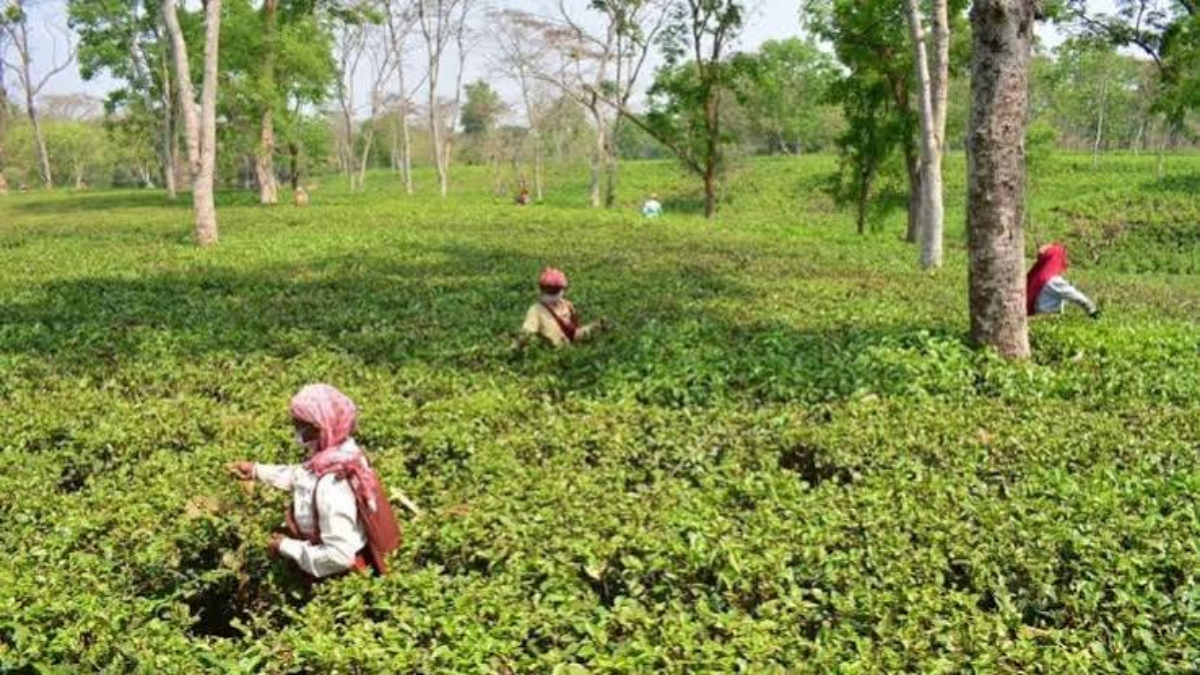
Tripura tea industry has received a fresh boost with the dispatch of 23.31 metric tonnes of high-quality tea from the Durgabari Central Tea Processing Factory in Bamutia to major tea markets in Kolkata and Guwahati. The latest consignment is being seen as an important step in strengthening the state’s tea trade, improving returns for producers and expanding the market reach of Tripura tea.
Of the total consignment, 15.31 metric tonnes was dispatched to Kolkata, while another eight metric tonnes was sent to Guwahati. The shipment was flagged off on September 11 in the presence of Industries and Commerce Secretary Kiran Gitte, Tripura Tea Development Corporation Limited (TTDCL) Chairman Samir Ranjan Ghosh and other officials.
Tripura tea industry targets stronger markets
The latest dispatch comes as the state government and TTDCL work to improve the commercial prospects of the tea sector. Tripura tea has traditionally been marketed through the Kolkata and Guwahati auction centres, making both markets important for growers and producers in the state.
According to TTDCL chairman Samir Ranjan Ghosh, the corporation operates five tea gardens, with three of them collectively producing around nine lakh kilograms of tea annually. He said the sector had previously faced financial pressure because tea was sometimes sold below its production cost.
The situation has improved in recent years. Tea that was earlier sold for around ₹70 to ₹100 per kilogram is now fetching about ₹200 per kilogram, according to Ghosh. Better monitoring of tea gardens, improved production practices and greater attention to quality have contributed to the improvement in prices.
Quality focus supports market expansion
Quality has become a major part of Tripura’s strategy to expand its tea business. The state produces different varieties, including black CTC, green and organic tea. Government data has previously noted that Tripura tea is sold mainly through the Guwahati and Kolkata auctions, while some production reaches other domestic markets and overseas destinations.
The latest shipment also comes amid growing efforts to take Tripura tea into international markets. Reports on the September 11 dispatch said 15.31 metric tonnes was prepared for overseas markets, with the consignment moving through Kolkata. The export-bound tea has been prepared to meet stringent international quality requirements, with officials highlighting compliance with multiple quality parameters.
This development could give Tripura producers greater exposure beyond traditional auction markets and strengthen the identity of the state’s tea as a premium regional product.
Government support for tea workers
The revival of the Tripura tea industry is also being linked to measures aimed at improving the lives of tea workers. TTDCL has highlighted 22 types of facilities provided to workers, along with the distribution of land pattas to tea workers.
The daily wage of tea workers has also been increased to ₹204, according to the corporation. Such measures are significant because the tea sector supports thousands of workers and small growers across the state.
Tripura has a sizeable tea-growing base. Government information has previously identified 54 tea estates and 2,755 small tea growers across the state, with the sector providing livelihoods to tribal and local communities.
Plans for a local tea auction centre
Another major proposal is the establishment of a tea auction system within Tripura. At present, producers depend heavily on auction centres outside the state, particularly Kolkata and Guwahati.
A local auction centre could reduce logistical dependence on outside markets and create additional opportunities for growers, workers, traders and other businesses linked to tea. It could also help strengthen Tripura’s position within the wider Northeast tea economy.
For the Tripura tea industry, the combination of better prices, tighter quality control, worker-focused initiatives and wider market access represents a significant shift from earlier financial challenges.
A new phase for Tripura tea
The dispatch of 23.31 metric tonnes is therefore more than a routine movement of tea from a processing factory. It reflects the state’s broader effort to build stronger markets for its produce and improve the commercial value of the sector.
With Kolkata and Guwahati continuing to provide important auction platforms and international markets opening new possibilities, Tripura is looking to turn improvements in quality and production into sustainable economic gains. The latest consignment could help reinforce that strategy while giving tea growers and workers renewed confidence in the future of the sector.
Sikkim University Campus Delay Sparks Fresh Concern Over PG Vacancies