


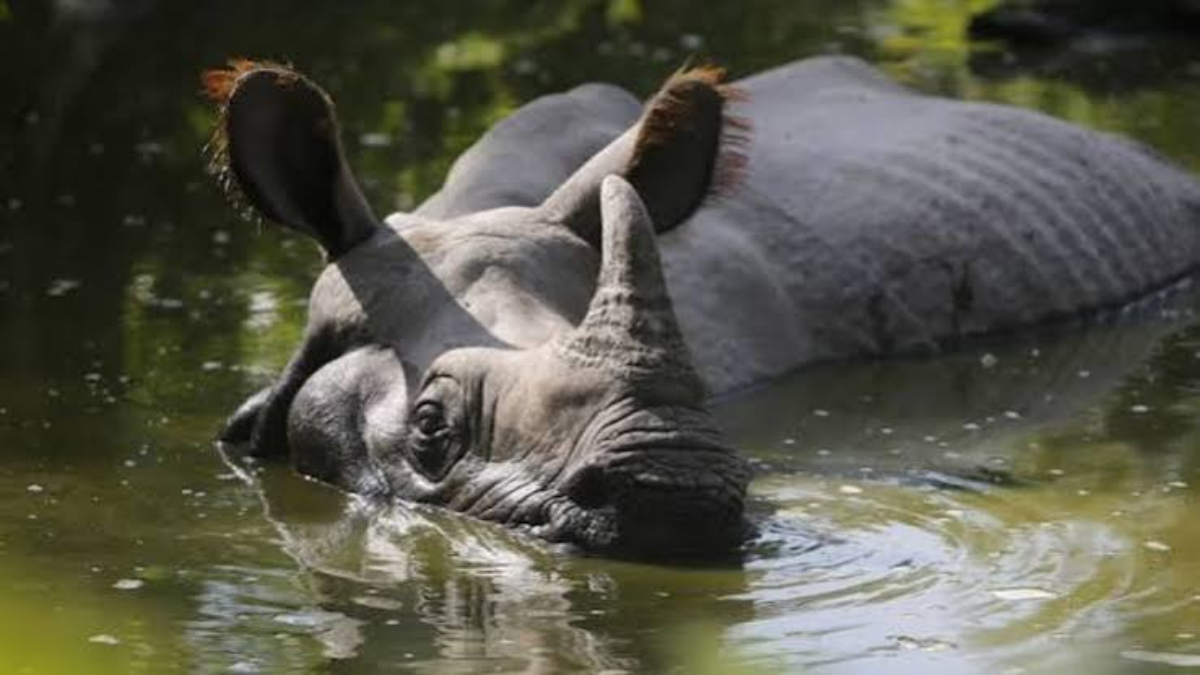
Greater one-horned rhino population has reached an estimated 4,075 globally, marking a major conservation milestone for one of Asia’s most recognisable large mammals. The latest State of the Rhino 2026 report by the International Rhino Foundation shows that the species has increased from 4,014 in 2022. Assam remains at the centre of this recovery, holding about 80 per cent of the world’s greater one-horned rhinos.
Rhino numbers show a strong recovery
The rise is significant because the species was once close to extinction. Its numbers had fallen to fewer than 100 in the early 20th century because of hunting, habitat loss and other human pressures. Strong protection, improved wildlife management and anti-poaching measures have helped reverse that decline.
The greater one-horned rhinoceros, scientifically known as Rhinoceros unicornis, is currently found in India and Nepal. It is classified as Vulnerable on the International Union for Conservation of Nature Red List. Despite the recovery, conservation groups continue to warn that habitat pressure remains a major challenge.
The 2026 assessment places the global population at 4,075, up from 4,014 recorded in the previous major assessment. The increase reflects sustained conservation efforts across the species’ remaining range.
Assam holds about 80% of the global population
Assam has emerged as the most important stronghold for the species. Around 80 per cent of the global population lives in the state, with Kaziranga National Park accounting for the largest share. Recent estimates put the rhino population in Kaziranga at more than 2,600, while Manas National Park supports an estimated 40 to 50 animals.
Other important rhino habitats in Assam include Orang National Park and Pobitora Wildlife Sanctuary. Together, these protected areas have made the state a key centre of rhino conservation in India.
The Assam government has also pursued long-term conservation programmes aimed at expanding and strengthening rhino populations beyond their main strongholds. The Indian Rhino Vision 2020 programme focused on increasing rhino numbers and establishing viable populations in multiple protected areas. Assam’s forest department continues to maintain records and resources related to the programme.
Protection and anti-poaching efforts remain crucial
The recovery in the greater one-horned rhino population has been closely linked to stronger protection and law enforcement. The latest conservation assessments point to continued efforts by India and Nepal to protect rhinos from illegal hunting.
Data from the International Rhino Foundation’s 2025 assessment showed that nine greater one-horned rhinos were killed by poachers in India between 2021 and 2024. Four of those killings occurred in Assam. Arrests were made in all four Assam cases.
The reduction in poaching compared with earlier periods represents an important conservation gain. However, experts stress that maintaining strong surveillance and enforcement will remain essential as rhino numbers grow.
Habitat pressure emerges as the next challenge
Rising numbers also create a new conservation priority: ensuring there is enough suitable habitat for the expanding population.
The greater one-horned rhino depends heavily on grasslands, wetlands and riverine ecosystems. These habitats can be affected by floods, invasive plants, infrastructure development and human activity. As populations recover, conservation planning must therefore focus not only on protecting individual animals but also on maintaining connected and healthy landscapes.
A recent study of reintroduced rhinos in Manas National Park found encouraging signs of breeding and adaptation. The population was re-established through translocation and rehabilitation programmes, demonstrating the potential of carefully planned conservation interventions. Researchers have nevertheless highlighted the need for continued protection and additional introductions to address long-term genetic risks.
India and Nepal share responsibility
India and Nepal together support virtually the entire remaining global population of the species. The latest assessment recorded 3,323 greater one-horned rhinos in India and 752 in Nepal, with the combined figure reaching 4,075.
The steady increase demonstrates what sustained conservation can achieve. At the same time, the limited geographic range of the species means that disease, habitat loss, climate pressures or a renewed rise in poaching could have serious consequences.
For Assam, the record figure is both an achievement and a responsibility. With roughly four-fifths of the world’s rhinos concentrated in the state, protecting Kaziranga and other habitats will remain central to the species’ future.
The new population estimate offers strong evidence that decades of conservation have delivered results. But the next phase will require equal attention to habitat restoration, ecological connectivity, community participation and protection. The continued rise in the greater one-horned rhino population will ultimately depend on ensuring that Assam and other range areas can provide safe, healthy habitats for generations to come.
Sikkim University Campus Delay Sparks Fresh Concern Over PG Vacancies