


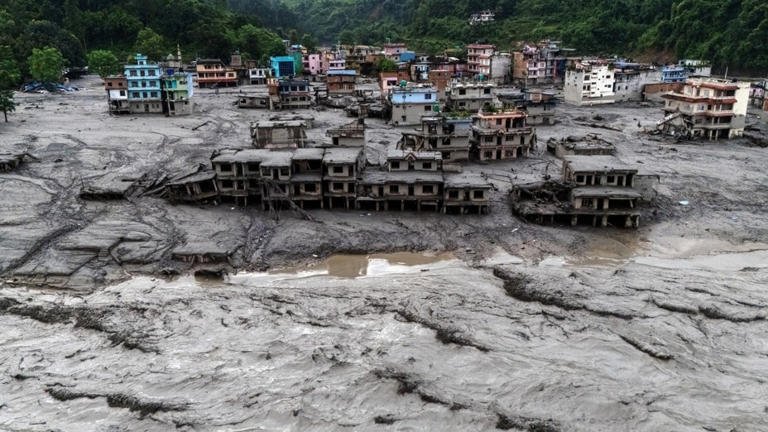
The bodies of five Nepali nationals who were swept away during the devastating flash floods in Nepal and later recovered from the Gandak River in Uttar Pradesh’s Kushinagar district have been handed over to Nepal Police at the Sonauli border.
Officials said the bodies, comprising two women and three men, were recovered from areas along the Gandak River in Kushinagar before being transported to the India-Nepal border. The remains were handed over to Nepal Police on September 1 after the completion of the required procedures.
The Nepal flood victims’ bodies handed over at the Sonauli border highlight the cross-border impact of the devastating floods, which have carried victims downstream from Nepal into India through interconnected river systems.
Five Bodies Recovered From Gandak River in Kushinagar
The five bodies were recovered from the Barwa Patti and Khadda areas of Kushinagar district in Uttar Pradesh.
According to officials, the victims are believed to have been swept away by the powerful floodwaters that struck Nepal before their bodies travelled downstream into Indian territory through the river system.
The Gandak River, known as the Narayani River in Nepal, crosses the international border and flows through several districts in Uttar Pradesh before continuing towards Bihar.
The recovery of bodies in Kushinagar demonstrates the devastating cross-border reach of the recent flooding, with floodwaters carrying debris and victims hundreds of kilometres downstream.
Officials have been continuing search and recovery operations along the riverbanks as concerns remain that more victims could be carried into Indian territory by the swollen waters.
Bodies Handed Over at Sonauli Border
The recovered bodies were brought to Sonauli at around 4 pm and formally handed over to Nepal Police.
Officials said the bodies were handed over to Sub-Inspector Hariram Dangi, the officer in charge of Nepal’s Belahiya police station.
Following the handover, the bodies were transported towards Butwal in Nepal, where the Nepal Police will undertake the process of identification and subsequently facilitate the handover of the victims’ remains to their respective families.
The transfer was carried out as authorities on both sides of the India-Nepal border continued to coordinate in dealing with the aftermath of the devastating floods.
Cross-border coordination has become increasingly important as bodies believed to be flood victims continue to be recovered from the Gandak River in Uttar Pradesh.
Search Operations Continue Along the River
Authorities have continued search and recovery operations along stretches of the Gandak River following the discovery of several bodies in Uttar Pradesh.
Teams from disaster response agencies and local authorities have been monitoring the river and its banks, particularly in areas vulnerable to flooding.
Earlier reports said multiple bodies believed to be victims of the Nepal floods had been recovered in Uttar Pradesh’s Maharajganj and Kushinagar districts.
Seventeen bodies had reportedly been recovered from the Gandak River system in Uttar Pradesh by the end of August, with authorities continuing efforts to trace additional victims and establish their identities.
The five bodies handed over at Sonauli form part of the wider humanitarian and administrative challenge created by the cross-border movement of flood victims through the river.
Identification Process to Continue in Nepal
While the bodies have been handed over to Nepal Police, the identification process is expected to continue in Nepal.
Officials said the remains would be taken to Butwal, where Nepalese authorities would undertake the necessary procedures to establish the identities of the victims and contact their families.
Identification has emerged as a major challenge in the aftermath of the disaster, particularly because many bodies have been recovered days after the floods and may have travelled long distances through powerful river currents.
Authorities have been relying on photographs, documentation and forensic procedures, including DNA sampling in cases where immediate identification is not possible.
The identification process is particularly important for families searching for relatives who remain missing following the disaster.
Flood Alert Remains in Parts of Uttar Pradesh
The handover of the bodies came as continuous rainfall in Nepal and Uttar Pradesh caused water levels to rise in several rivers in Maharajganj and adjoining areas.
Officials said 1,50,200 cusecs of water had been released from the Gandak barrage at Valmikinagar amid continued rainfall.
Authorities have maintained heightened vigilance in vulnerable and low-lying areas, with district officials, irrigation authorities and flood control teams directed to remain alert.
Relief and rescue arrangements have also been kept ready as authorities continue to monitor the situation.
While some rivers remained below their danger levels, officials reported rising water levels in several areas, prompting the administration to strengthen preparedness measures.
Maharajganj Administration Steps Up Vigilance
The Maharajganj district administration has intensified its monitoring of the flood situation following continued rainfall and the release of water from the Gandak barrage.
Additional District Magistrate Prashant Kumar said officials, including sub-divisional magistrates, tehsil authorities, the irrigation department and flood control agencies, had been directed to maintain heightened vigilance.
The administration has also ensured that relief and rescue arrangements are available in vulnerable areas.
Authorities have been monitoring embankments in Maharajganj and adjoining areas near the India-Nepal border to prevent further flooding-related emergencies.
The heightened alert reflects concerns that continued rainfall and rising river levels could affect communities in low-lying areas of Uttar Pradesh.
Earlier Bodies Also Handed Over to Nepal
The latest transfer follows earlier instances in which bodies recovered from the Gandak-Narayani river system in Uttar Pradesh were handed over to Nepalese authorities.
Four unidentified bodies, including three women and a man, recovered in Uttar Pradesh’s Maharajganj district were previously handed over to Nepal after post-mortem examinations and DNA sampling.
Officials said the bodies had been preserved for the required period before legal and administrative formalities were completed.
The collection of DNA samples was intended to help authorities match the remains with families searching for missing relatives.
The continued recovery of bodies in India has made cooperation between Indian and Nepalese authorities essential, particularly for identification, documentation and the eventual handover of remains to families.
Nepal Flood Tragedy Has Cross-Border Impact
The devastating floods in Nepal have had consequences beyond the country’s borders, with the river systems carrying water, debris and victims downstream into India.
The Gandak River’s connection with Nepal’s Narayani river system has made districts along the India-Nepal border particularly important in the ongoing search and recovery effort.
The discovery of victims in Uttar Pradesh has added another dimension to the disaster response, requiring coordination between local administrations, police forces and disaster management agencies from both countries.
Search teams continue to monitor the river, while authorities remain prepared for the possibility of further recoveries as floodwaters move downstream.
Nepal Flood Victims’ Bodies Handed Over Amid Continued Search
The handover of five bodies recovered from the Gandak River marks another sombre development in the aftermath of the devastating Nepal floods.
The victims, including two women and three men, were formally transferred to Nepal Police at the Sonauli border and will now undergo the identification process before their remains are handed over to their families.
The Nepal flood victims’ bodies handed over operation also demonstrates the importance of close coordination between India and Nepal during disasters that affect communities and river systems across international borders.
With authorities continuing search and recovery operations along the Gandak River and maintaining heightened vigilance over rising water levels, the humanitarian consequences of the floods continue to be felt on both sides of the India-Nepal border.