


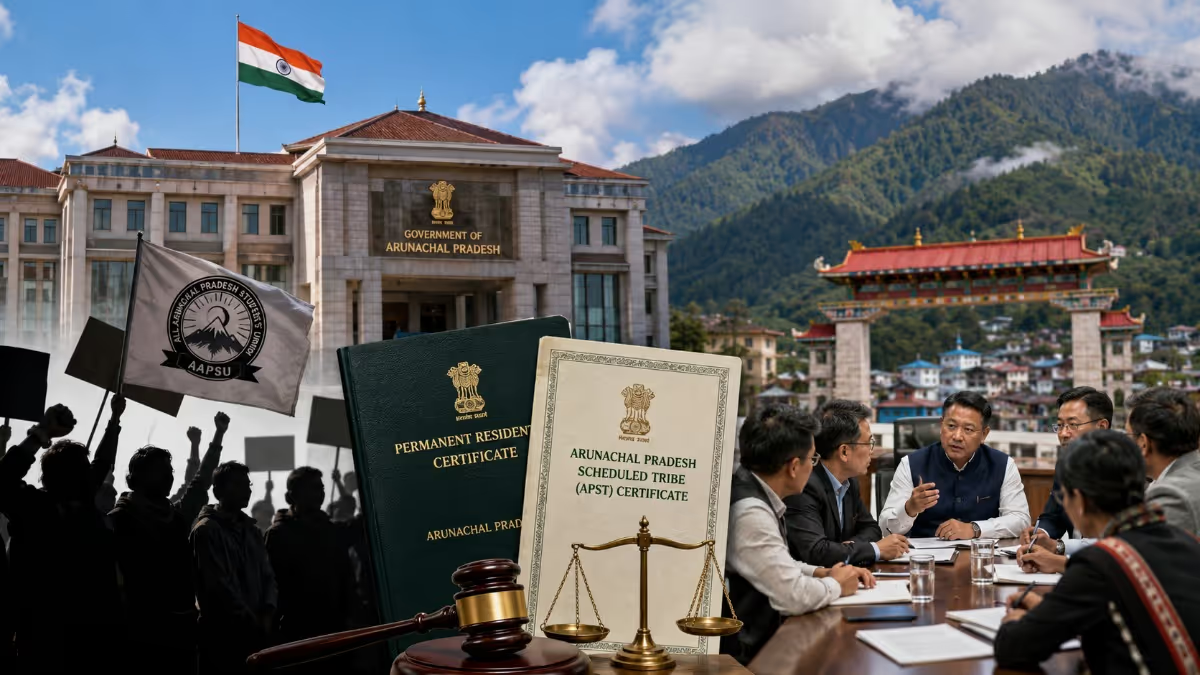
The PRC Recruitment Requirement has become a major topic of discussion after the All Far Tribal Forum (AFTF) demanded that a Permanent Resident Certificate (PRC) be made mandatory for candidates appearing in recruitment examinations conducted by the Arunachal Pradesh Public Service Commission (APPSC) and the Arunachal Pradesh Staff Selection Board (APSSB). Moreover, the forum stated that the proposal is intended to strengthen verification procedures and ensure that recruitment policies align with the state’s eligibility framework. Consequently, the demand has sparked renewed debate over public employment policies, recruitment eligibility, and administrative reforms in Arunachal Pradesh.
Activists Seek ST Only Eligibility for Arunachal Pradesh State Recruitment Exams
PRC Recruitment Requirement Gains Public Attention
The PRC Recruitment Requirement entered public discourse after the AFTF urged the state government to require a Permanent Resident Certificate for APPSC and APSSB recruitment examinations. Furthermore, the organization argued that the eligibility criterion should be reviewed through the appropriate administrative and legal processes.
Recruitment policies directly influence access to government employment. Consequently, proposals concerning eligibility requirements often attract considerable attention from applicants, policymakers, and community organizations.
Moreover, recruitment rules are generally reviewed through established governmental procedures. Therefore, any policy changes would require official examination before implementation.
Additionally, transparent recruitment guidelines help maintain confidence in public appointments. Thus, the issue continues to generate public discussion.
AFTF Calls for Stronger Eligibility Verification
The PRC Recruitment Requirement reflects the AFTF’s demand for enhanced verification measures during state recruitment examinations. Furthermore, the forum maintained that requiring a Permanent Resident Certificate would strengthen the existing eligibility verification process.
Verification mechanisms help recruitment agencies maintain orderly and transparent selection procedures. Consequently, authorities periodically review administrative requirements to improve efficiency.
Moreover, clearly defined eligibility criteria provide greater certainty for applicants. Therefore, transparent documentation requirements remain an important aspect of recruitment management.
Similarly, consistent verification procedures support administrative accountability. Additionally, well-defined policies help reduce procedural ambiguity.
APPSC and APSSB Recruitment Policies Under Discussion
The PRC Recruitment Requirement has brought renewed attention to the recruitment systems administered by APPSC and APSSB. Furthermore, both recruitment bodies operate under rules and regulations established by the state government for public appointments.
Public recruitment policies are typically reviewed to ensure consistency with applicable laws and administrative objectives. Consequently, stakeholder feedback may form part of broader policy discussions.
Moreover, institutional consultation helps policymakers evaluate proposed reforms. Therefore, administrative reviews remain essential before any changes are adopted.
Similarly, transparent governance strengthens public confidence in recruitment processes. Additionally, regular policy assessments contribute to efficient administration.
Consultation and Due Process Remain Essential
The PRC Recruitment Requirement debate highlights the importance of consultation and due process in reviewing recruitment policies. Furthermore, any modification to eligibility rules would generally proceed through established constitutional, legal, and administrative mechanisms.
Constructive dialogue between government authorities and stakeholder organizations supports balanced policymaking. Consequently, evidence-based discussions contribute to informed administrative decisions.
Moreover, adherence to legal procedures promotes transparency and accountability. Therefore, institutional review remains a key element of public policy development.
Similarly, public participation enhances democratic governance. Additionally, careful evaluation helps ensure that recruitment reforms are implemented fairly and consistently.
Conclusion
The PRC Recruitment Requirement has gained prominence after the All Far Tribal Forum called for making a Permanent Resident Certificate mandatory for APPSC and APSSB recruitment examinations. Moreover, the proposal has renewed discussions on eligibility verification, recruitment policy, and administrative reforms in Arunachal Pradesh.
Furthermore, any future consideration of the demand is expected to follow established constitutional, legal, and administrative procedures. Consequently, transparent consultation, institutional review, and effective governance will remain central to the ongoing debate surrounding the PRC Recruitment Requirement.
FAQs
1. What is the PRC Recruitment Requirement?
It refers to the AFTF’s demand to make a Permanent Resident Certificate mandatory for candidates appearing in APPSC and APSSB recruitment examinations.
2. Who raised the demand?
The All Far Tribal Forum (AFTF) proposed the requirement for recruitment conducted by APPSC and APSSB.
3. What is a Permanent Resident Certificate (PRC)?
A PRC is an official document issued by the competent authority that certifies a person’s permanent residency status under applicable state rules.
4. Can recruitment eligibility rules be changed?
Any changes would generally require review through established constitutional, legal, and administrative procedures.
5. Why is the PRC Recruitment Requirement significant?
It has renewed discussions on recruitment eligibility, document verification, public employment policies, and administrative governance in Arunachal Pradesh.