


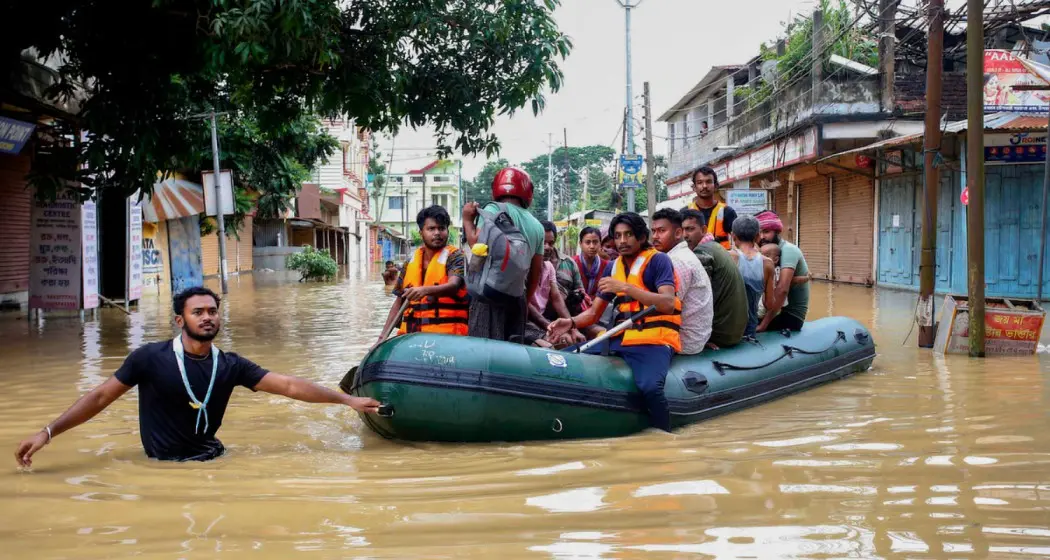
Engineers have deployed heavy water pumps at critical junctions under the Agartala Smart Drainage response to tackle waterlogging in Tripura’s capital. The intervention aims to remove accumulated rainwater from vulnerable locations and reduce disruption caused by intense rainfall and inadequate drainage capacity.
Kuki Inpi Manipur Raises Strong Objection to CM’s Kangpokpi Visit
Agartala Smart Drainage Targets Critical Waterlogging Points
The Agartala Smart Drainage effort has focused on critical junctions where accumulated rainwater creates problems during heavy rainfall. Engineers deployed heavy water pumps to remove water and prevent prolonged street flooding.
Waterlogging can disrupt road traffic, affect pedestrians, and create difficulties for nearby residents and businesses. Moreover, rapid water removal can help authorities restore affected roads more quickly after intense rainfall.
The deployment of heavy pumps represents a direct operational response to water accumulation. However, the available information does not identify the exact junctions where the equipment has been installed or the number and capacity of the pumps.
Therefore, specific details about individual pumping locations require confirmation from the relevant authorities.
The intervention nevertheless highlights the need for active drainage management during periods of intense rain in Agartala.
Agartala Smart Drainage Uses Pumps to Remove Accumulated Water
The Agartala Smart Drainage response relies on heavy water pumps to move accumulated rainwater away from critical areas. Pumping can provide a temporary method of clearing water when natural drainage cannot remove it quickly enough.
Furthermore, strategic deployment allows engineers to concentrate equipment at locations experiencing significant water accumulation. This approach can help reduce the duration of street flooding and improve mobility in affected areas.
However, pumps provide an immediate drainage response rather than necessarily addressing the underlying causes of waterlogging. Drainage capacity, blocked channels, rainfall intensity, and the design of existing infrastructure can all influence how quickly water drains.
Consequently, continued maintenance and infrastructure improvements may remain important alongside emergency pumping operations.
The available information does not indicate whether authorities plan permanent drainage upgrades at the affected junctions.
Agartala Smart Drainage Responds to Heavy Rainfall
The Agartala Smart Drainage measures come as urban areas face pressure from intense rainfall. When rainfall exceeds the capacity of local drainage systems, water can accumulate rapidly on roads and at low-lying junctions.
Moreover, densely developed urban areas often contain extensive paved surfaces that limit natural water absorption. As a result, rainfall can reach drainage networks quickly and create localized waterlogging.
Engineers can use pumps to manage accumulated water at particularly vulnerable locations. Additionally, monitoring critical junctions can help authorities identify where additional equipment may become necessary during periods of heavy rain.
However, the available information does not provide rainfall totals associated with the current pumping operation.
It also does not establish whether the waterlogging resulted from a specific drainage blockage, insufficient capacity, or exceptionally heavy rainfall.
Therefore, those factors should not be assumed without an official technical assessment.
Agartala Smart Drainage Highlights Need for Urban Preparedness
The Agartala Smart Drainage response demonstrates the importance of preparedness in managing urban waterlogging. Heavy pumps can help authorities respond quickly when rainwater accumulates faster than existing drainage systems can handle.
Furthermore, emergency pumping can complement regular drainage maintenance and longer-term infrastructure planning. Authorities can use observations from repeated waterlogging incidents to identify locations that require additional attention.
Effective urban drainage also depends on maintaining channels, improving water flow, and ensuring that infrastructure can handle expected rainfall conditions.
Nevertheless, the available information only confirms the deployment of heavy water pumps at critical junctions. It does not provide details about any permanent drainage reconstruction or modernization project.
Therefore, the current intervention should be viewed as an operational measure aimed at reducing immediate waterlogging.
Conclusion
The Agartala Smart Drainage response has seen engineers deploy heavy water pumps at critical junctions to tackle accumulated rainwater and prevent prolonged street flooding. The measure provides an immediate way to clear water from vulnerable urban locations during periods of intense rainfall.
Moreover, targeted pumping can help reduce disruption for residents, pedestrians, and road users while authorities manage challenging weather conditions. However, pumping alone may not resolve underlying drainage limitations, particularly if certain locations repeatedly experience waterlogging.
Overall, the Agartala Smart Drainage effort highlights the importance of combining rapid flood-response measures with effective urban drainage planning. Further information about the locations, pump capacity, and longer-term infrastructure measures would provide a clearer picture of Agartala’s strategy for managing urban waterlogging.
FAQs
1. What is the Agartala Smart Drainage response?
The Agartala Smart Drainage response involves deploying heavy water pumps at critical junctions to remove accumulated rainwater and reduce street flooding.
2. Why were heavy water pumps deployed?
Engineers deployed the pumps to clear water from locations experiencing significant waterlogging during heavy rainfall.
3. Where were the pumps deployed?
The available information only states that engineers deployed them at critical junctions. It does not identify the individual locations.
4. Can pumps permanently solve urban waterlogging?
Pumps can provide an immediate solution for removing accumulated water. However, long-term waterlogging can also require drainage maintenance, infrastructure improvements, and adequate drainage capacity.
5. Why is drainage management important for Agartala?
Effective drainage management can help reduce water accumulation on roads and at vulnerable junctions, limiting disruption during periods of intense rainfall.