


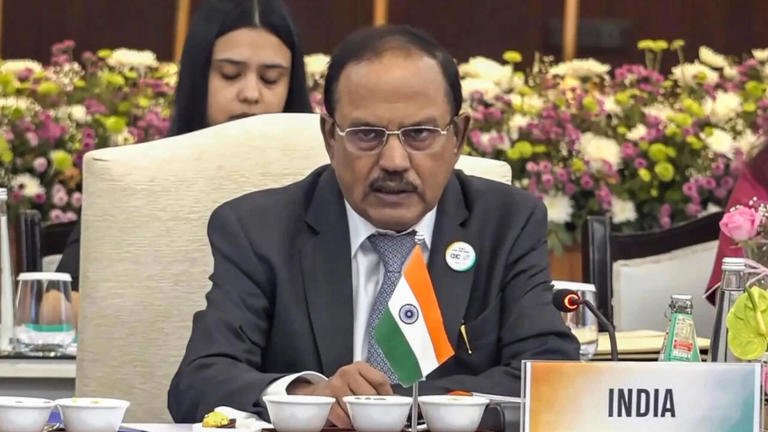
National Security Adviser Ajit Doval is set to visit China today for an important round of India-China border talks. The visit comes ahead of an expected meeting between Prime Minister Narendra Modi and Chinese President Xi Jinping.
Doval will hold discussions with Chinese Foreign Minister Wang Yi under the Special Representatives mechanism. The talks are expected to focus on the boundary dispute, peace along the Line of Actual Control and the broader relationship between the two Asian neighbours.
The visit carries added diplomatic importance because India and China have recently taken steps to stabilise relations after years of military tensions along the border. The outcome of the talks could also help create a favourable atmosphere for a possible Modi-Xi meeting.
Ajit Doval to Hold Border Talks in China
Ajit Doval will represent India during the latest round of Special Representatives talks. Wang Yi will represent China.
The Special Representatives mechanism remains an important channel for discussing the long-standing boundary dispute between the two countries.
India and China established this mechanism in 2003. Since then, the two sides have used it for high-level discussions on the border issue and other matters affecting bilateral relations.
Doval’s visit comes at a crucial time. Both countries are trying to maintain stability after the border tensions that followed the 2020 Galwan Valley clash.
The talks are expected to review the current situation along the Line of Actual Control, also known as the LAC.
Peace Along the LAC Likely to Dominate Agenda
Maintaining peace and stability along the LAC is likely to remain a key focus of the discussions.
India has repeatedly maintained that normal bilateral relations depend on peace and tranquillity in border areas.
The two sides may review the progress made after disengagement arrangements at key friction points. They could also discuss ways to prevent fresh tensions and strengthen existing mechanisms for border management.
Troop deployment and de-escalation may also feature in the discussions.
Both countries have maintained a significant military presence in sensitive areas since the border crisis began in 2020.
A stable border situation remains essential for improving diplomatic relations between New Delhi and Beijing.
Talks Come Ahead of Possible Modi-Xi Meeting
Doval’s China visit comes shortly before a possible meeting between Prime Minister Narendra Modi and President Xi Jinping.
The two leaders could meet on the sidelines of an upcoming international gathering, making the outcome of the border talks especially significant.
A positive discussion between Doval and Wang Yi could help create better conditions for high-level engagement.
India and China have gradually increased diplomatic contact after reaching agreements to manage tensions along the border.
However, the boundary dispute remains unresolved. Both countries continue to hold different views on several aspects of the border.
The upcoming discussions could therefore help both sides understand each other’s positions before any meeting between Modi and Xi.
Special Representatives Mechanism Remains Important
The Special Representatives mechanism allows senior leaders from India and China to discuss the complex boundary issue directly.
The border dispute covers several sectors and remains one of the most difficult issues in the relationship.
The immediate objective of the talks is not necessarily to achieve a final settlement. Instead, the focus is likely to remain on managing differences and preventing another major confrontation.
The mechanism also provides an opportunity to discuss confidence-building measures.
Such measures can improve communication and reduce the possibility of misunderstandings between troops operating near sensitive border areas.
The Doval-Wang Yi meeting could examine whether existing arrangements remain effective and whether both sides need additional measures.
India-China Relations Under Close Watch
The relationship between India and China has remained under close watch since the 2020 military confrontation in eastern Ladakh.
The Galwan Valley clash caused a major setback in bilateral ties. Both countries later held several rounds of military and diplomatic talks.
These discussions helped achieve disengagement at several friction points. However, the larger boundary dispute remains unresolved.
Recent diplomatic engagement has raised hopes of a gradual improvement in relations.
Doval’s visit represents another important step in this process.
The talks could help both sides assess progress and identify areas where further engagement is possible.
Broader Bilateral Issues May Also Be Discussed
Although the border issue will remain central, Doval and Wang Yi may also discuss the wider direction of India-China relations.
The two countries share major economic and regional interests. However, strategic differences and the unresolved boundary dispute continue to affect their relationship.
Progress on border stability could make it easier for both sides to expand engagement in other areas.
The talks may therefore explore steps to improve communication and reduce tensions.
Both India and China have an interest in preventing border disagreements from developing into a larger crisis.
Continued dialogue remains an important tool for managing these differences.
What to Watch From Doval’s China Visit
The outcome of Ajit Doval’s visit will offer important clues about the future direction of India-China relations.
Observers will watch for any new understanding on border management, de-escalation or confidence-building measures.
The talks could also indicate whether both sides are ready to take further steps towards improving relations.
Any positive development may help set the stage for a possible meeting between Prime Minister Narendra Modi and President Xi Jinping.
However, major differences remain, and a final solution to the boundary dispute is unlikely to emerge immediately.
A Crucial Diplomatic Engagement
Ajit Doval’s China visit marks an important moment in India’s ongoing efforts to manage its complex relationship with Beijing.
The discussions will focus on maintaining peace along the LAC and preventing fresh tensions. They may also examine the broader relationship between the two countries.
The timing of the visit, ahead of a possible Modi-Xi meeting, adds greater significance to the talks.
A constructive outcome could help strengthen diplomatic engagement and create a more stable environment for future high-level discussions.
For now, all eyes will remain on Doval’s meeting with Wang Yi and whether the latest round of border talks produces fresh progress in the long and complex India-China relationship.