


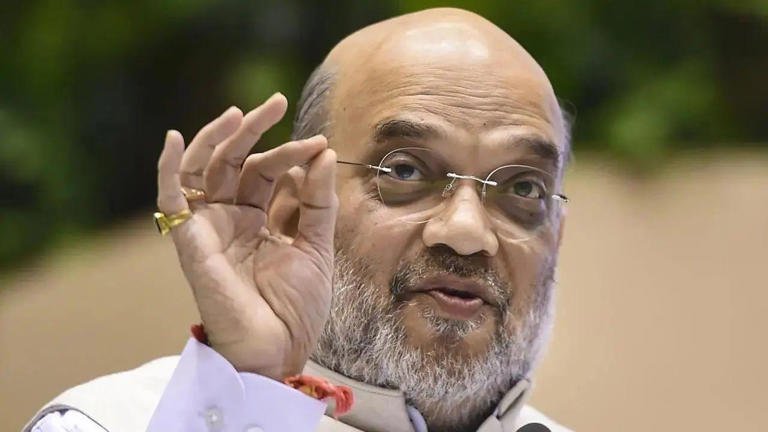
Union Home Minister Amit Shah is set to launch two significant initiatives—the PM Family Care Tracker and Bharat Taxi—during his visit to Gujarat, marking another step in the government’s efforts to strengthen digital governance, public service delivery, and citizen-centric infrastructure. The launch is expected to highlight the increasing role of technology in improving welfare implementation and enhancing transportation services across the country.
The twin initiatives are aimed at improving administrative efficiency while making government services more accessible to citizens. Officials believe the programmes will contribute to better monitoring of welfare delivery, stronger coordination among government agencies, and improved convenience for users of public transport services.
The visit is also expected to include interactions with local officials, public representatives, and stakeholders associated with the implementation of the new initiatives.
PM Family Care Tracker to Strengthen Welfare Delivery
One of the major highlights of Amit Shah’s visit will be the launch of the PM Family Care Tracker, a digital platform designed to improve the monitoring and delivery of government welfare schemes.
Officials stated that the platform seeks to integrate beneficiary-related information in a systematic manner, enabling authorities to ensure that eligible families receive benefits under various government programmes without unnecessary duplication or delays.
The tracker is expected to improve coordination among departments by providing a comprehensive digital framework for monitoring welfare implementation and identifying gaps in service delivery.
Authorities believe that technology-based monitoring systems will strengthen transparency, accountability, and administrative efficiency.
Digital Governance at the Core
The launch of the PM Family Care Tracker aligns with the government’s broader emphasis on digital governance and data-driven public administration. Digital platforms have increasingly become central to the implementation of welfare schemes by improving beneficiary identification, reducing paperwork, and enabling faster delivery of services.
Officials noted that integrated digital systems help streamline administrative processes while allowing policymakers to monitor programme performance more effectively.
The platform is expected to support evidence-based decision-making and improve resource allocation by providing real-time information regarding beneficiary coverage.
Digital governance continues to remain a key component of India’s administrative reforms.
Bharat Taxi Initiative to Enhance Mobility
Alongside the welfare platform, Amit Shah will also launch Bharat Taxi, an initiative aimed at strengthening transportation services through a structured and technology-enabled framework.
Officials indicated that the initiative seeks to improve accessibility, convenience, and efficiency within the taxi service ecosystem while promoting better connectivity for passengers.
The programme is expected to leverage digital technology for service management, enabling improved booking systems, operational transparency, and better user experience.
By encouraging organised mobility services, Bharat Taxi is also expected to support drivers through expanded opportunities while enhancing passenger convenience.
The initiative reflects the growing importance of digital innovation in the transportation sector.
Technology Driving Public Service Reforms
Both initiatives demonstrate the government’s continued focus on using technology to improve governance and service delivery. Digital platforms have become increasingly important for strengthening transparency, reducing administrative delays, and improving citizen engagement.
Officials stated that modern governance requires integrated digital systems capable of connecting various departments while simplifying interactions between citizens and public institutions.
The PM Family Care Tracker and Bharat Taxi represent two different applications of technology aimed at improving welfare administration and transportation services respectively.
Such initiatives contribute to creating a more efficient and responsive governance ecosystem.
Focus on Citizen-Centric Governance
Amit Shah has consistently emphasised the importance of citizen-centric governance, where public services are designed to be accessible, transparent, and efficient. The new initiatives reflect this broader administrative philosophy by placing greater emphasis on convenience and accountability.
The PM Family Care Tracker seeks to ensure that welfare benefits reach intended beneficiaries efficiently, while Bharat Taxi aims to improve the accessibility and reliability of transport services.
Officials believe that simplifying public service delivery strengthens trust between citizens and government institutions.
The initiatives are expected to benefit a wide range of stakeholders through improved digital integration.
Supporting Inclusive Development
The government has increasingly focused on leveraging technology to promote inclusive development by ensuring that welfare programmes reach every eligible household while improving access to essential public services.
Officials observed that digital governance reduces barriers to service delivery and helps create more equitable administrative systems.
The PM Family Care Tracker is expected to support inclusive welfare implementation, while Bharat Taxi may contribute to improved mobility across urban and semi-urban areas.
Together, the initiatives reflect the broader objective of making public services more efficient and widely accessible.
Gujarat Continues as Innovation Hub
The launch of the two initiatives in Gujarat also highlights the state’s continued role as a centre for innovation, digital governance, and administrative reforms. Gujarat has frequently served as a platform for introducing new governance models and technology-driven public service initiatives.
Officials noted that the state’s administrative infrastructure and technological capabilities provide a conducive environment for implementing large-scale digital programmes.
The launch is expected to further strengthen Gujarat’s reputation as an important centre for governance innovation and public administration.
Successful implementation could also provide valuable lessons for expansion to other parts of the country.
Strengthening Administrative Efficiency
Government officials have emphasised that improving administrative efficiency remains one of the primary objectives of ongoing governance reforms. Technology-enabled platforms reduce manual processes, improve record management, enhance coordination, and support faster decision-making.
The PM Family Care Tracker is expected to simplify monitoring of welfare schemes, while Bharat Taxi aims to modernise transportation services through digital integration.
Both initiatives demonstrate how technology can improve operational effectiveness while delivering better outcomes for citizens.
Officials believe that continuous innovation remains essential for strengthening governance in a rapidly evolving digital environment.
Step Towards Smarter Governance
Union Home Minister Amit Shah’s upcoming launch of the PM Family Care Tracker and Bharat Taxi during his Gujarat visit reflects the government’s continued emphasis on digital transformation, efficient governance, and citizen-focused public services. By combining technology with administrative reforms, both initiatives seek to improve welfare delivery, enhance transportation systems, and strengthen overall service accessibility.
The PM Family Care Tracker promises more effective implementation of welfare programmes through improved beneficiary monitoring, while Bharat Taxi aims to modernise mobility services with technology-enabled solutions. Together, these initiatives represent another step in India’s broader journey towards smarter governance, digital innovation, and inclusive development. As technology continues reshaping public administration, such programmes are expected to play an increasingly important role in creating transparent, efficient, and responsive governance systems that better serve citizens across the country.