


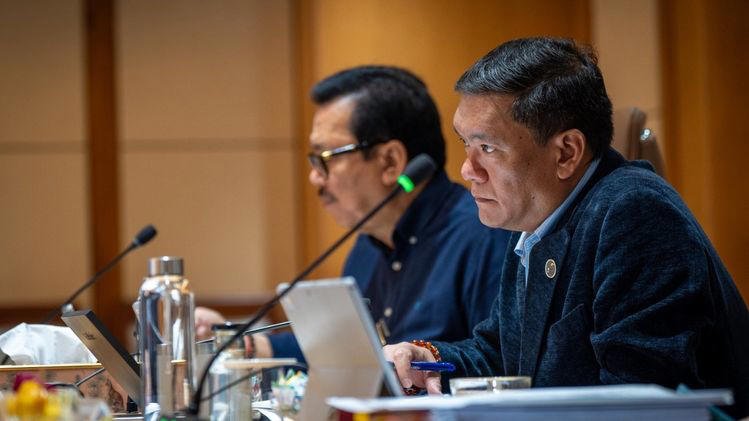
The Arunachal Pradesh Cabinet has approved a Rs 7,834 crore reform package, paving the way for a series of major initiatives aimed at accelerating development in infrastructure, education, and the power sector. The comprehensive package reflects the state government’s long-term vision of strengthening public infrastructure, improving essential services, enhancing educational opportunities, and ensuring reliable electricity supply across Arunachal Pradesh.
The decisions were taken during a Cabinet meeting chaired by Chief Minister Pema Khandu, where several proposals designed to promote inclusive growth and improve governance received approval. Officials said the package is expected to significantly contribute to the state’s socio-economic development while supporting sustainable infrastructure expansion and public welfare.
The reform measures are also aligned with the government’s broader objective of modernising Arunachal Pradesh through strategic investments in key sectors.
Cabinet Approves Rs 7,834 Crore Development Package
The Cabinet’s approval of the Rs 7,834 crore reform package marks one of the state’s most significant development initiatives in recent years.
The investment will be directed towards multiple sectors, including transportation infrastructure, educational development, electricity generation and distribution, and other public welfare initiatives aimed at improving the quality of life for citizens.
Officials stated that the package has been designed to strengthen the state’s development framework while addressing long-standing infrastructure requirements in both urban and rural areas.
The government believes that sustained investments in these sectors will generate long-term economic and social benefits.
Major Push for Infrastructure Development
Infrastructure development forms a central component of the newly approved package.
The government plans to strengthen road networks, bridges, public buildings, and other essential infrastructure required to improve connectivity across Arunachal Pradesh’s challenging mountainous terrain.
Better transportation infrastructure is expected to reduce travel time, improve access to remote regions, facilitate trade, and strengthen administrative services.
Officials noted that improved infrastructure also plays a vital role in promoting tourism, industrial investment, and regional economic growth.
The projects are expected to enhance connectivity between districts while improving public access to essential services.
Focus on Strengthening Education
The Cabinet also approved initiatives aimed at strengthening the education sector across the state.
The reforms focus on improving educational infrastructure, enhancing teaching quality, expanding academic opportunities, and strengthening institutional capacity in government schools and educational institutions.
Officials said investments in education remain essential for developing skilled human resources capable of contributing to the state’s long-term growth.
The government aims to create an education system that equips students with modern knowledge, practical skills, and greater opportunities for higher education and employment.
Improving educational standards continues to be one of the administration’s key priorities.
Expanding the Power Sector
Power sector development is another major pillar of the reform package.
The government plans to strengthen electricity infrastructure by improving generation capacity, upgrading transmission and distribution networks, and expanding access to reliable power in underserved regions.
Officials believe that better electricity infrastructure will support households, educational institutions, healthcare facilities, businesses, and industries while promoting balanced economic development.
Reliable electricity supply is also expected to encourage private investment and industrial expansion throughout the state.
The reforms aim to create a more resilient and efficient power sector capable of meeting future energy demands.
Improving Public Service Delivery
The reform package seeks to enhance the efficiency and effectiveness of public services across multiple sectors.
By strengthening infrastructure and institutional capacity, the government aims to improve access to healthcare, education, transportation, electricity, and other essential services.
Officials said better public service delivery contributes directly to improving living standards while promoting inclusive development across both urban and rural communities.
The government has emphasised transparency, accountability, and efficient implementation as important elements of the reform programme.
Promoting Inclusive Development
A major objective of the Cabinet’s decisions is to ensure that development reaches all sections of society.
Special emphasis has been placed on improving infrastructure and public services in remote and border districts where geographical challenges often limit access to development opportunities.
Officials stated that balanced regional development remains central to the government’s policy framework.
The approved projects are expected to reduce regional disparities while improving economic opportunities and social welfare throughout the state.
Employment and Economic Growth
The implementation of large-scale infrastructure and development projects is expected to generate significant employment opportunities.
Construction activities, infrastructure expansion, educational projects, and power sector initiatives will require engineers, technicians, skilled workers, contractors, and various support services.
Beyond direct employment, improved infrastructure is expected to attract private investment, encourage entrepreneurship, and stimulate business activity across Arunachal Pradesh.
Officials believe the economic multiplier effect of the reform package will contribute to sustained long-term growth.
Strengthening Investment Climate
Improved infrastructure and reliable public services play a crucial role in attracting investment.
The government believes that modern transportation networks, quality educational institutions, and dependable electricity supply will make Arunachal Pradesh increasingly attractive for investors and industries.
Officials said continued investment in foundational infrastructure creates favourable conditions for industrial development, tourism, agriculture, and service sector expansion.
The reform package is expected to strengthen the state’s competitiveness while supporting economic diversification.
Government’s Vision for Sustainable Development
The Cabinet’s decisions reflect Arunachal Pradesh’s long-term vision of sustainable and inclusive development.
Alongside infrastructure expansion, the government continues to focus on environmental conservation, efficient resource utilisation, quality education, and improved governance.
Officials stated that sustainable development requires balanced investments in physical infrastructure as well as human capital, ensuring that economic growth benefits present and future generations.
The approved reforms are intended to support this integrated development approach.
A Significant Step Towards Arunachal’s Future
The approval of the Rs 7,834 crore reform package marks a significant milestone in Arunachal Pradesh’s development journey.
By investing in infrastructure, education, power, and public services, the state government aims to strengthen economic growth, improve governance, and enhance the quality of life for its citizens. The comprehensive package reflects a forward-looking strategy focused on building resilient infrastructure, empowering educational institutions, and ensuring reliable energy access while promoting balanced regional development.
As these initiatives move towards implementation, Arunachal Pradesh is expected to witness improved connectivity, stronger educational outcomes, enhanced electricity infrastructure, and greater economic opportunities, reinforcing the state’s vision of sustainable and inclusive development.