


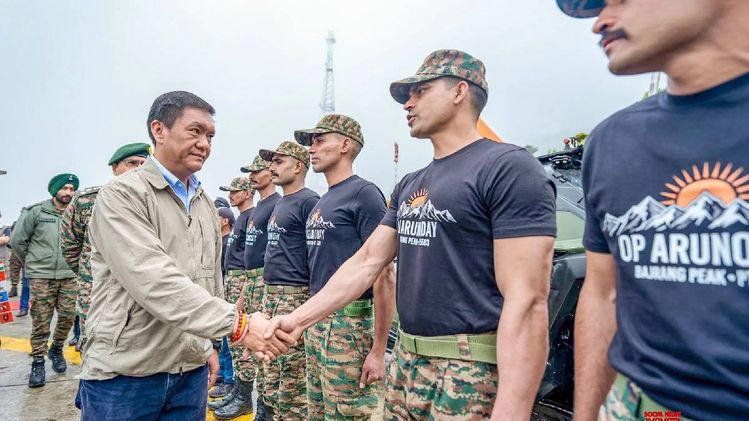
Arunachal Pradesh Chief Minister Pema Khandu has formally flagged off ‘Op Arunoday’, a landmark initiative aimed at promoting border tourism while creating sustainable livelihood opportunities for local communities residing in the state’s remote frontier regions. The programme reflects the state government’s broader vision of transforming border villages into vibrant centres of tourism, culture, and economic activity.
The initiative seeks to unlock the immense tourism potential of Arunachal Pradesh’s picturesque border areas by encouraging responsible travel, improving infrastructure, and empowering local residents through employment and entrepreneurship. With its breathtaking mountains, pristine rivers, unique tribal traditions, and strategic location, the state has long been regarded as one of India’s most promising yet underexplored tourism destinations.
Flagging off the initiative, Khandu said that border villages should no longer be viewed merely as the country’s last settlements but as the nation’s “first villages,” deserving focused development and greater economic opportunities.
Transforming Border Villages into Growth Centres
The Chief Minister emphasized that Op Arunoday is designed to change the perception of border regions from isolated areas into thriving hubs of tourism and local enterprise. He noted that many villages situated near the international border possess exceptional natural beauty, rich cultural heritage, and immense tourism potential that can significantly contribute to the state’s economy.
According to Khandu, encouraging visitors to explore these frontier destinations will not only generate income for local communities but also strengthen the connection between citizens and India’s strategically important border regions.
The programme is expected to encourage the development of homestays, eco-tourism ventures, local handicrafts, traditional cuisine, guided trekking, cultural performances, and adventure tourism, thereby ensuring that economic benefits remain within the local communities.
Tourism as a Tool for Rural Prosperity
Highlighting tourism as one of the strongest drivers of inclusive economic growth, Khandu said the government intends to create sustainable employment opportunities for rural youth through Op Arunoday. Instead of relying solely on government jobs, the initiative encourages entrepreneurship by enabling local residents to establish tourism-related businesses.
The Chief Minister stressed that tourism has the potential to provide year-round income to families through accommodation services, transportation, food outlets, handicraft sales, nature guiding, and cultural tourism.
He observed that when tourism develops responsibly, it creates opportunities across multiple sectors while preserving local traditions and encouraging community participation in development.
The initiative is expected to particularly benefit women entrepreneurs, self-help groups, artisans, and young people seeking employment within their own villages.
Strengthening Infrastructure in Frontier Areas
A key component of Op Arunoday is the improvement of infrastructure required to support tourism in remote locations. The government plans to strengthen road connectivity, develop visitor facilities, improve digital connectivity, establish wayfinding systems, and enhance basic amenities for tourists.
Officials believe that better infrastructure will not only improve the travel experience for visitors but also benefit residents by increasing access to education, healthcare, markets, and essential public services.
The government also intends to coordinate with various departments to ensure that infrastructure development takes place in an environmentally sustainable manner while preserving the ecological balance of the fragile Himalayan region.
Khandu reiterated that infrastructure expansion must complement environmental conservation rather than compromise it.
Preserving Culture While Promoting Tourism
Arunachal Pradesh is home to numerous indigenous tribes, each possessing unique traditions, festivals, languages, handicrafts, music, and cuisine. The Chief Minister said Op Arunoday would place special emphasis on promoting cultural tourism while ensuring that indigenous heritage remains protected.
Visitors will be encouraged to experience authentic local traditions through village tourism, community festivals, folk performances, traditional architecture, and locally produced handicrafts.
Khandu observed that cultural preservation and tourism can coexist successfully when local communities play the leading role in designing tourism experiences. Rather than commercialising traditions, the initiative seeks to showcase the state’s diverse heritage in a respectful and sustainable manner.
He also noted that promoting tribal culture among domestic and international tourists would generate additional income while strengthening cultural pride among younger generations.
Supporting the Centre’s Vision for Vibrant Border Villages
The launch of Op Arunoday aligns with the broader national objective of strengthening development in India’s border regions. The initiative complements the Central Government’s efforts to improve infrastructure, connectivity, and economic opportunities in frontier villages under various development programmes.
Khandu said that prosperous border villages contribute not only to regional development but also to national security by encouraging people to continue living and working in these strategically important areas.
He reiterated that border communities have historically served as guardians of India’s frontiers and deserve focused developmental attention to improve their quality of life.
The Chief Minister added that empowering local populations through tourism and livelihood generation would help reduce migration while strengthening the social and economic fabric of these remote regions.
Encouraging Sustainable and Responsible Tourism
Environmental sustainability remains one of the central pillars of Op Arunoday. The government has emphasized that tourism growth must take place without harming Arunachal Pradesh’s rich biodiversity and fragile ecosystems.
The initiative promotes eco-friendly tourism practices, responsible waste management, conservation of forests and wildlife, and community-led environmental protection. Visitors will also be encouraged to respect local customs, traditions, and ecological guidelines while exploring the state’s natural attractions.
Khandu noted that sustainable tourism is essential for preserving Arunachal Pradesh’s pristine landscapes for future generations while ensuring long-term economic benefits for local communities.
He said the government’s objective is to develop high-quality tourism experiences that balance environmental conservation with economic development.
Local Communities at the Centre of Development
Unlike conventional tourism projects, Op Arunoday places local communities at the heart of planning and implementation. The initiative encourages active participation by village councils, youth organisations, women’s groups, entrepreneurs, and local stakeholders in developing tourism infrastructure and services.
The government believes that community ownership is essential for ensuring the long-term success of tourism initiatives. By allowing residents to directly benefit from tourism-related income, the programme seeks to create a sense of responsibility towards protecting natural and cultural resources.
Training programmes, skill development workshops, hospitality education, and entrepreneurship support are also expected to be introduced to help local residents fully participate in the growing tourism economy.
A Vision for Inclusive Growth
Chief Minister Pema Khandu described Op Arunoday as more than just a tourism campaign, calling it a comprehensive development initiative aimed at creating economic opportunities while preserving Arunachal Pradesh’s identity and strengthening its border communities.
He expressed confidence that with improved infrastructure, stronger community participation, sustainable tourism practices, and effective government support, the initiative would become a model for inclusive development in frontier regions.
As Arunachal Pradesh continues to position itself as one of India’s emerging tourism destinations, Op Arunoday is expected to play a significant role in opening up previously unexplored border areas to responsible tourism. By combining economic development, cultural preservation, environmental sustainability, and community empowerment, the programme reflects the state’s long-term vision of transforming its border villages into prosperous gateways of opportunity while reinforcing their importance in India’s national landscape.