


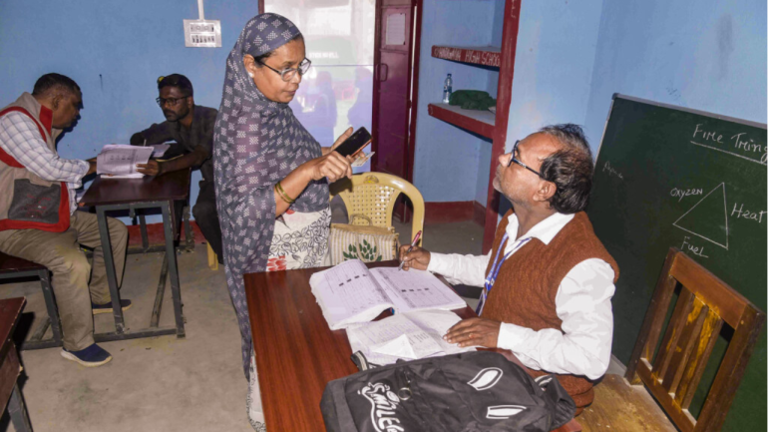
Assam borrows from BJP’s Maharashtra and Bihar playbook by placing women at the center of its 2026 election strategy. Chief Minister Himanta Biswa Sarma has accelerated the rollout of massive direct benefit transfer (DBT) and entrepreneurship schemes, mirroring the successful “Ladli Behna” and “Mahila Rojgar” models. This shift toward “Nari Shakti” is designed to create a loyal, gender-based vote bank that transcends traditional caste and religious lines.
Read More: Upper Assam Church Conference Draws 500, Highlights Youth and Community Prayer
Scaling Up the Orunodoi 3.0 Mega-Scheme
The cornerstone of this strategy is the Orunodoi 3.0 scheme, which the government launched in late 2025. By expanding the beneficiary base to nearly 40 lakh women, the government ensures that at least one woman in almost every low-income household receives ₹1,250 directly in her bank account on the 10th of every month.
As Assam borrows from BJP’s Maharashtra and Bihar playbook, the scale of Orunodoi has become its greatest strength.
- Universal Coverage: The scheme now covers 30% of the state’s total households.
- Financial Independence: It provides a “minimum monthly cash flow” for food, medicine, and sugar.
- Socio-Political Impact: By targeting the female head of the family, the BJP is securing a “silent” but decisive voter who often determines the household’s political leaning.
The Rise of “Lakhpati Baideos”: Entrepreneurship as a Poll Plank
Beyond monthly doles, the state has intensified the Mukhya Mantri Mahila Udyamita Abhiyaan (MMUA). This scheme aims to turn 40 lakh rural women into “Lakhpati Baideos” (Millionaire Sisters) through a tiered financial support system. In January 2026 alone, the government distributed seed capital of ₹10,000 to over 15 lakh women across 35 districts.
Chief Minister Sarma recently noted that this specific model was so effective it was “adopted in Bihar” during their recent elections, turning women into a “key factor in the NDA’s massive mandate.” Following the initial ₹10,000 grant, successful beneficiaries become eligible for a ₹25,000 subsidized loan and a subsequent ₹50,000 installment. This long-term financial hand-holding ensures the voter remains engaged with the government throughout the election cycle.
“Nijut Moina” and Education-Led Empowerment
Recognizing that the youth and their mothers are interlinked, the government also introduced the Nijut Moina scheme. This initiative provides monthly stipends to girl students—₹1,000 for those in Higher Secondary, ₹1,250 for Degree students, and ₹2,500 for Post-Graduates.
| Scheme Name | Target Audience | Primary Benefit |
| Orunodoi 3.0 | Low-income women | ₹1,250 monthly DBT |
| MMUA (Lakhpati Baideo) | SHG members | ₹10k seed capital + ₹75k loans |
| Nijut Moina | Girl students | Up to ₹2,500 monthly stipend |
| Swanirbhar Naari | Weavers/Artisans | Assured buy-back of handloom |
By combining education stipends with household cash transfers, the BJP is building a multi-generational alliance with women. Since Assam borrows from BJP’s Maharashtra and Bihar playbook, these schemes are often framed as “gifts from a brother” (Mama), creating a personal, emotional connection between the leadership and the female electorate.
Countering the Opposition in Strongholds
The political undertones of these schemes are most visible in opposition strongholds. During recent distribution events in Dhubri and Barpeta—areas where the BJP has traditionally struggled—the Chief Minister emphasized that welfare has “no religion or politics.”
Political observers suggest that this “welfare-driven inclusivity” is a tactical move to neutralize the Congress and AIUDF’s traditional support bases. If a woman in an opposition-held constituency receives tangible financial benefits every month, her loyalty may shift toward the provider of that relief, regardless of her family’s historical political ties.
Conclusion
The 2026 polls in Assam will serve as a ultimate test of “Labharthi” (beneficiary) politics. Since Assam borrows from BJP’s Maharashtra and Bihar playbook, the government has successfully shifted the narrative from identity-based conflict to economic empowerment. With 40 lakh women targeted as direct beneficiaries, the BJP is betting that “Nari-preneurs” will be the engine that drives them back to power for a third consecutive term.
Read More: Tripura CM Orders Strict Action After Attack on BJP Workers