


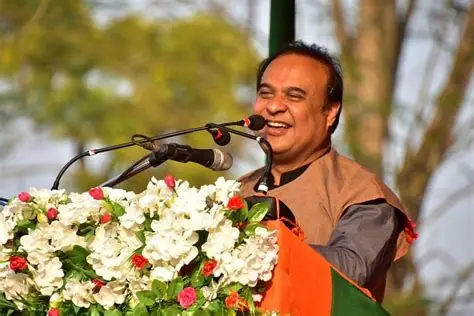
Assam Chief Minister Himanta Biswa Sarma has assured that the long-standing issue of doubtful voters, commonly called D-Voters, is now nearing resolution. Speaking at an official event, he declared that anyone who came before 1971 is 100 per cent Indian, bringing relief to thousands of families who have faced years of uncertainty. The statement reflects both legal clarity and the state government’s intent to close one of Assam’s most sensitive chapters linked to identity and citizenship.
Read More: Assam Bamboo Conclave 2025 Highlights Green Economy and Jobs
Assam CM on D-Voter Cases: A Landmark Assurance
While addressing the gathering, the Assam CM on D-Voter cases stated that most of the disputes are already settled. He added that remaining cases are also moving toward final closure through the proper legal process. According to him, confusion over who qualifies as an Indian citizen has been unnecessarily prolonged, but the government now has a clear direction.
The Chief Minister’s words carried a strong reassurance: individuals who entered Assam before the cut-off date of March 24, 1971, have nothing to fear. This date, drawn from the Assam Accord of 1985, has long served as the legal benchmark for determining citizenship in the state.
What the Resolution Means for Citizens
The declaration that anyone before 1971 is Indian holds deep importance for families labeled as doubtful voters. Being marked a D-Voter meant suspension of voting rights and the burden of proving citizenship before Foreigners Tribunals. Many families struggled with documentation, court appearances, and social stigma.
By clarifying that pre-1971 entrants are unquestionably Indian, the government has eased anxieties. This move also underlines Assam’s commitment to closing the chapter of arbitrary doubt and ensuring dignity for residents who have lived in the state for decades.
At the same time, the Chief Minister noted that cases filed under suspicion will still be resolved through due process. However, with legal precedent and government support aligned, most affected individuals are expected to receive relief.
Linking the Issue to Assam Accord
The Assam CM on D-Voter cases reiterated that the resolution aligns with the Assam Accord. Signed in 1985, the accord set March 24, 1971, as the deadline for detecting and deporting illegal immigrants. It was meant to balance the concerns of indigenous communities with humanitarian considerations following the Bangladesh Liberation War.
For decades, the cut-off date has been a reference point in political debates and court proceedings. Yet, thousands of people continued to face doubt over their citizenship status. With the CM’s statement, the government has reinforced its commitment to uphold the accord while closing unnecessary disputes.
Broader Impact on Assam’s Society
The near resolution of the D-Voter issue is likely to impact Assam’s social fabric positively. Communities divided by suspicion may now find a chance for reconciliation. Many residents, especially in border districts, have lived under constant anxiety that their identity could be challenged.
With this declaration, the government is attempting to restore trust. Analysts suggest that a stable and inclusive approach to citizenship is vital for Assam’s long-term peace and development. It also reduces the administrative burden of endless citizenship disputes, freeing resources for governance and social welfare.
Political and Administrative Significance
The Assam CM on D-Voter cases emphasized that the state government is working in sync with the Election Commission and judiciary. Coordination ensures that resolved cases do not return to uncertainty. The CM also credited the administration for fast-tracking pending matters and ensuring that legal procedures respect the rights of affected citizens.
Politically, this assurance comes at a crucial time. With national debates on citizenship laws continuing, Assam’s position is under the spotlight. By aligning its stance with both the Assam Accord and constitutional values, the state government has attempted to strike a balance between regional concerns and humanitarian needs.
Looking Ahead: Ending Decades of Doubt
While announcing that D-Voter cases are almost resolved, the Chief Minister also spoke about the future. He stressed that Assam must now focus on development, infrastructure, and social progress, leaving behind decades of disputes.
Observers noted that the assurance could also reduce the influence of divisive narratives in Assam’s politics. By declaring clarity on the issue, the government has opened space for debates on growth, employment, and governance rather than prolonged disputes over identity.
The statement by Himanta Biswa Sarma has brought a turning point in Assam’s citizenship debate. By affirming that anyone who came before 1971 is 100 per cent Indian, the government has extended relief to thousands who lived under doubt for years.
The near-complete resolution of D-Voter cases shows that Assam is ready to close a sensitive chapter in its history. It also reaffirms the Assam Accord as the guiding principle in balancing historical concerns with legal clarity.
As the issue moves toward final closure, the people of Assam can expect a renewed focus on unity, development, and peace. The Assam CM on D-Voter cases has given a message of inclusion, one that could shape Assam’s political and social landscape for years to come.
Read More: Pradyot Deb Barma Supports BPF, Calls for Regional Unity in BTR