


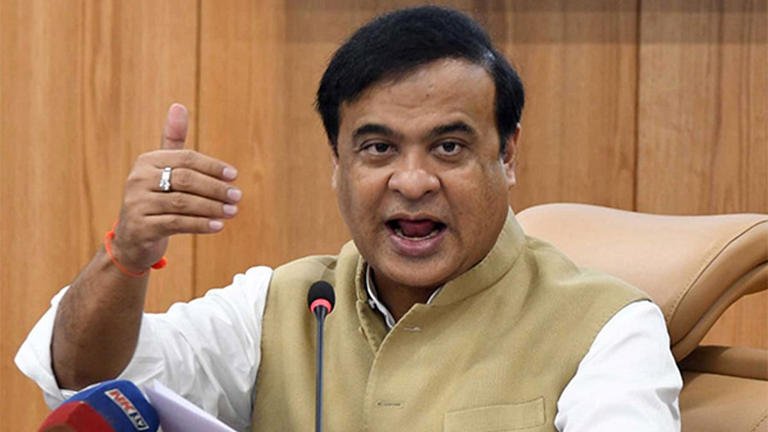
Assam demographic change has once again come into sharp focus after Chief Minister Himanta Biswa Sarma warned of what he described as a potential “demographic takeover” in the state. Speaking at a public forum, Sarma claimed that the population of Bangladesh-origin Muslims in Assam could reach nearly 40 per cent by 2027 if current trends continue. According to him, the issue poses serious social, political, and administrative challenges.
The chief minister stressed that his remarks were based on official data trends and demographic projections. Therefore, he urged for urgent policy interventions to protect Assam’s social balance and indigenous identity.
Read More: India and Nepal Bolster Healthcare Ties: Focus on Medicine Supply and Capacity Building
Assam Demographic Change and CM’s Concerns
The Assam demographic change debate has been ongoing for decades, often linked to migration, population growth patterns, and land use concerns. According to Sarma, demographic shifts have already altered the population structure in several districts. Consequently, he argued that unchecked growth could further strain resources and governance.
He stated that the projected figures should not be viewed through a communal lens. Instead, he framed the issue as one of administrative responsibility and long-term planning. Moreover, Sarma said that failure to acknowledge demographic realities could lead to deeper social tensions.
The chief minister reiterated that the government’s focus remains on data-driven decision-making rather than rhetoric.
Claims on Bangladesh-Origin Population Growth
During his remarks, Sarma claimed that Bangladesh-origin Muslim population growth remains significantly higher than the state average. As a result, he warned that Assam could face a demographic imbalance within the next few years.
According to him, population concentration in certain regions has already influenced electoral dynamics, land ownership patterns, and local economies. Therefore, he argued that ignoring such trends could undermine inclusive development.
However, he also clarified that the government does not oppose any community. Instead, he emphasised that all residents must follow constitutional norms and legal frameworks governing citizenship and land rights.
Policy Measures and Government Response
Addressing the Assam demographic change challenge, Sarma highlighted several policy steps taken by the state government. These include eviction drives on government land, stricter enforcement of land laws, and increased monitoring of population data.
Additionally, the chief minister said the government is focusing on empowering indigenous communities through welfare schemes, education, and economic support. Consequently, such measures aim to ensure that demographic shifts do not marginalise historically rooted populations.
He also pointed out that population stabilisation remains a key concern. Therefore, awareness initiatives and targeted welfare interventions are being promoted in high-growth areas.
Political and Social Reactions
The chief minister’s statement triggered mixed reactions across political and social groups. Supporters argued that addressing Assam demographic change is necessary to preserve cultural identity and administrative balance. Meanwhile, critics accused the government of politicising population data and creating social anxiety.
Opposition leaders called for transparent data sharing and broader consultation before drawing conclusions. At the same time, civil society groups urged restraint in public discourse to prevent polarisation.
In response, Sarma maintained that open discussion based on facts is essential. According to him, avoiding difficult conversations only delays solutions.
Migration, Identity, and Governance Challenges
Assam demographic change cannot be separated from historical migration patterns and identity movements in the state. Issues related to citizenship, border management, and land rights have shaped Assam’s politics for decades.
Experts note that demographic shifts influence governance by affecting resource allocation, employment, and public services. Therefore, long-term planning becomes crucial to ensure stability and social harmony.
The chief minister stressed that strong governance and clear legal frameworks remain the only way forward. Moreover, he said that policies must balance humanitarian concerns with constitutional obligations.
Call for Data-Based Dialogue
Sarma concluded by calling for informed and data-based dialogue on Assam demographic change. He said that the government remains open to scrutiny and debate, provided discussions are grounded in facts.
Furthermore, he emphasised that protecting Assam’s identity does not conflict with democratic values. Instead, he argued that responsible governance requires anticipating future challenges and acting early.
Way Forward for Assam
Looking ahead, the Assam government plans to continue monitoring demographic trends closely. Officials said policy adjustments may follow based on updated census and administrative data.
Ultimately, the issue of Assam demographic change remains complex and sensitive. As the debate continues, the challenge lies in addressing population trends while preserving social cohesion, constitutional values, and long-term stability in the state.
Read More: Ramakrishna Mission to Open Language Centre in Tripura