


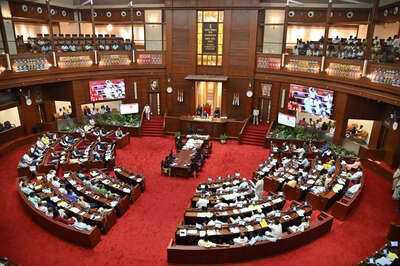
Assam Finance Minister Ajanta Neog has defended the state government’s borrowing strategy following criticism from opposition parties, asserting that the loans are being utilised responsibly to finance development projects, strengthen infrastructure, and support long-term economic growth.
Responding to the opposition’s concerns over the state’s debt levels, the Finance Minister said borrowing is a normal fiscal instrument used by governments to fund capital expenditure and accelerate development. She maintained that the state’s financial management remains disciplined and that borrowings are undertaken within the limits prescribed under fiscal responsibility norms.
The minister stressed that the government’s objective is to invest borrowed funds in productive sectors that generate long-term economic and social benefits for the people of Assam.
Government Says Borrowing Supports Development Projects
Defending the state’s fiscal approach, Ajanta Neog stated that borrowings are primarily being directed towards infrastructure development and public welfare initiatives rather than routine expenditure.
She said investments in roads, bridges, healthcare facilities, educational institutions, irrigation projects, drinking water supply, and other public infrastructure are essential for improving the state’s growth prospects. According to the minister, such capital investments create long-term assets that contribute to economic expansion and improved public services.
She emphasised that responsible borrowing allows governments to accelerate development without placing undue pressure on existing financial resources.
The minister maintained that every borrowing decision is taken after careful financial planning and evaluation.
Fiscal Discipline Remains a Priority
The Finance Minister rejected suggestions that the state’s finances are under stress, stating that Assam continues to adhere to established fiscal responsibility guidelines.
She explained that the government closely monitors debt levels, repayment obligations, revenue generation, and expenditure patterns to ensure long-term financial sustainability.
According to the minister, prudent fiscal management requires balancing developmental needs with financial stability. She asserted that the government remains committed to maintaining responsible debt management while continuing investments in priority sectors.
Officials also noted that borrowing is a common practice among both central and state governments to finance infrastructure and development projects.
Opposition Questions Debt Levels
The Finance Minister’s remarks came in response to criticism from opposition parties, which have questioned the state’s borrowing pattern and expressed concerns regarding the overall debt burden.
Opposition leaders have argued that rising borrowings could affect the state’s financial position in the future and have sought greater transparency regarding debt utilisation and repayment strategies.
Responding to these concerns, Ajanta Neog maintained that the government’s borrowings are being utilised transparently and in accordance with financial regulations. She reiterated that investments funded through loans are expected to generate long-term economic returns and strengthen public infrastructure.
The minister stated that the government’s financial decisions are guided by developmental priorities rather than short-term considerations.
Infrastructure Investment Key to Economic Growth
The Finance Minister highlighted infrastructure development as one of the principal reasons for the state’s borrowing strategy.
She said improved roads, bridges, transport networks, healthcare institutions, educational facilities, power infrastructure, and irrigation systems create the foundation for sustained economic growth and private investment.
According to the government, such projects improve connectivity, support industries, enhance agricultural productivity, and generate employment opportunities across the state.
The minister observed that infrastructure investments often require significant financial resources, making planned borrowing an important component of development financing.
She emphasised that these investments are intended to benefit future generations by strengthening Assam’s economic capacity.
Focus on Productive Capital Expenditure
Ajanta Neog stated that the government is prioritising productive capital expenditure over non-productive spending.
Capital expenditure involves creating long-term public assets that continue delivering economic and social benefits over many years. The Finance Minister said this approach strengthens the state’s development trajectory while improving the quality of public services.
She explained that investments in infrastructure, healthcare, education, water supply, and rural development contribute to increased productivity and improved living standards.
The government believes that well-planned capital expenditure also attracts private investment by improving the state’s business environment.
Government Reaffirms Commitment to Financial Transparency
The Finance Minister assured that the government remains committed to transparency and accountability in financial management.
She stated that borrowing decisions, budget allocations, and expenditure are undertaken in accordance with statutory procedures and are subject to legislative scrutiny and financial oversight mechanisms.
Officials said regular monitoring of projects ensures that borrowed funds are utilised efficiently while maintaining financial discipline throughout implementation.
The minister reiterated that the government’s objective is to maximise the developmental impact of every rupee invested through prudent fiscal planning.
Long-Term Vision for Assam’s Development
Concluding her remarks, Ajanta Neog said the state’s borrowing strategy is aligned with Assam’s long-term development vision, which focuses on improving infrastructure, expanding public services, promoting economic growth, and creating employment opportunities.
She argued that responsible borrowing, when directed towards productive investments, serves as an important tool for accelerating development while strengthening the state’s economic foundations.
The Finance Minister emphasised that the government will continue balancing fiscal responsibility with developmental priorities to ensure sustainable growth.
As political debate over the state’s finances continues, the government has maintained that its borrowing strategy is based on prudent financial planning and aimed at building long-term public assets. By defending the state’s fiscal approach, Ajanta Neog reiterated that investments in infrastructure and development remain central to Assam’s economic agenda, with responsible debt management and financial discipline continuing to guide the government’s decision-making process.