


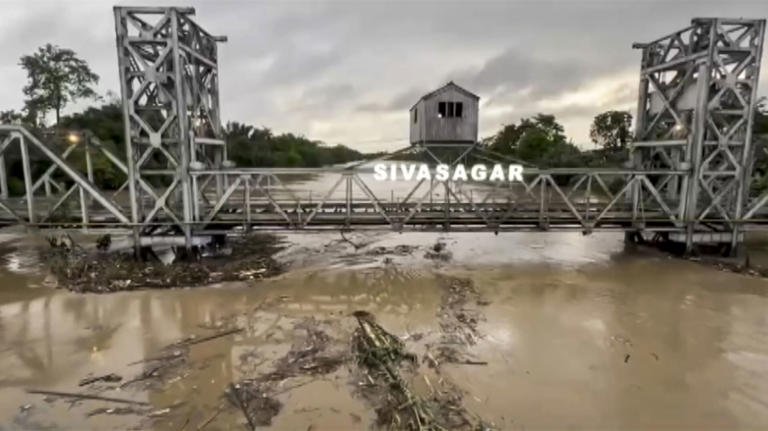
The flood situation in Assam has deteriorated significantly, with five more people losing their lives and the number of affected residents rising to 3.63 lakh across 15 districts. Continuous heavy rainfall has caused rivers to overflow, inundating thousands of villages, damaging agricultural land, and disrupting road and rail connectivity. As the crisis deepens, the Indian Army has joined state agencies in rescue and relief operations to assist stranded residents.
According to the Assam State Disaster Management Authority (ASDMA), the latest fatalities have pushed the death toll from this year’s floods to 10. The state government has intensified rescue efforts while monitoring the situation closely as major rivers continue to flow above the danger mark in several locations.
Five More Lives Lost in Fresh Flooding
The latest spell of heavy rainfall has claimed five additional lives, highlighting the severity of the ongoing flood crisis.
Flood-related incidents, including drowning and strong river currents, have contributed to the rising death toll. Authorities have expressed concern that continued rainfall may further aggravate the situation, particularly in low-lying and riverine areas that remain vulnerable to fresh inundation.
Officials have extended condolences to the families of the victims and assured all possible assistance through relief and rehabilitation measures.
Over 3.63 Lakh People Affected
The floods have affected nearly 3.63 lakh people spread across 15 districts of Assam, disrupting normal life on a massive scale.
Thousands of families have been forced to leave their homes as floodwaters entered villages and residential areas. Relief camps and distribution centres have been established to provide temporary shelter, food, drinking water, medicines, and other essential supplies to displaced residents.
Authorities continue to receive updated reports from affected districts as the extent of damage is assessed.
Army Joins Rescue Operations
With the flood situation worsening, the Indian Army has joined state disaster response agencies in carrying out rescue and evacuation operations.
Army personnel, along with teams from the National Disaster Response Force (NDRF), State Disaster Response Force (SDRF), police, and district administration, are assisting stranded residents in flood-hit areas.
Boats and specialised rescue equipment have been deployed to reach villages cut off by rising water levels, while relief materials are being transported to remote locations.
Rivers Continue to Flow Above Danger Mark
Continuous rainfall across Assam and neighbouring states has caused several major rivers to remain in spate.
The rising water levels have led to fresh flooding in multiple districts, while embankments and low-lying areas remain under pressure. Authorities are closely monitoring river conditions and issuing regular advisories to residents living in vulnerable areas.
Officials have urged people to avoid travelling through flooded roads and to immediately move to safer locations if instructed by local authorities.
Rail Services and Transport Disrupted
The floods have severely affected transportation across several parts of the state.
Rail services on certain routes have been disrupted due to waterlogging and damage to railway infrastructure, while several roads have become impassable because of flooding and landslides. Transportation difficulties have slowed the movement of people and relief materials in some areas.
Authorities are working to restore connectivity wherever conditions permit, although continuous rainfall remains a challenge.
Agriculture Suffers Heavy Damage
Floodwaters have submerged thousands of hectares of agricultural land, causing significant losses to farmers.
Standing crops, especially paddy fields and other seasonal crops, have been damaged, raising concerns about agricultural productivity and rural livelihoods. Several tea gardens in Upper Assam have also been inundated, affecting one of the state’s key economic sectors.
Officials are conducting damage assessments to determine the extent of crop losses and prepare rehabilitation measures for affected farmers.
Relief Camps and Emergency Assistance
The Assam government has established numerous relief camps to accommodate displaced families.
These camps are providing food, clean drinking water, sanitation facilities, healthcare services, and temporary accommodation. Medical teams have also been deployed to monitor public health and prevent outbreaks of waterborne diseases.
Special attention is being given to children, elderly citizens, pregnant women, and individuals with medical conditions who may require additional assistance during their stay in relief camps.
Government Closely Monitoring the Situation
The Assam government continues to monitor the flood situation through the State Disaster Management Authority and district administrations.
Emergency control rooms remain operational, and officials are coordinating rescue, relief, and rehabilitation efforts across affected districts. Authorities have also appealed to residents to follow official advisories and rely on verified information regarding weather forecasts and flood warnings.
The government has reiterated its commitment to ensuring the safety of residents and providing timely assistance to all affected communities.
Rescue and Relief Efforts Continue
As Assam faces another severe phase of the monsoon floods, rescue agencies, government departments, and volunteers continue working to minimise the impact of the disaster. With 3.63 lakh people affected, five additional deaths reported, and extensive damage to homes, agriculture, and infrastructure, the priority remains saving lives and providing relief to affected communities.
The combined efforts of the Army, disaster response forces, and local administration are expected to play a crucial role in supporting flood-hit residents as authorities work towards restoring normalcy across the state.