


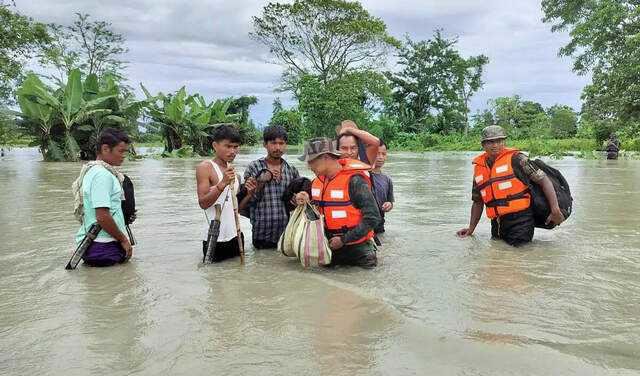
The Assam government has issued a high alert across several districts following forecasts of heavy rainfall and the growing threat of floods in vulnerable areas. Authorities have directed district administrations, disaster management agencies, and emergency response teams to remain on heightened vigilance as weather conditions continue to deteriorate in parts of the state.
The alert comes amid concerns over rising river levels, waterlogging, and the possibility of flash floods triggered by persistent rainfall. Officials have urged residents in flood-prone areas to stay informed about weather updates and follow advisories issued by local authorities.
The state administration has also activated emergency protocols to ensure a swift response if the situation worsens. The move reflects Assam’s proactive approach to minimizing the impact of floods and protecting lives and property during the monsoon season.
Heavy Rainfall Raises Concerns Across Districts
Several districts have experienced continuous rainfall over recent days, prompting authorities to closely monitor weather developments. Meteorological forecasts indicate the possibility of additional heavy showers, raising concerns about flooding, landslides, and transportation disruptions.
Officials stated that prolonged rainfall can quickly increase pressure on rivers, drainage systems, and embankments. Consequently, even moderate increases in precipitation may lead to localized flooding in vulnerable regions.
The government has instructed district officials to assess local conditions regularly and maintain communication with disaster management agencies. Furthermore, authorities are monitoring areas that have historically experienced flooding during the monsoon season.
Experts note that early preparedness plays a critical role in reducing risks and improving emergency response capabilities.
Rising River Levels Under Close Watch
River monitoring has become a key focus of the government’s flood preparedness strategy. Several rivers in Assam often witness significant increases in water levels during periods of intense rainfall.
Officials have deployed teams to track river conditions and assess potential risks to nearby communities. Additionally, authorities are reviewing water flow patterns and evaluating vulnerable stretches where flooding could occur.
The state administration has emphasized the importance of continuous monitoring because rapid changes in river levels can leave communities with limited time to respond. Therefore, timely warnings and coordinated action remain essential.
Local authorities have also begun sharing updates with residents in areas located near major rivers and flood-prone zones.
Disaster Management Teams on High Alert
The Assam State Disaster Management Authority and other emergency response agencies have intensified their preparedness efforts. Rescue teams, emergency personnel, and local administrations remain on standby to respond quickly if flood conditions emerge.
Officials have reviewed emergency response plans and strengthened coordination among departments responsible for disaster management, public works, health services, and law enforcement.
Furthermore, authorities have identified locations where relief camps may be established if evacuations become necessary. Essential supplies such as food, drinking water, medicines, and emergency equipment are also being positioned in strategic locations.
The government aims to ensure that emergency assistance reaches affected communities without delay.
Focus on Vulnerable and Low-Lying Areas
Low-lying areas and flood-prone districts remain a major concern as rainfall continues. These regions often experience water accumulation and drainage challenges during periods of intense precipitation.
District administrations have increased surveillance in vulnerable locations and are working with local communities to improve preparedness. Officials have also inspected embankments, drainage systems, and critical infrastructure to identify potential weaknesses.
Moreover, authorities are encouraging residents to remain alert and report any signs of flooding or structural damage. Community participation is considered an important component of effective disaster management.
The government believes that early intervention can significantly reduce the impact of flooding on local populations.
Transportation and Infrastructure Concerns
Heavy rainfall often affects transportation networks across Assam, particularly in rural and low-lying regions. Roads, bridges, and railway infrastructure can face disruptions due to flooding, waterlogging, or landslides.
Officials have instructed relevant departments to monitor transportation corridors and undertake preventive measures wherever necessary. Maintenance teams remain prepared to respond to infrastructure-related emergencies.
Additionally, authorities are coordinating with transport agencies to ensure that essential services continue to operate during adverse weather conditions. Travelers have been advised to exercise caution and stay updated on road and weather conditions.
The government aims to minimize disruptions while ensuring public safety throughout the monsoon period.
Measures to Protect Public Safety
Protecting lives remains the government’s top priority during the ongoing weather threat. Authorities have launched awareness campaigns and issued advisories to help residents prepare for possible flooding.
Citizens have been urged to avoid unnecessary travel during periods of intense rainfall and to follow official instructions in case of evacuation orders. Furthermore, local administrations are sharing information through multiple communication channels to ensure broad public outreach.
Officials have also emphasized the importance of keeping emergency supplies readily available and maintaining contact with local authorities.
Preparedness at the household and community levels can play a crucial role in reducing risks during natural disasters.
Agriculture Sector Faces Potential Challenges
The agriculture sector remains particularly vulnerable to flood-related disruptions. Excessive rainfall can damage crops, affect soil conditions, and disrupt farming activities across several districts.
Officials are monitoring agricultural areas closely and assessing potential risks to standing crops. The government has indicated that support mechanisms will be activated if farmers face significant losses due to flooding.
Furthermore, agricultural departments are advising farmers on precautionary measures that may help reduce damage during periods of heavy rainfall.
Agriculture plays a vital role in Assam’s economy, making flood preparedness especially important for rural communities and livelihoods.
Importance of Early Preparedness
The current high alert underscores the importance of preparedness in managing natural disasters. Assam has experienced major floods in the past, prompting authorities to place greater emphasis on early warning systems and proactive planning.
Over the years, the state has strengthened disaster response mechanisms through improved coordination, technology-driven monitoring, and enhanced community engagement. These efforts aim to reduce response times and improve overall resilience.
Officials believe that preparedness can significantly limit the impact of floods and help communities recover more quickly. Therefore, continuous monitoring and timely action remain essential components of the state’s disaster management strategy.
The government continues to review developments and adjust response measures as weather conditions evolve.
Looking Ahead
The Assam government’s decision to issue a high alert reflects growing concerns over heavy rainfall and potential flooding across several districts. With river levels under close observation and weather forecasts predicting further rain, authorities are taking precautionary steps to safeguard communities and critical infrastructure.
Disaster management agencies, district administrations, and emergency responders remain on standby to address any situation that may arise. Meanwhile, residents have been urged to remain vigilant and cooperate with local authorities.
As the monsoon season progresses, preparedness and coordination will remain crucial in minimizing risks and protecting lives. Through early action, effective monitoring, and community participation, Assam hopes to reduce the impact of potential floods and ensure the safety and well-being of its residents during this challenging period.