


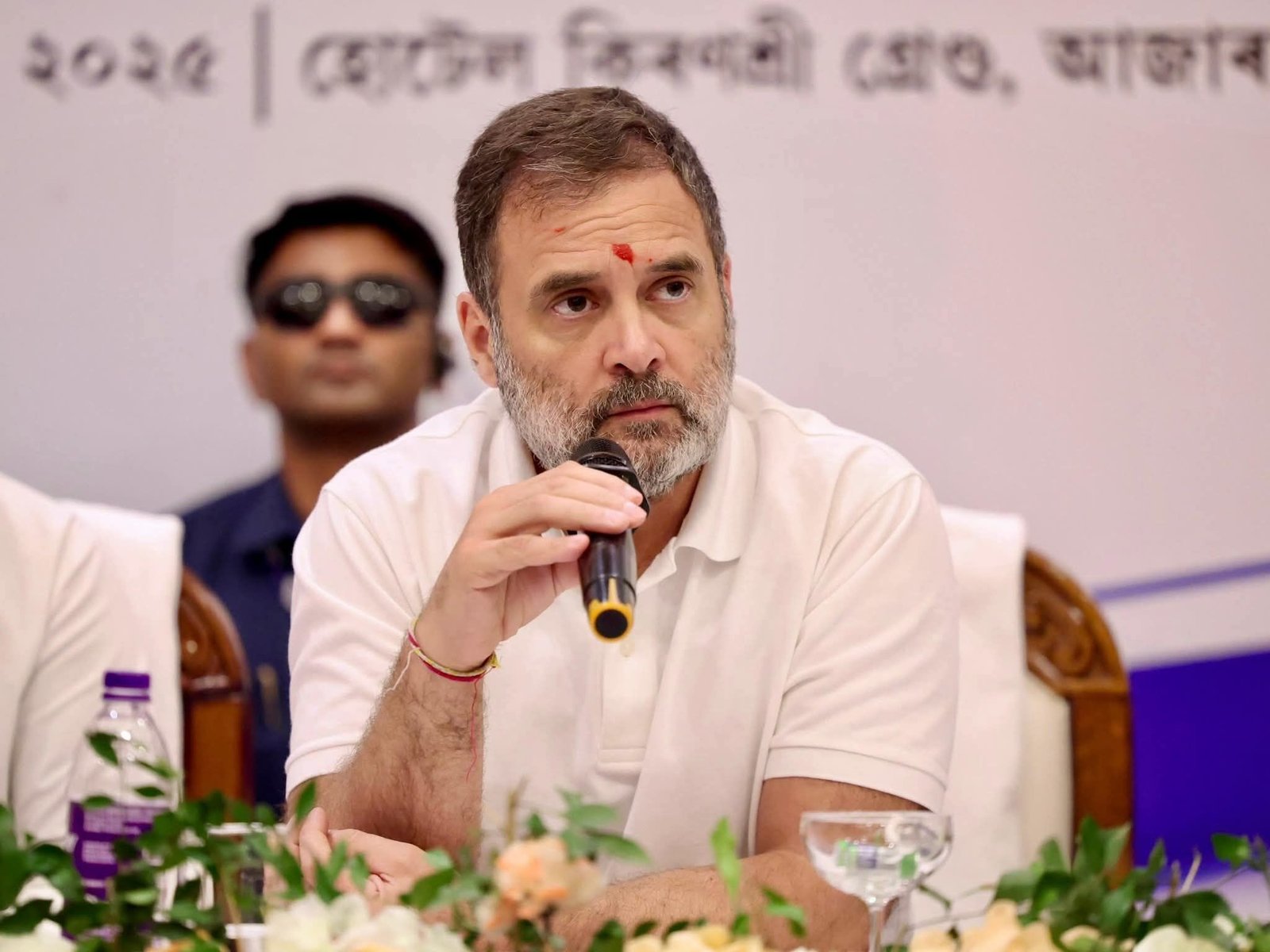
Assam Latest News covers AJP Presses Rahul Gandhi, urging him to address Assam Accord and foreigner expulsion concerns.
Assam Latest News: AJP Presses Rahul Gandhi on Assam Accord and Foreigner Expulsion Issues
In a development that has put one of Assam’s most sensitive and long-standing political issues back into the spotlight, Assam Latest News reports that a delegation from the Assam Jatiya Parishad (AJP) met Congress leader Rahul Gandhi to press for concrete action on the Assam Accord and the contentious question of foreigner detection and expulsion.
The meeting, held during Gandhi’s visit to Assam, is being seen as a strategic attempt by AJP to ensure that the concerns of the Assamese people remain part of the national political conversation — especially ahead of upcoming elections.
The Assam Accord AJP Presses Rahul Gandhi- A Promise Unfulfilled?
Signed in 1985 between the Government of India and leaders of the Assam Movement, the Assam Accord was intended to address the issue of illegal immigration into Assam, a concern that had fueled years of protest and unrest.
Key provisions included:
- Detecting and deporting foreigners who entered Assam after March 25, 1971.
- Updating the National Register of Citizens (NRC).
- Providing constitutional, legislative, and administrative safeguards to protect Assamese cultural and political identity.
While some measures have been partially implemented, many in Assam believe the core promises remain unfulfilled.
AJP Presses Rahul Gandhi – Demands in the Meeting
The AJP delegation, led by party president Lurinjyoti Gogoi, placed several demands before Rahul Gandhi:
- Clear Policy Commitment – A firm stance from Congress on implementing the Assam Accord in its original spirit.
- Efficient NRC Process – Ensuring the NRC is accurate, free of errors, and immune to political manipulation.
- Action Against Illegal Immigration – Strengthening border management and legal processes for deportation.
- Cultural Safeguards – Legal protection for Assamese language, land rights, and indigenous communities.
According to AJP spokespersons, the meeting was “direct but cordial,” with Gandhi listening intently to each concern.
Rahul Gandhi’s Response
While Gandhi stopped short of making outright promises, sources present at the meeting said he assured the delegation that their concerns would be taken seriously. He reportedly stated that the Assam Accord was “a commitment, not a suggestion,” and that his party would work towards its full implementation if voted to power.
Gandhi also emphasized the importance of balancing national security with human rights, noting that any process of foreigner detection must be transparent, fair, and non-discriminatory.
Why This Meeting Matters Now
The political timing of this meeting is crucial. Assam’s voter base has long been divided over how to handle the foreigner issue, with some demanding strict enforcement and others cautioning against human rights violations.
By directly engaging with Rahul Gandhi, AJP has ensured that the matter cannot be ignored in the national political narrative. This could influence party manifestos and campaign strategies in the months ahead.
Reactions from Political Circles
The meeting has drawn mixed reactions:
- Supporters of AJP hailed the move as a proactive step to keep Assamese issues on the national agenda.
- Critics, especially from rival parties, dismissed it as political theater, arguing that Congress had decades to act on the Assam Accord but failed to deliver.
- Neutral observers noted that while such meetings generate headlines, real change depends on consistent political will.
Public Sentiment on the Assam Accord
On the streets and in tea stalls across Assam, the Assam Accord remains a deeply emotional subject. For many, it is a matter of identity and survival.
- Farmers worry about losing land to encroachment by alleged illegal immigrants.
- Students demand protection of Assamese language and culture.
- Urban residents express frustration over what they see as unchecked demographic changes.
The inclusion of these concerns in Assam Latest News stories keeps public attention on the issue – but also heightens political pressure.
Challenges to Implementation
Even if political will exists, implementing the Assam Accord faces several hurdles:
- Legal Complications – Deportation requires proof of nationality and cooperation from neighboring countries.
- Administrative Burden – Updating and verifying NRC data is resource-intensive.
- Humanitarian Concerns – Risk of wrongful exclusion or statelessness for genuine citizens.
- Political Polarization – Different parties interpret the Accord’s provisions in conflicting ways.
Experts suggest that any solution will require a combination of legal reforms, technological tools for border management, and community engagement to avoid unrest.
The Role of Civil Society
Civil society organizations in Assam have played a critical role in keeping the Assam Accord relevant. From student unions to cultural groups, these organizations regularly organize awareness programs, debates, and public campaigns.
Many of them see the AJP’s meeting with Rahul Gandhi as a step towards bringing their decades-long advocacy into the national spotlight.
Looking Ahead – Will There Be Action?
The real test will be whether this meeting translates into policy action. AJP leaders have already announced plans to follow up with Congress and other national parties, seeking written commitments.
If successful, this could set a precedent for how regional parties in Assam engage with national leaders — moving from protest to negotiation, and from negotiation to action.
Implications for Assam’s Political Landscape
The foreigner issue has historically swayed elections in Assam. A party perceived as strong on implementing the Assam Accord could gain significant political ground.
Conversely, failure to act could fuel further regionalism, with parties like AJP gaining more influence at the cost of national parties.
Read More: Assam Latest News: Nagaon Honors Culture with Roopkonwar Chowk Renaming