


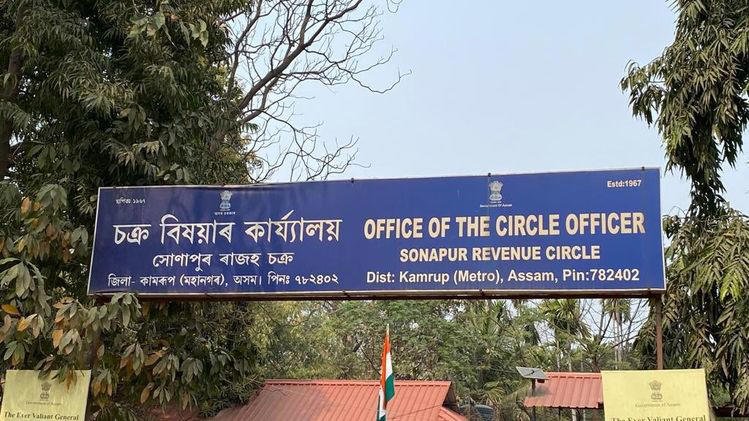
The Assam government has announced a major administrative reform aimed at strengthening revenue administration and improving the delivery of public services across the state. Chief Minister Himanta Biswa Sarma informed the Assam Legislative Assembly that the government will establish 14 new Circle Officer (CO) offices to decentralise governance and make essential services more accessible to people living in different regions of Assam.
The decision is expected to reduce the administrative burden on existing revenue circles while ensuring faster delivery of land-related services, revenue administration, and other government functions. According to the Chief Minister, the move forms part of the state’s broader efforts to modernise governance and bring public administration closer to citizens.
The announcement was made during the ongoing session of the Assam Legislative Assembly, where the government highlighted its commitment to improving administrative efficiency through institutional reforms rather than temporary measures. The new Circle Officer offices are expected to enhance coordination between district administrations and local residents while simplifying access to various government services.
Strengthening Revenue Administration Across Assam
Revenue administration plays a vital role in the functioning of the state government. Circle Officer offices handle a wide range of responsibilities, including land records, land mutation, revenue collection, issuance of certificates, disaster management coordination, and implementation of several government schemes.
Over the years, the growing population and increasing demand for public services have placed considerable pressure on existing Circle Officer offices. In many districts, residents often have to travel long distances to access basic revenue services, resulting in delays and inconvenience.
To address these challenges, the Assam government has decided to create 14 additional Circle Officer offices across different parts of the state. Chief Minister Himanta Biswa Sarma said the expansion will decentralise administrative responsibilities and improve the overall efficiency of the revenue department.
New Offices to Improve Public Service Delivery
According to the Chief Minister, one of the primary objectives behind setting up the new Circle Officer offices is to ensure that government services become more citizen-friendly and accessible.
With smaller administrative jurisdictions, officials will be able to process applications more efficiently, respond to public grievances more quickly, and provide faster services related to land documentation and revenue matters.
The move is expected to benefit thousands of people who currently depend on overcrowded Circle Officer offices for essential services. Reduced workload at existing offices is also likely to improve administrative efficiency and shorten waiting periods for citizens seeking government approvals or certificates.
Officials believe that decentralised governance will enable local administrations to understand regional requirements better and respond more effectively to the needs of individual communities.
Revenue Circles to Be Realigned
Along with creating the new Circle Officer offices, the Assam government also plans to realign revenue circles to ensure better administrative coordination.
Chief Minister Sarma stated that the government intends to remove situations where villages belonging to one Assembly constituency fall under a different revenue circle. Such mismatches often create administrative complications during the implementation of government schemes and public service delivery.
To achieve this objective, the government has instructed District Commissioners to review existing revenue circle boundaries and submit revised proposals within a specified timeframe. The exercise is expected to improve coordination between elected representatives, local administration, and residents.
Officials say the realignment will create a more logical administrative structure while ensuring smoother governance across districts.
Locations Identified for New Circle Officer Offices
The new Circle Officer offices will be established in strategically selected locations across Assam to improve regional administrative coverage.
According to the government’s announcement, the proposed locations include Madhya Guwahati, Paka Betbari, Chenga, Srijangram, Birshing Jarua, Khowang, Jaleswar, Naobaicha, and several other areas where administrative demand has increased significantly over the years. These locations have been identified after assessing population growth, geographical accessibility, and workload on existing revenue offices.
The establishment of these offices is expected to reduce travel time for citizens and make government services available much closer to their homes.
Benefits for Citizens
The creation of additional Circle Officer offices is expected to bring several direct benefits to the people of Assam.
Residents will likely experience quicker processing of land mutation applications, issuance of land records, income certificates, caste certificates, domicile certificates, and other important government documents.
Faster administrative processing can also help reduce pending cases related to land disputes and revenue matters. Improved accessibility is particularly important for rural residents, many of whom currently travel considerable distances to visit Circle Officer offices.
Besides revenue administration, the new offices are also expected to strengthen disaster response mechanisms. Since Circle Officers play a crucial role during floods and other natural disasters, better administrative coverage can improve coordination during emergencies and ensure quicker relief distribution.
Overall, the initiative aims to make governance more efficient, transparent, and responsive to public needs.
Part of Assam’s Administrative Reforms
The announcement reflects the Assam government’s broader strategy of strengthening governance through administrative reforms and institutional expansion.
Over the past few years, the state has undertaken several initiatives to improve digital governance, simplify public service delivery, modernise government offices, and enhance coordination between departments.
The establishment of new Circle Officer offices aligns with these efforts by expanding administrative infrastructure and reducing pressure on existing institutions.
Chief Minister Himanta Biswa Sarma has repeatedly emphasised that efficient governance depends not only on introducing new schemes but also on strengthening the institutions responsible for implementing them.
By investing in administrative capacity, the government hopes to improve the effectiveness of welfare programmes while ensuring faster service delivery across the state.
Assembly Announcement Highlights Government’s Long-Term Vision
The announcement in the Assembly signals the government’s intention to prepare Assam’s administrative framework for future population growth and increasing demand for public services.
As urbanisation expands and more people seek government services, strengthening grassroots administrative institutions becomes increasingly important. The new Circle Officer offices are expected to serve as key centres for revenue administration while improving coordination between district authorities and local communities.
Political observers note that the initiative also demonstrates the government’s emphasis on decentralisation, allowing administrative decisions to be taken closer to the people they affect.
Officials believe that the reforms will contribute to better governance, improved accountability, and greater public satisfaction with government services.
Looking Ahead
The Assam government’s decision to establish 14 new Circle Officer offices marks an important step toward strengthening revenue administration and improving public service delivery across the state. By decentralising administrative responsibilities, realigning revenue circles, and bringing government offices closer to citizens, the initiative aims to create a more efficient and accessible governance system.
Once the new offices become operational, residents are expected to benefit from faster processing of land and revenue-related services, reduced travel distances, and more responsive local administration. The initiative reflects the state’s long-term commitment to administrative reforms, efficient governance, and citizen-centric public service delivery, laying the foundation for a stronger and more effective revenue administration system in Assam.