


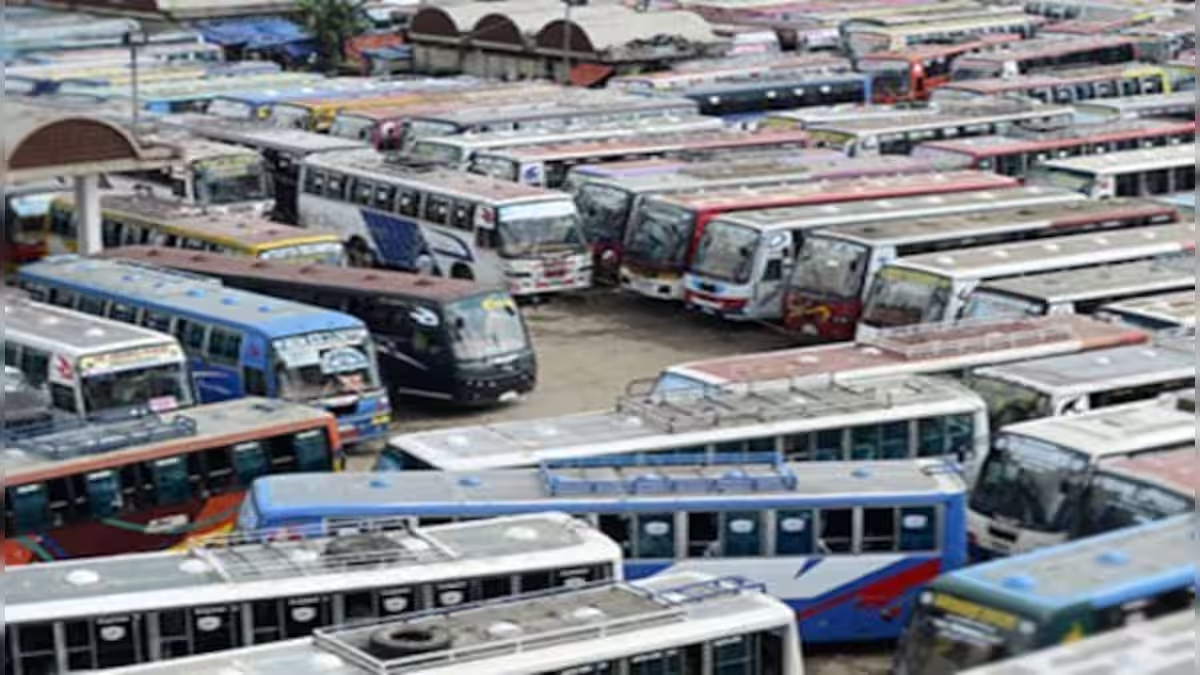
Assam’s proposed 48-hour statewide transport strike was withdrawn following discussions between transport organisations and the state Transport Department on November 19, 2026. The Motor Transport Sector Owners-Workers Coordination Committee had announced a statewide chakka bandh from November 20 to November 22, seeking higher fares, social security benefits and relief from operational difficulties. Although the organisers withdrew the shutdown before its scheduled start, commuters still faced transport disruptions in parts of Assam on November 20. The developments brought attention to the financial challenges facing private vehicle owners, drivers and other workers across the state’s transport sector.
Manipur Cabinet Approves ₹4,000 Monthly Aid for PhD Scholars
Manipur Toxic Liquor Tragedy Triggers Urgent Probe
Assam’s 48-Hour Chakka Bandh Withdrawn
The Motor Transport Sector Owners-Workers Coordination Committee had announced a 48-hour statewide chakka bandh beginning at 6 am on November 20.
The proposed shutdown was scheduled to continue until 6 am on November 22. It aimed to suspend commercial passenger and goods transport services across Assam.
However, representatives of transport owners and workers met senior Transport Department officials in Guwahati on November 19.
Following the discussions, the organisations agreed to withdraw the strike after receiving assurances from the department.
The decision brought relief to commuters and businesses that had prepared for two days of transport disruption.
Nevertheless, vehicle movement remained limited in several areas on the morning of November 20. Reports from Guwahati indicated that passengers continued to face difficulties before services gradually improved.
Which Vehicles Could Have Been Affected?
The proposed chakka bandh covered several categories of commercial and passenger vehicles.
The shutdown could have affected:
- Line buses and city buses
- Private travellers and tourist vehicles
- Taxis and commercial cabs
- Magic vehicles and other shared transport services
- Electric autos and commercial three-wheelers
- Goods carriers and trucks
The participating organisations represented different sections of the private motor transport industry.
These included the All Namoni and Madhya Asom Bus Malik Sangha, the All Namoni and Madhya Asom Motor Sramik Parishad and the All-Assam Cab Operators Association.
However, the Seven State Tourist Cab Operators’ Union separately announced that it would not support the proposed strike. Its representatives cited difficulties for tourists travelling across the Northeast.
The strike’s withdrawal therefore prevented the planned statewide shutdown from continuing for the full 48 hours.
Transport Groups Demand 70% Fare Increase
A major reason behind the strike announcement was the demand for a 70% increase in passenger vehicle fares.
Transport organisations argued that existing fares had remained unchanged since 2019, despite rising operating expenses.
They pointed to higher fuel prices, spare-part costs, vehicle maintenance expenses and other essential charges.
Vehicle owners who purchased commercial vehicles through bank loans also reported difficulties meeting monthly instalments.
Meanwhile, drivers and other transport workers raised concerns about their earnings and financial security.
The associations argued that the existing fare structure no longer reflected the costs of operating commercial vehicles.
During the November 19 meeting, the Transport Department reportedly assured the organisations that it would consider fare revision within one month.
However, the department did not announce an immediate 70% fare increase.
Workers Seek Social Security Scheme Implementation
Another major demand concerned the implementation of the Assam Transport Workers Social Security Scheme.
The organisations want the government to introduce the scheme and extend welfare benefits to eligible workers in the private transport sector.
Drivers, conductors, mechanics and other transport employees depend on the industry for their livelihoods.
According to the associations, nearly 25 lakh people, including workers, employees, self-employed individuals and small vehicle owners, depend on Assam’s private motor transport sector.
The organisations have argued that rising living expenses and uncertain earnings have increased financial pressure on these groups.
The proposed welfare scheme could provide an institutional framework for social protection.
During the discussions, the department also gave assurances concerning the processing of workers’ welfare-related matters. However, a complete implementation schedule was not confirmed in the available reports.
Relief From Speed Limiting Device Fines
The transport organisations also raised concerns about penalties and enforcement measures affecting commercial vehicle operators.
They sought relief from fines associated with Speed Limiting Devices, along with action on what they described as excessive penalties and harassment of motor workers.
Following the meeting, the Transport Department reportedly assured the associations of a one-month relaxation on certain Speed Limiting Device-related fines and relief concerning pending penalties.
The assurance was expected to provide temporary support to vehicle owners.
However, transport groups will continue to monitor the department’s response during the promised period.
They have also indicated that they could consider further protest action if authorities fail to address the outstanding demands.
District-Level Fitness Certification Proposed
Commercial vehicle fitness certification was another important issue raised during the negotiations.
Vehicle owners wanted District Transport Officer offices across Assam to receive greater authority to issue fitness certificates.
They argued that decentralising the process could reduce travel, delays and administrative difficulties.
The Transport Department reportedly agreed to facilitate fitness certification through DTO offices in every district.
This assurance could make the process more accessible to commercial vehicle owners, particularly those operating outside major urban centres.
The department’s implementation arrangements will determine how quickly operators can benefit from the proposed change.
Government Assurances Bring Temporary Relief
The decision to withdraw the strike followed discussions involving transport representatives and senior officials at the Transport Commissioner’s office.
The department reportedly agreed to consider fare revision within one month. It also offered temporary relief concerning Speed Limiting Device penalties and supported district-level fitness certification arrangements.
These assurances addressed several immediate concerns raised by the organisations.
However, the withdrawal does not mean that every demand has already been fulfilled.
The fare revision, social security scheme and other issues still require follow-up action.
Transport representatives have indicated that they will review the government’s progress before deciding on their next steps.
Commuters Face Morning Disruption Despite Withdrawal
Although the organisers withdrew the strike before its scheduled start, the announcement did not immediately restore normal transport movement everywhere.
Guwahati experienced limited vehicle availability during the morning of November 20. Passengers reported difficulties finding transport, while movement gradually improved after the withdrawal became clear.
The situation showed how strike preparations and uncertainty can affect commuters even when organisers cancel a shutdown.
Students, office workers, traders and people travelling between districts remained among those potentially affected by the reduced availability of commercial vehicles.
The developments also highlighted the importance of timely communication between transport organisations, government departments and passengers.
Conclusion
Assam’s proposed 48-hour chakka bandh was withdrawn after transport owners and workers held discussions with the state Transport Department on November 19, 2026. The organisations had demanded a 70% fare increase, implementation of a social security scheme, relief from penalties and district-level fitness certification. Although the government offered several assurances, the demands still require follow-up action. Some commuters faced disruption on November 20 despite the strike’s withdrawal. The coming weeks will show whether the department fulfils its commitments and prevents further transport protests.
FAQs
1. When was the Assam transport strike scheduled to begin?
The proposed 48-hour chakka bandh was scheduled to begin at 6 am on November 20 and end at 6 am on November 22, 2026.
2. Who called the Assam transport strike?
The Motor Transport Sector Owners-Workers Coordination Committee and associated transport organisations announced the statewide shutdown.
3. Why did transport organisations call the strike?
They demanded a 70% passenger fare increase, social security benefits, relief from penalties and changes to commercial vehicle fitness certification.
4. Was the 48-hour Assam transport strike held?
No. Organisers withdrew the proposed shutdown after talks with the Transport Department on November 19. Some transport disruption nevertheless occurred on November 20.
5. What assurances did the Transport Department provide?
The department reportedly assured the organisations that it would consider fare revision within one month, provide temporary relief on certain Speed Limiting Device fines and facilitate fitness certification through district-level DTO offices.
6. Could transport organisations announce another strike?
Yes. Reports indicate that the organisations may consider further protest action if the government fails to address their outstanding demands within the promised period.