


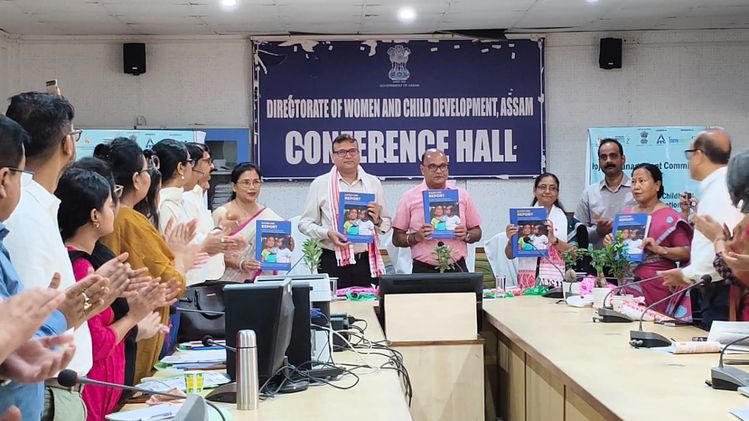
The Assam Women and Child Development (WCD) Department, in collaboration with ITC Limited, has conducted a comprehensive review of its Early Childhood Development (ECD) initiative being implemented across 11 districts of the state. The review focused on assessing the programme’s progress in improving child nutrition, early learning, health, caregiver awareness, and the overall quality of services delivered through Anganwadi Centres.
The initiative reflects a collaborative effort between the government and the private sector to strengthen early childhood care and education during the most critical years of a child’s development. Officials from the WCD Department and ITC evaluated the programme’s implementation, reviewed achievements, identified challenges, and discussed strategies for expanding the initiative to benefit more children and families across Assam.
The review reaffirmed the commitment of both partners to building a stronger foundation for children’s physical, cognitive, emotional, and social development through community-based interventions and improved service delivery.
Strengthening Early Childhood Development
Early Childhood Development has emerged as one of the key priorities in India’s child welfare framework, recognizing that the first six years of life play a decisive role in shaping a child’s long-term health, education, and overall well-being.
The initiative being implemented in Assam focuses on creating nurturing environments that support holistic child development through improved nutrition, healthcare, early stimulation, and preschool education.
Officials emphasized that investments during early childhood generate lifelong benefits by improving school readiness, cognitive development, and future productivity.
The review highlighted the importance of ensuring that every child receives quality care during these formative years regardless of socio-economic background.
Review Conducted Across 11 Districts
The programme review covered implementation across 11 districts where the initiative has been introduced in partnership with ITC. Officials assessed various aspects of programme delivery, including child health indicators, nutrition services, preschool education activities, community participation, and the functioning of Anganwadi Centres.
The evaluation also examined the effectiveness of capacity-building programmes for Anganwadi workers, the availability of educational materials, and mechanisms for monitoring child development outcomes.
Representatives from the participating districts shared experiences, achievements, and practical solutions that have contributed to improving service delivery at the grassroots level.
The review aimed to identify successful practices that can be replicated across other districts in the future.
Focus on Nutrition and Health
Improving child nutrition remains one of the central objectives of the Early Childhood Development initiative. Officials noted that proper nutrition during early childhood is essential for healthy physical growth, brain development, and disease prevention.
The programme promotes balanced nutrition, growth monitoring, immunization support, health check-ups, and awareness among parents regarding appropriate feeding practices.
Community-level interventions also encourage mothers and caregivers to adopt healthier nutritional habits for infants and young children.
The review examined the effectiveness of nutrition-related activities while identifying opportunities to strengthen service delivery through better coordination between health and child development departments.
Enhancing Preschool Learning
The initiative places equal emphasis on strengthening early learning opportunities through improved preschool education delivered at Anganwadi Centres.
Children participate in age-appropriate learning activities designed to develop language skills, cognitive abilities, creativity, motor coordination, and social interaction.
Officials reviewed teaching-learning methods, classroom environments, educational materials, and child-friendly activities introduced under the programme.
The objective is to ensure that children enter formal schooling with stronger foundational skills, improving their long-term educational outcomes.
The programme also encourages playful learning approaches that support holistic child development.
Capacity Building for Anganwadi Workers
Anganwadi workers remain the backbone of early childhood services across Assam. The review highlighted ongoing efforts to strengthen their knowledge and professional skills through regular training and capacity-building programmes.
Training sessions focus on child nutrition, growth monitoring, preschool education, health awareness, community engagement, and record management.
Officials emphasized that well-trained frontline workers are essential for delivering quality services and ensuring effective implementation of child welfare programmes.
Continuous professional development also enables Anganwadi workers to respond more effectively to the evolving needs of children and their families.
Community Participation and Parental Awareness
The success of Early Childhood Development programmes depends significantly on active community participation and parental involvement.
The initiative encourages parents, caregivers, self-help groups, village committees, and local communities to actively participate in child development activities.
Awareness campaigns educate families about nutrition, hygiene, immunization, breastfeeding, early stimulation, and positive parenting practices.
Officials noted that informed caregivers are better equipped to support children’s healthy development both at home and within the community.
Strengthening community ownership remains one of the programme’s important long-term objectives.
Public-Private Partnership Driving Impact
The collaboration between the Assam WCD Department and ITC demonstrates the growing importance of public-private partnerships in supporting social development initiatives.
Through its corporate social responsibility initiatives, ITC has contributed technical expertise, programme support, capacity-building resources, and community engagement strategies that complement government efforts.
Officials stated that partnerships with responsible corporate organizations help strengthen programme implementation while introducing innovative approaches to service delivery.
Such collaborative models enable greater resource mobilization and accelerate progress toward child development goals.
Monitoring and Continuous Improvement
The review also focused on strengthening monitoring systems to ensure consistent programme quality across all participating districts.
Regular assessments, field visits, data collection, and performance reviews enable officials to identify implementation gaps and introduce timely corrective measures.
Technology-based monitoring tools are increasingly being explored to improve programme tracking and facilitate evidence-based decision-making.
Officials emphasized that continuous monitoring is essential for measuring programme outcomes and ensuring that interventions achieve meaningful improvements in child well-being.
The review process also provides valuable feedback for future planning and expansion.
Vision for Future Expansion
Based on the positive experiences from the 11 participating districts, discussions were held on expanding the initiative to additional districts across Assam.
Officials expressed optimism that lessons learned during implementation would help strengthen future programme design while ensuring greater efficiency and scalability.
Future priorities include improving infrastructure at Anganwadi Centres, expanding digital learning resources, strengthening nutrition services, enhancing training programmes, and increasing community engagement.
The government also intends to continue working with development partners to improve early childhood outcomes throughout the state.
Conclusion
The joint review conducted by the Assam Women and Child Development Department and ITC underscores the importance of collaborative efforts in strengthening early childhood development across the state. By focusing on nutrition, health, preschool education, caregiver awareness, and frontline worker capacity, the initiative seeks to provide children with a strong foundation for lifelong learning and well-being.
As the programme continues to evolve, the lessons gained from implementation across 11 districts are expected to guide future expansion and improve service delivery. Through sustained government commitment, community participation, and strategic partnerships, Assam is taking meaningful steps toward ensuring that every child receives the care, nutrition, education, and opportunities necessary to reach their full potential.