


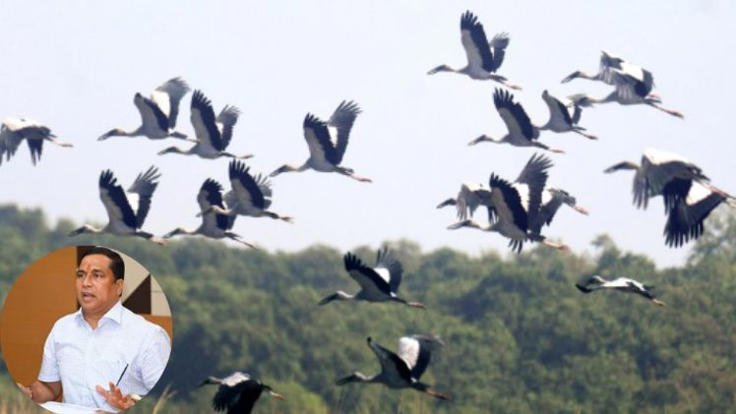
Assam’s Pobitora Wildlife Sanctuary recorded 35,371 visitors during 2025-26, highlighting its growing importance as a nature-tourism destination in the state. Assam minister Jayanta Mallabaruah shared the figure on World Tourism Day on September 27 while outlining the government’s approach to tourism and conservation.
Located in Morigaon district and relatively close to Guwahati, Pobitora is known for its rich biodiversity and population of the greater one-horned rhinoceros. The sanctuary is also recognised for its bird diversity and grassland ecosystem.
Tourism Focus Shifts Towards Conservation
The latest tourism push in Pobitora is being linked with a broader emphasis on conservation rather than visitor numbers alone.
Mallabaruah said the government’s approach was to connect tourism with wildlife protection and livelihood opportunities for communities living around forest areas. The aim is to ensure that tourism contributes to the protection of natural resources while creating economic opportunities for local residents.
This approach places Pobitora within Assam’s wider effort to develop nature-based tourism while protecting its forests, wildlife and ecological resources.
Greater Role for Forest-Fringe Communities
Communities living around protected areas can play an important role in both conservation and tourism. The Assam government is looking to involve forest-fringe residents more closely in conservation activities while creating opportunities connected with tourism.
According to the minister, areas such as nature guiding and interpretation can provide employment opportunities for local people. These roles can also help visitors understand the sanctuary’s ecology and biodiversity.
Community participation can provide an additional source of income while encouraging residents to become stakeholders in protecting the natural environment.
Tourism Beyond Wildlife Sightings
The government’s approach also seeks to broaden the tourism experience at Pobitora beyond simply viewing wildlife.
New tourism experiences are being developed to help visitors understand the landscape, ecology and natural environment of the sanctuary. Such activities can provide tourists with a deeper understanding of conservation and the importance of protecting wildlife habitats.
The focus reflects a growing emphasis on responsible and experience-based tourism in Assam’s wildlife destinations.
Pobitora’s Ecological Importance
Pobitora covers about 38.81 square kilometres and comprises Assam’s characteristic alluvial grassland along with hilly forest areas. The sanctuary is also an Important Bird Area, according to the Assam Forest Department.
Apart from the greater one-horned rhinoceros, the sanctuary supports several other mammals, reptiles, amphibians and fish species. Hundreds of resident and migratory bird species have also been recorded in the area.
The diversity makes conservation central to maintaining Pobitora’s appeal as a tourism destination.
Assam Promotes Conservation-Focused Tourism
Pobitora’s development is part of Assam’s broader efforts to promote tourism based on the state’s natural and cultural assets. The Centre has also supported tourism development in Assam through schemes including Swadesh Darshan, with a wildlife circuit covering destinations such as Manas, Pobitora, Nameri, Kaziranga and Dibru-Saikhowa.
The state’s tourism authorities have increasingly highlighted the need to balance visitor growth with environmental protection and community participation.
Tourism and Local Livelihoods
The connection between tourism and livelihoods is particularly important for communities living close to protected areas. Employment in guiding, hospitality, transport and other tourism-related activities can provide alternative sources of income.
A conservation-focused tourism model can also create incentives for communities to participate in protecting wildlife and natural habitats.
For Pobitora, the challenge will be to ensure that increasing tourist activity does not place additional pressure on the sanctuary’s fragile ecosystem.
Balancing Visitor Growth and Conservation
The 35,371 visitors recorded in 2025-26 demonstrate the growing interest in Pobitora as a wildlife destination. However, the government’s stated approach indicates that future tourism development will focus not only on attracting visitors but also on ensuring conservation and community benefits.
As Assam expands its nature-tourism sector, Pobitora is being positioned as an example of how wildlife tourism, environmental protection and local livelihoods can be developed together. The continued success of this model will depend on responsible tourism practices and sustained protection of the sanctuary’s biodiversity.