


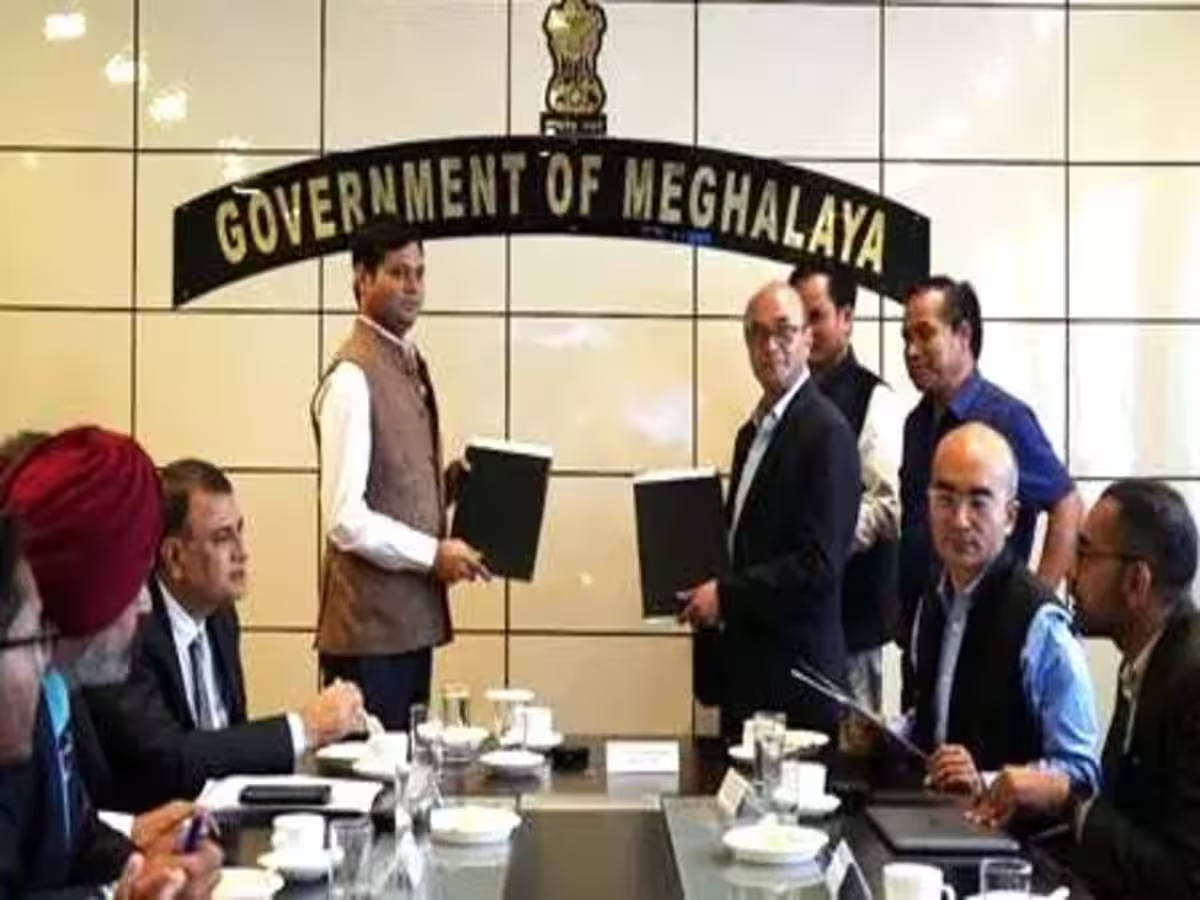
The Autonomous Council Reforms initiative has gained attention after the Meghalaya government offered financial advances to Autonomous District Councils (ADCs), subject to the implementation of bureaucratic reforms. The move aims to strengthen governance, improve administrative efficiency, and support institutional development across the councils.
The Autonomous Council Reforms proposal has become a key governance development in Meghalaya after the state government announced financial advances for Autonomous District Councils, conditional upon the adoption of bureaucratic reforms. Moreover, the initiative reflects the government’s focus on improving administrative systems while supporting the functioning of local autonomous institutions. The policy seeks to balance financial assistance with governance reforms.
KHADC Funding Stand: Khasi Hills Autonomous District Council Chooses Financial Self-Reliance
Autonomous Council Reforms Linked to Financial Assistance
The Autonomous Council Reforms initiative offers financial advances to Autonomous District Councils that undertake specified administrative reforms. Furthermore, the state government has linked financial support to improvements in bureaucratic processes.
Financial assistance often helps strengthen institutional capacity. Consequently, reform-based funding has become an important governance approach.
Moreover, performance-linked support encourages administrative improvements. Therefore, the initiative has attracted public and policy attention.
Meghalaya Promotes Administrative Modernization
A key objective of the Autonomous Council Reforms initiative is to improve bureaucratic efficiency within Autonomous District Councils. Furthermore, the proposed reforms aim to strengthen governance and administrative accountability.
Efficient administration supports better public service delivery. Similarly, institutional reforms can improve operational effectiveness.
Consequently, modernization efforts remain central to the government’s approach. Thus, governance improvements continue to be a priority.
Financial Advances Support Institutional Development
The Autonomous Council Reforms framework combines financial assistance with governance objectives. Moreover, the funding is intended to help councils strengthen their administrative capacity while implementing reforms.
Institutional development often requires both financial resources and policy improvements. Additionally, targeted support can help councils address administrative challenges.
Consequently, linking financial assistance to reforms promotes long-term sustainability. Therefore, the initiative represents a structured governance model.
Reform-Based Funding Encourages Accountability
The Autonomous Council Reforms initiative also emphasizes accountability by connecting government funding with measurable administrative progress. Furthermore, reform-oriented policies can encourage greater transparency and efficiency.
Performance-based support promotes responsible governance. Similarly, regular reviews help authorities monitor implementation.
Moreover, accountability strengthens public confidence in institutions. Thus, bureaucratic reforms remain an important aspect of the initiative.
Strengthening Local Governance in Meghalaya
The Autonomous Council Reforms proposal reflects Meghalaya’s broader focus on improving local governance. Furthermore, stronger administrative institutions can contribute to more effective policy implementation and public administration.
Well-functioning councils support regional development. Consequently, governance reforms can enhance institutional performance over time.
Additionally, continued collaboration between the state government and Autonomous District Councils may improve administrative outcomes. Therefore, sustained engagement remains essential.
Looking Ahead
The Autonomous Council Reforms initiative is expected to guide future discussions on governance and institutional capacity within Meghalaya’s Autonomous District Councils. Moreover, implementation of the proposed reforms may influence future financial support and administrative planning.
As the councils work toward meeting reform conditions, authorities are likely to monitor progress through established review mechanisms. Similarly, continued policy dialogue can help refine governance strategies.
Consequently, the initiative highlights the importance of combining financial support with institutional reform. Thus, administrative modernization is expected to remain a policy priority.
Conclusion
The Autonomous Council Reforms initiative represents Meghalaya’s effort to strengthen local governance by linking financial advances with bureaucratic improvements. The approach seeks to enhance institutional efficiency while providing targeted financial support to Autonomous District Councils.
Moreover, reform-based funding encourages accountability, transparency, and effective public administration. Consequently, the policy reflects a structured approach to improving governance at the local level.
Looking ahead, continued implementation and periodic evaluation will determine the long-term impact of the Autonomous Council Reforms initiative on administrative performance and institutional development across Meghalaya.
FAQs
1. What are the Autonomous Council Reforms?
The Autonomous Council Reforms refer to Meghalaya’s initiative of offering financial advances to Autonomous District Councils subject to administrative and bureaucratic reforms.
2. Who announced the initiative?
The Meghalaya state government introduced the reform-linked financial support proposal.
3. What is the purpose of the financial advances?
The advances are intended to strengthen institutional capacity while encouraging administrative reforms.
4. Why are bureaucratic reforms being linked to funding?
The approach aims to improve governance, accountability, and administrative efficiency within the councils.
5. Which institutions are covered under the initiative?
The policy applies to Meghalaya’s Autonomous District Councils.