


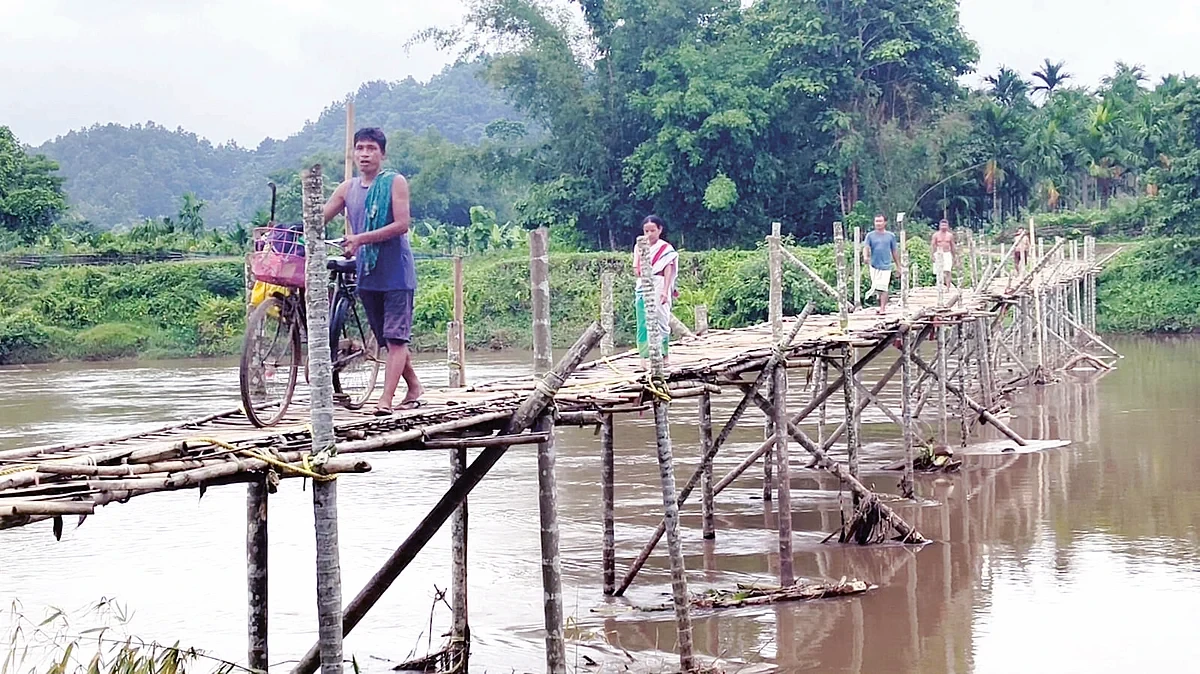
The Bamboo Border Fencing (MZ) initiative has entered a testing phase as border security units assess high-durability treated bamboo structures along river frontiers in Mizoram. The reported trial explores the potential use of locally available bamboo in border infrastructure while maintaining attention to durability and operational requirements.
The Bamboo Border Fencing (MZ) initiative focuses on testing treated bamboo structures in areas where river terrain creates particular challenges for conventional boundary infrastructure. Border security units are assessing the durability of the structures before any wider use.
The reported trial represents an effort to examine whether treated bamboo can provide a practical structural option in difficult frontier environments. Moreover, bamboo offers a locally available material that can be processed for specialized construction purposes.
However, the available information does not specify the exact river locations, the quantity of bamboo structures under testing, or the agencies responsible for conducting the technical assessment.
Therefore, the results of the trial will remain important before authorities determine whether the approach can support broader border infrastructure requirements.
Sikkim National Highway 10: Emergency Restoration Begins After Repeated Rain Disruptions
Bamboo Border Fencing (MZ) Tests Structures Along River Frontiers
The Bamboo Border Fencing (MZ) initiative involves testing high-durability treated bamboo structures along river frontiers.
River boundaries can present different infrastructure requirements compared with dry land because water movement, soil conditions, seasonal changes, and exposure to moisture can affect construction materials.
Furthermore, bamboo requires appropriate treatment when authorities intend to use it in exposed environments. Treatment can improve resistance to factors that contribute to material deterioration, although the performance depends on the treatment method, construction design, and environmental conditions.
The current testing process can help technical teams determine whether the structures can withstand conditions along the selected riverfront areas.
However, the available information does not identify the treatment technology, expected service life, structural dimensions, or testing standards.
Consequently, no specific claims about the durability of the structures should be made until authorities release technical findings.
Bamboo Border Fencing (MZ) Examines Alternative Materials
The Bamboo Border Fencing (MZ) trial highlights the potential role of alternative construction materials in specialized border infrastructure.
Bamboo grows widely across Northeast India and has long supported construction, handicrafts, furniture, and other traditional activities. Moreover, using processed bamboo in infrastructure can create additional applications for a resource already familiar to local communities.
Treated bamboo can offer structural strength for certain applications when engineers select appropriate species, treatment methods, dimensions, and joining techniques.
However, border fencing presents demanding requirements. Structures must remain stable under environmental pressure and maintain their intended function over time.
Therefore, the current trial remains important because it allows technical teams to assess actual performance rather than relying only on theoretical advantages.
The testing stage can also help identify weaknesses and determine whether additional engineering modifications are necessary.
Bamboo Border Fencing (MZ) Considers Durability and Maintenance
The Bamboo Border Fencing (MZ) initiative places durability at the center of the testing process. High-durability treatment can help extend the useful life of bamboo structures, particularly when authorities use them in areas exposed to moisture.
Moreover, riverfront environments can create maintenance challenges because water levels and surrounding ground conditions can change over time.
Regular inspection would therefore remain important if authorities eventually use treated bamboo structures on a larger scale. Additionally, maintenance teams would need to monitor structural condition and replace components when necessary.
However, the available information does not indicate how frequently the trial structures will undergo inspection or what maintenance standards authorities have established.
Similarly, there are no reported findings on how the treated bamboo has performed under actual riverfront conditions.
Consequently, it would be premature to compare the material directly with conventional fencing systems.
The trial instead provides an opportunity to gather practical information before authorities make broader decisions.
Bamboo Border Fencing (MZ) Could Support Local Bamboo Use
The Bamboo Border Fencing (MZ) initiative could have implications beyond border infrastructure if testing produces favorable results.
A wider application of treated bamboo could create additional demand for bamboo processing and treatment services. Furthermore, increased demand could provide opportunities for local producers and enterprises involved in harvesting, processing, treatment, transportation, and fabrication.
Such an approach could also encourage greater development of technical expertise around engineered bamboo products.
However, the economic impact remains uncertain because the current information only confirms that security units have tested the structures.
There are no available figures on the quantity of bamboo required, projected procurement costs, employment opportunities, or potential benefits for local producers.
Therefore, any assessment of the initiative’s economic contribution will require additional data.
The immediate focus remains the technical evaluation of the material under frontier conditions.
Bamboo Border Fencing (MZ) Faces Environmental Conditions
The Bamboo Border Fencing (MZ) trial must account for the environmental conditions found along river frontiers.
Rainfall, humidity, flooding, river movement, soil erosion, and exposure to sunlight can influence the condition of outdoor structures. Moreover, these factors can vary considerably between different locations.
Engineers therefore need to consider local conditions when assessing the performance of treated bamboo.
The testing process can provide practical information about how the structures respond to these conditions. Additionally, technical observations can help determine whether the design requires modifications before authorities consider wider deployment.
However, the available information does not state whether the current testing covers seasonal flooding or other long-term environmental stresses.
Consequently, the present assessment may represent only one stage of a broader evaluation process.
Further testing over an appropriate period could provide authorities with more information about durability and maintenance requirements.
Bamboo Border Fencing (MZ) Remains at the Testing Stage
The Bamboo Border Fencing (MZ) initiative should currently be understood as a testing exercise rather than confirmation of a large-scale fencing program.
Testing allows authorities to assess whether a proposed material meets practical requirements before committing to wider deployment. Furthermore, controlled evaluation can reduce the risk of adopting a system that later proves unsuitable for challenging terrain.
Technical teams can examine factors such as structural stability, material condition, maintenance requirements, and performance under environmental exposure.
However, the information provided does not confirm whether authorities have approved the treated bamboo structures for permanent use.
Similarly, it does not indicate whether the trial will expand to additional riverfront locations.
Therefore, future decisions will depend on the results of the ongoing assessment and any technical recommendations that follow.
Conclusion
The Bamboo Border Fencing (MZ) initiative represents a reported trial of high-durability treated bamboo structures along river frontiers in Mizoram. Border security units are testing the material to determine how effectively it can perform in challenging environments where moisture, water movement, and changing terrain can affect infrastructure.
Moreover, the initiative highlights the potential for processed bamboo to serve applications beyond traditional construction and handicrafts. If technical assessments produce favorable results, the approach could create additional opportunities for bamboo processing while offering authorities another material option for selected infrastructure needs.
Overall, the Bamboo Border Fencing (MZ) initiative remains at the testing stage, and its wider significance will depend on technical findings. Details about durability, treatment methods, maintenance requirements, costs, and future deployment have not been provided. Further assessments will determine whether treated bamboo can meet the operational and environmental demands of river frontier infrastructure.
FAQs
1. What is the Bamboo Border Fencing (MZ) initiative?
The Bamboo Border Fencing (MZ) initiative refers to the testing of high-durability treated bamboo structures along river frontiers in Mizoram.
2. Why are treated bamboo structures being tested?
The testing aims to assess whether treated bamboo can provide a durable and practical structural material in riverfront environments.
3. Why does bamboo require treatment for outdoor use?
Treatment can improve bamboo’s resistance to environmental factors that may contribute to deterioration. However, performance depends on the treatment method, bamboo type, construction design, and surrounding conditions.
4. Has authorities approved bamboo fencing for wider deployment?
The available information only confirms testing. It does not establish that authorities have approved large-scale or permanent deployment.
5. Could the initiative benefit Mizoram’s bamboo sector?
Potentially. Wider use could increase demand for bamboo processing, treatment, fabrication, and related services. However, the current information does not provide data on its expected economic impact.