


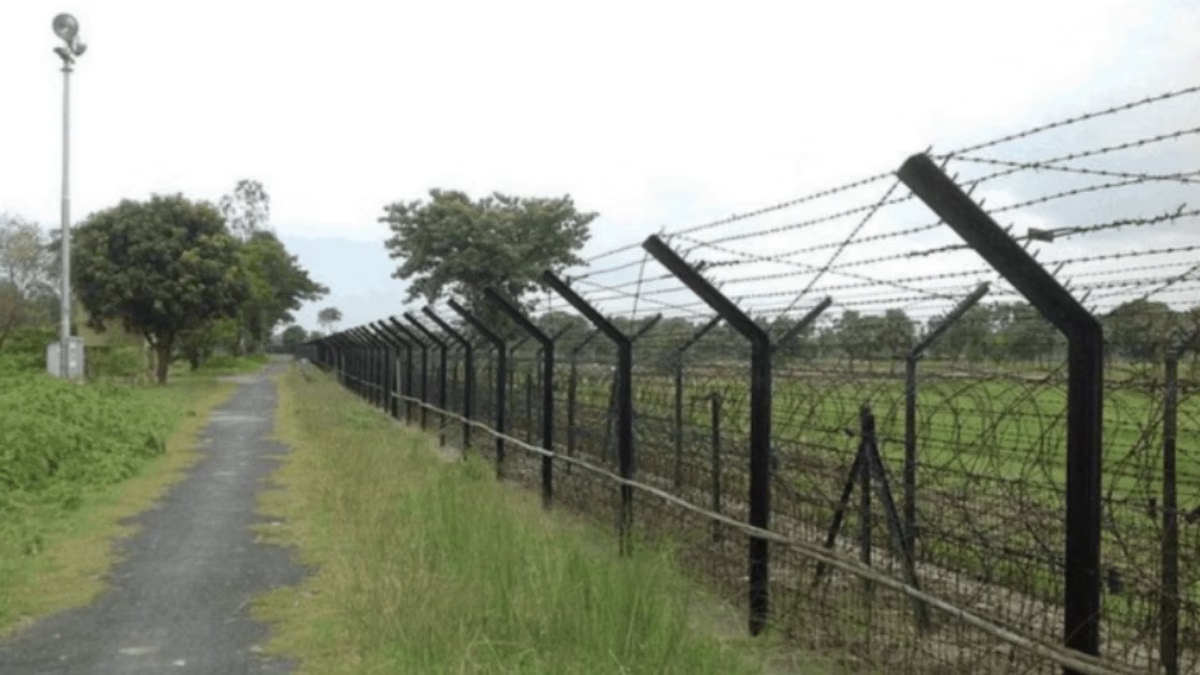
Bangladesh border fencing allocation efforts gained momentum after the West Bengal government pledged urgent land support to the Border Security Force for strengthening fencing infrastructure along sensitive sections of the international border. Meanwhile, state officials stated that the decision aims to improve border management, enhance security coordination, and address logistical challenges delaying construction activities in certain regions. The announcement immediately attracted administrative and political attention because border fencing remains a major national security and migration-related issue across eastern India. Additionally, authorities emphasized that faster land allocation may help accelerate pending infrastructure work in strategically important border districts.
The development emerged amid continued focus on border surveillance, illegal cross-border movement, and infrastructure modernization along India’s international boundaries. Furthermore, security experts noted that coordinated action between state administrations and central security agencies remains critical for effective border management.
TMC Election Setback Sparks Intimidation Allegations
Northeast States Brace for Heavy Rainfall Alert
West Bengal Government Promises Faster Land Support
State authorities formally assured urgent cooperation with the Border Security Force regarding land-related requirements for fencing projects. Bangladesh border fencing allocation discussions therefore quickly became a significant administrative development in eastern India.
Meanwhile, officials explained that unresolved land acquisition and transfer issues previously slowed fencing expansion in some border stretches. Additionally, the government reportedly initiated coordination with district administrations to identify and process pending land-related clearances more efficiently.
Authorities stated that stronger border infrastructure remains important for maintaining security, regulating movement, and supporting surveillance operations. Furthermore, officials argued that timely administrative coordination may significantly improve execution of strategic projects in border-sensitive areas.
Earlier, security agencies repeatedly highlighted logistical and land-related obstacles affecting fencing work along certain sections of the India-Bangladesh border. Consequently, the latest assurance generated renewed focus on infrastructure completion timelines.
At the same time, district administrations reportedly began reviewing land documentation and field-level implementation procedures.
BSF Infrastructure Projects Under Renewed Focus
The latest announcement placed renewed attention on infrastructure development initiatives led by the Border Security Force. Bangladesh border fencing allocation measures therefore became closely associated with broader national border management strategies.
Meanwhile, officials indicated that fencing projects remain essential for improving surveillance capacity and reducing unauthorized cross-border movement in vulnerable areas. Additionally, BSF personnel reportedly continue coordinating with civil administrations regarding operational and logistical requirements.
Security analysts observed that fencing infrastructure often supports better monitoring, patrol movement, and technological integration along sensitive international boundaries. Furthermore, strategically developed border systems may strengthen response capability during security-related incidents.
Several experts also highlighted the geographical complexity of border regions involving rivers, agricultural zones, and densely populated settlements. Consequently, infrastructure development frequently requires extensive coordination between multiple agencies and local authorities.
However, observers emphasized that effective border management also depends heavily on intelligence coordination and community engagement beyond physical fencing alone.
Border Districts Hold Strategic Importance
The fencing initiative carries major significance for districts located along the India-Bangladesh border in West Bengal. Bangladesh border fencing allocation plans therefore attracted close attention from local administrations and security observers.
Meanwhile, several border districts continue experiencing heavy movement involving trade, transportation, agriculture, and cross-border interaction because of geographic proximity. Additionally, security agencies remain particularly focused on vulnerable stretches where terrain and settlement patterns complicate monitoring operations.
Officials stated that improved fencing and surveillance systems may help strengthen operational control and reduce illegal activities linked to unauthorized crossings and smuggling networks. Furthermore, infrastructure modernization may improve coordination between field units and monitoring agencies.
Several geopolitical experts noted that the India-Bangladesh border remains one of the most densely populated and operationally complex international boundaries in South Asia. Consequently, infrastructure planning requires careful administrative and logistical management.
At the same time, local residents expressed interest regarding how land allocation and fencing expansion may affect agricultural movement and daily activities near border zones.
Political Reactions and Security Debate Intensify
The state government’s pledge also triggered wider political discussion regarding border security and administrative cooperation. Bangladesh border fencing allocation developments therefore became part of broader debates involving migration, national security, and governance priorities.
Meanwhile, ruling party representatives defended the move and described it as a responsible administrative step supporting national security objectives and inter-agency coordination. Additionally, government officials argued that cooperation between state authorities and central security agencies remains essential for effective border management.
Opposition figures, however, questioned earlier delays in land transfer and fencing implementation across certain border regions. Furthermore, critics demanded stronger accountability mechanisms to ensure timely completion of pending infrastructure projects.
Political analysts observed that border management issues frequently influence political discourse in eastern India because of their connection with migration, security, and demographic concerns. Consequently, the latest announcement quickly generated strong public and political reactions.
At the same time, policy experts encouraged balanced approaches combining security infrastructure with humanitarian and developmental considerations in border communities.
Residents and Local Communities Monitor Developments
Communities living near border regions closely followed the latest government announcement regarding fencing infrastructure. Bangladesh border fencing allocation decisions therefore generated discussion among farmers, traders, and residents in affected districts.
Meanwhile, some residents expressed support for stronger security infrastructure and argued that improved surveillance may reduce criminal activity and unauthorized movement. Additionally, local observers stated that better coordination between authorities could improve law enforcement presence in sensitive areas.
Others, however, raised concerns regarding possible land-related disputes, access restrictions, and the impact of construction work on agriculture and transportation routes. Furthermore, civic groups urged authorities to maintain transparency and fair compensation practices wherever land acquisition becomes necessary.
Development experts emphasized that border infrastructure projects often affect local communities directly because of proximity to agricultural fields and settlements. Consequently, public consultation and communication remain important components of implementation planning.
At the same time, security officials reassured residents that coordination mechanisms would remain active during project execution stages.
Future Border Modernization Efforts Expected
Experts believe the latest land support pledge may accelerate broader modernization efforts along the India-Bangladesh border. Bangladesh border fencing allocation initiatives therefore could influence future infrastructure planning involving surveillance systems and operational upgrades.
Meanwhile, authorities reportedly continue evaluating additional measures involving roads, floodlighting, monitoring technology, and communication systems along border stretches. Additionally, security planners emphasized the importance of integrated infrastructure supporting rapid response and efficient patrolling operations.
Several national security experts observed that modern border management increasingly depends on combining physical infrastructure with technological surveillance capabilities. Furthermore, coordinated administrative support remains essential for maintaining operational effectiveness in geographically challenging regions.
Observers also highlighted the importance of sustained cooperation between state governments, security agencies, and local administrations during large-scale border projects. Consequently, future policy discussions may increasingly focus on infrastructure efficiency and inter-agency coordination.
At the same time, residents and civic organizations called for balanced implementation that protects both security interests and local livelihoods.
Conclusion
Bangladesh border fencing allocation efforts advanced after the West Bengal government pledged urgent land support to the Border Security Force for expanding fencing infrastructure along sensitive border areas. Meanwhile, authorities and security agencies intensified coordination aimed at improving border management, surveillance, and infrastructure implementation. The announcement renewed political debate and public attention regarding national security, migration control, and administrative cooperation in eastern India. Ultimately, the effectiveness of the initiative may depend on timely execution, inter-agency coordination, and balanced engagement with local communities.
FAQs
What did the West Bengal government announce?
The government pledged urgent land allocation support for BSF border fencing projects.
Why is Bangladesh border fencing allocation important?
The initiative supports border security, surveillance, and infrastructure modernization along sensitive regions.
Which agency will benefit from the land support?
The Border Security Force will use the land for fencing and related border infrastructure work.
Why have fencing projects faced delays?
Officials cited land-related issues and logistical challenges in certain border stretches.
Did political reactions emerge after the announcement?
Yes, political parties debated border security, migration, and implementation delays.
Could more border modernization projects follow?
Experts believe additional surveillance and infrastructure upgrades may be planned in future phases.