


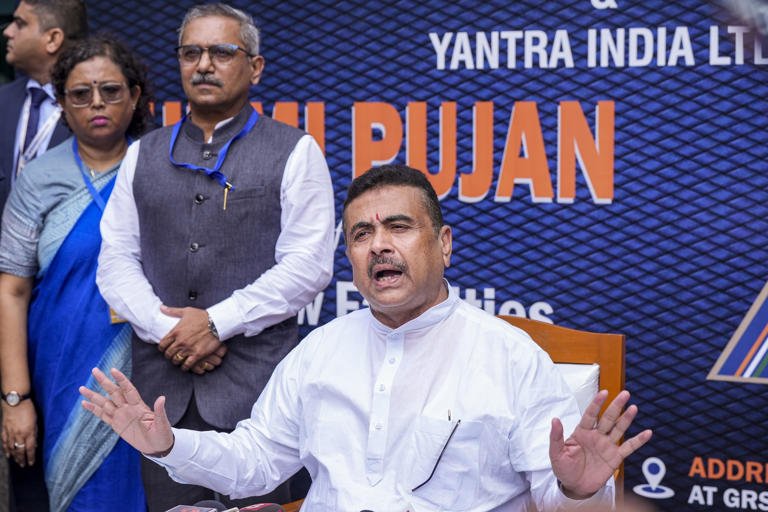
West Bengal Chief Minister Suvendu Adhikari has announced that the state’s new disaster management force, Arjun Vahini, will become operational from September. The specialised force will work along the lines of the National Disaster Response Force (NDRF) and respond quickly to emergencies across the state.
The government has raised Arjun Vahini after drawing lessons from major disasters, including the Taratala warehouse collapse in Kolkata and Cyclone Amphan in 2020. The force will receive modern equipment, vehicles and other infrastructure to strengthen disaster response capabilities.
Arjun Vahini to Start Operations in September
Chief Minister Suvendu Adhikari said the state government would launch Arjun Vahini in September. The government aims to create a trained and dedicated force that can respond quickly during disasters and emergency situations.
The force will follow the working model of the NDRF. Its personnel will receive equipment and infrastructure needed for rescue and disaster response operations.
Adhikari said the government would provide the force with facilities ranging from specialised vehicles to cameras. These resources will help personnel carry out rescue operations more effectively.
The state government hopes that Arjun Vahini will strengthen West Bengal’s ability to respond to disasters without delays.
Lessons From Taratala Warehouse Collapse
The government decided to strengthen its disaster response system after recent emergencies highlighted the need for specialised personnel.
Adhikari referred to the Taratala warehouse collapse in southwest Kolkata as an important example. A three-storey warehouse under construction collapsed on June 24, killing 11 people and injuring around 19 others.
The NDRF rescued 22 people from under the debris during the operation. Kolkata Police also played an important role in the search and rescue effort.
The Chief Minister said Kolkata needs an effective disaster management system because it is a large and densely populated city. He also pointed to concerns surrounding illegal constructions in different parts of the city.
The incident strengthened the government’s focus on creating a dedicated state-level disaster response force.
Cyclone Amphan Also Influenced the Decision
The devastating Cyclone Amphan of May 2020 also influenced the decision to raise Arjun Vahini.
The cyclone caused widespread destruction across West Bengal, especially in coastal districts and Kolkata. It damaged homes and infrastructure while disrupting electricity, communication and transport services.
Major natural disasters require trained personnel who can quickly carry out rescue and relief operations. The government now wants Arjun Vahini to provide a faster and more organised response during such emergencies.
The specialised force will add another layer to the state’s disaster preparedness system.
Government Recruits 200 Ex-Servicemen
The state government has already recruited 200 ex-servicemen through the Sainik Board for Arjun Vahini.
The Chief Minister said the government also plans to recruit Agniveers into the force. However, the state will receive former Agniveers only from January next year.
For now, the government has created the initial force with ex-servicemen.
The deployment plan will cover different geographical regions and disaster-prone areas of West Bengal.
Of the 200 personnel, 100 will remain based in Kolkata. Another 50 personnel will operate in the Darjeeling hills, while the remaining 50 will be stationed in Kakdwip in South 24 Parganas.
This arrangement will allow the force to respond to different types of disasters in urban, hilly and coastal areas.
Personnel to Cover Kolkata, Hills and Coastal Areas
Kolkata will receive the largest deployment because of its dense population and complex urban infrastructure.
The Darjeeling hills face different challenges, including landslides and other weather-related emergencies. A dedicated team in the region can improve response time during such incidents.
Meanwhile, Kakdwip and the coastal areas of South 24 Parganas remain vulnerable to cyclones and severe weather events.
By positioning personnel across these regions, the government aims to ensure faster deployment during emergencies.
The personnel will use modern equipment to respond to disasters and carry out rescue operations.
Arjun Vahini to Follow NDRF Model
The state government has instructed Arjun Vahini to function along the lines of the National Disaster Response Force.
The NDRF has played an important role in rescue and relief operations across India. Its teams respond to natural disasters, building collapses, floods and other emergencies.
West Bengal’s new force aims to develop similar capabilities at the state level.
The government hopes that trained personnel and modern equipment will help Arjun Vahini respond quickly when disasters strike.
A dedicated force can reduce dependence on external teams and strengthen the state’s immediate response system.
The West Bengal government’s Disaster Management and Civil Defence Department already focuses on reducing disaster risks, saving lives and protecting property. Arjun Vahini is expected to further strengthen this wider disaster preparedness framework.
Focus on Faster Disaster Response
The main objective behind Arjun Vahini is to ensure faster action during emergencies.
Disasters often require immediate rescue operations. Delays can increase the risk to people trapped under debris, affected by floods or facing other dangerous situations.
A trained force stationed within the state can reach affected areas quickly.
The government’s decision to deploy teams across Kolkata, the Darjeeling hills and coastal South 24 Parganas reflects this focus on rapid response.
Arjun Vahini will therefore play an important role in strengthening West Bengal’s preparedness for both natural and man-made disasters.
Bengal Strengthens Its Disaster Preparedness
The launch of Arjun Vahini marks a significant step in West Bengal’s efforts to improve disaster management.
The new force will combine trained personnel, specialised equipment and strategic deployment across different regions.
The government has linked the initiative to lessons learned from the Taratala warehouse collapse and Cyclone Amphan. Both incidents demonstrated the importance of quick and organised disaster response.
With 200 ex-servicemen already recruited, the state is preparing to begin operations from September. The government also plans to expand the force by recruiting Agniveers in the future.
As West Bengal faces risks ranging from cyclones and floods to landslides and urban accidents, a dedicated disaster management force could strengthen its ability to respond quickly.
The launch of Arjun Vahini in September will mark the beginning of a new state-level disaster response system aimed at protecting lives and improving emergency preparedness across West Bengal.