


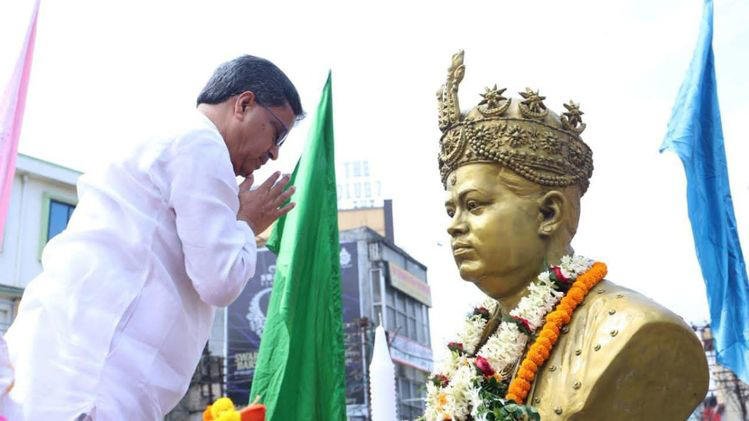
Tripura Chief Minister Manik Saha has called for the legacy of Maharaja Bir Bikram Kishore Manikya Bahadur to be preserved and passed on to future generations. Speaking on the Maharaja’s 118th birth anniversary, Saha described his contribution to Tripura’s development as an important part of the state’s history.
The Chief Minister paid floral tribute to Maharaja Bir Bikram’s statue at Zero Point in Agartala. He highlighted the former ruler’s role in shaping modern Tripura and said his contributions deserved greater recognition. Saha also stressed the need to ensure that younger generations learn about the Maharaja’s vision and achievements.
CM Highlights Bir Bikram’s Legacy
Saha described Maharaja Bir Bikram as a key figure in the development of modern Tripura. He said the Maharaja’s contributions covered several areas, including education, roads, urban development and administration.
According to the Chief Minister, Bir Bikram’s progressive outlook helped shape the state’s development during his reign. His exposure to different parts of India and foreign countries also broadened his perspective. Saha said those experiences influenced the Maharaja’s approach to governance and development.
The Chief Minister also highlighted Bir Bikram’s efforts to promote harmony between tribal and non-tribal communities. He said the Maharaja worked to encourage unity and peaceful coexistence among different sections of society.
Saha argued that such contributions should remain an important part of Tripura’s historical narrative. He also said the younger generation should have the opportunity to learn about the work carried out during the Maharaja’s reign.
Bir Bikram Remembered as Architect of Modern Tripura
Maharaja Bir Bikram Kishore Manikya Bahadur is widely remembered as the architect of modern Tripura. His reign saw several initiatives that contributed to the development of Agartala and other parts of the former princely state.
Saha particularly highlighted his contribution to urban development. The Maharaja worked on roads, public buildings and civic institutions in Agartala. The Chief Minister also recalled the development of municipal administration during his reign.
These initiatives helped lay the foundation for the modern city. The government believes that understanding this history can help people appreciate the evolution of Tripura’s administrative and urban institutions.
Saha said the present government has taken steps to recognise the contributions of the Manikya dynasty. He pointed to efforts to honour historical figures and preserve important sites connected with Tripura’s royal heritage.
Focus on Education and Development
Education was another major area that Saha highlighted while discussing Bir Bikram’s legacy. The Maharaja supported the development of educational institutions and promoted learning in Tripura.
The Chief Minister said the former ruler understood the importance of education in building a progressive society. His approach reflected a broader vision for the state’s development.
Saha stressed that today’s generation should learn about these initiatives. Historical knowledge, he said, should not remain limited to books or official records. Young people should understand how earlier leaders contributed to the development of the state.
The Chief Minister also linked Bir Bikram’s vision with the broader idea of preserving Tripura’s heritage. He said development and heritage should move together as the state continues to modernise.
Contribution to Agartala’s Development
Agartala’s development received special attention during Saha’s remarks. The Chief Minister recalled Bir Bikram’s role in shaping the city’s roads, buildings and civic administration.
The Maharaja’s efforts helped transform Agartala into a more organised urban centre. His vision included planned development and stronger civic institutions.
Saha also referred to the historic Zero Point area, where the Maharaja’s statue now stands. He recalled that the government had restored and raised the historic zero milestone at the location before installing the statue.
The government sees such initiatives as part of its effort to preserve the city’s historical identity. Agartala’s development over the decades remains closely connected with the legacy of the Manikya rulers.
Bir Bikram’s Vision for Social Harmony
Saha also highlighted the Maharaja’s efforts to strengthen relations between tribal and non-tribal communities. Tripura has a diverse population with different cultural and social traditions.
The Chief Minister said Bir Bikram promoted unity and cooperation among different communities. His approach, according to Saha, helped strengthen social cohesion in the state.
This aspect of his legacy remains relevant today. Tripura continues to focus on maintaining peace and harmony among its different communities.
By remembering historical examples of cooperation, the government hopes to encourage younger generations to value unity and peaceful coexistence.
Relationship With Rabindranath Tagore
Saha also recalled Maharaja Bir Bikram’s connection with Nobel laureate Rabindranath Tagore. The relationship between the Manikya royal family and Tagore continued across generations.
According to the Chief Minister, Tagore visited Tripura several times at the invitation of the royal family. Their association also contributed to the cultural and intellectual life of the state.
The connection between Tagore and the royal family has become another important part of Tripura’s cultural history. Saha said this legacy should also receive greater attention.
The relationship demonstrates the role that the Manikya rulers played in supporting cultural and intellectual activities. It also connects Tripura’s royal history with one of India’s most influential literary figures.
Government Emphasises Heritage Preservation
The Manikya dynasty’s legacy has received greater attention from the Tripura government in recent years. Saha said the state government has taken steps since 2018 to recognise the contributions of the Maharajas and other historical personalities.
The government has also worked to restore sites associated with the royal period. Such efforts aim to protect historical landmarks while creating greater public awareness about Tripura’s past.
Heritage preservation can also support tourism. Historical buildings, monuments and royal sites can attract visitors and provide opportunities for people to learn about the state’s history.
However, preservation requires long-term planning. Historical structures need proper maintenance, documentation and public access. The government therefore faces the challenge of protecting heritage while allowing modern development to continue.
Young Generation Must Learn About History
One of Saha’s main messages was the importance of educating young people about Maharaja Bir Bikram. He said the next generation should know about the work carried out by the former ruler.
The Chief Minister believes that historical figures can provide valuable lessons about leadership, vision and public service. Learning about their achievements can also help young people understand how Tripura developed over time.
Saha therefore called for greater awareness of Bir Bikram’s contributions. Schools, educational institutions and cultural organisations can play an important role in passing this history to younger generations.
Preserving Bir Bikram’s Legacy
The Chief Minister’s remarks underline the government’s effort to preserve Maharaja Bir Bikram’s place in Tripura’s history. His contributions to education, infrastructure, urban development, administration and social harmony remain central to the state’s historical narrative.
For Saha, remembering Bir Bikram is not only about honouring a former ruler. It is also about ensuring that future generations understand the foundations on which modern Tripura developed.
The 118th birth anniversary provided an opportunity to reflect on that legacy. Saha’s call for greater recognition also comes as the government continues efforts to preserve Tripura’s royal heritage.
As the state moves forward with modern development, the government wants its historical identity to remain equally strong. Preserving the contribution of Maharaja Bir Bikram, Saha said, will help future generations understand the vision and efforts that shaped modern Tripura.
The Chief Minister’s message was clear: Tripura’s development story cannot be separated from its history. The contributions of leaders such as Bir Bikram must remain part of the state’s collective memory and continue to inspire future generations.