


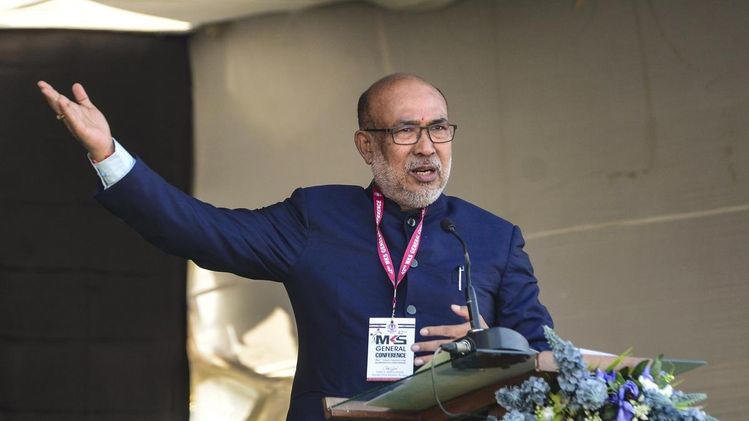
A fresh debate has emerged in Manipur after former Chief Minister N Biren Singh questioned the state’s progress on identifying and addressing illegal immigration. Biren Singh stated that the public deserves answers on how far the Manipur illegal immigrant detection process has moved, especially given the ongoing concerns about demographic changes and security issues. His remarks have reignited discussion on one of the state’s most sensitive topics.
Read More: Assam Governor Reviews Flood Protection Work in Dhemaji
Biren Singh Calls for Transparency
Biren Singh said that the people of Manipur must be informed about the actual status of the Manipur illegal immigrant detection process. He stressed that the issue has long influenced the state’s social stability, yet clear updates have remained limited. According to him, transparency is essential to ensure trust and accountability.
He explained that earlier efforts aimed at identifying illegal immigrants were introduced with the goal of protecting indigenous populations. Several surveys, verification drives, and data collection campaigns were started. However, Singh noted that the public has not received consistent updates. He believes that unanswered questions have created confusion, especially as tensions surrounding identity, land, and security continue.
His statement reflected concerns expressed by many groups who fear that unchecked migration from across the border could alter the demographic balance. Singh mentioned that the government must present concrete data, explain delays, and outline future plans. He stressed that silence or vague statements weaken public confidence.
Public Concerns Over Ongoing Issues
The conversation around the Manipur illegal immigrant detection effort has been closely tied to recent unrest and strained relations between communities. Many residents believe that accurate data on illegal migrants is essential for maintaining peace. Some civil groups have long demanded stricter border monitoring, arguing that gaps in security have affected the state’s demographic and cultural structure.
Biren Singh echoed these concerns, explaining that the people deserve clarity because the issue affects multiple areas, including security, land use, employment, and welfare schemes. He added that uncertainty can intensify fear and suspicion, which only deepens social divides. Singh emphasised that the goal is not to target any community but to protect the rights of indigenous people.
Several public organisations expressed support for Singh’s call for transparency. They believe that clear communication will help address rumours and reduce tensions. Community elders also said that timely updates from the government could help everyone understand the scale of the problem and the steps needed to resolve it.
Need for Stronger Monitoring and Clear Policies
Biren Singh suggested that Manipur needs stronger monitoring systems, updated databases, and well-defined procedures to handle the issue effectively. He noted that the detection process must be systematic and backed by accurate documentation. Verification of identity records and settlement patterns, according to him, must be carried out thoroughly.
He stated that border districts require special attention, as they remain the most vulnerable points for illegal entry. Singh pointed out that without proper surveillance and coordinated action, earlier efforts may lose their value. He also noted that coordination between state and central agencies is important to ensure that data remains accurate and actionable.
Singh urged the government to outline how technology, local administration, and community participation will be used to improve the process. He added that only a transparent, step-by-step approach can build lasting trust. He reiterated that development, security, and social stability depend on addressing the issue in a fair and timely manner.
Civil society groups also highlighted that detection must be followed by clear legal procedures. They stressed that humanitarian considerations must not be ignored, yet laws should be applied uniformly. Some groups suggested that updated identification systems and community-based reporting could support ongoing efforts.
Conclusion
N Biren Singh’s comments on the Manipur illegal immigrant detection process have reignited public interest in a long-standing issue. His call for transparency reflects deep-rooted concerns about demographic changes, border safety, and social harmony. While the government has previously taken steps to address the problem, the public now seeks clearer information on progress and future plans.
The conversation has shown that people want both accountability and stability. As Manipur continues to manage sensitive social and political challenges, transparency will play a key role in restoring trust. Singh’s remarks underline the need for clear policies, better monitoring, and open communication. For many residents, answers are not just expected—they are essential for ensuring a secure and united future.
Read More: Manipur Declares Normalcy After Sangai Festival Clash