


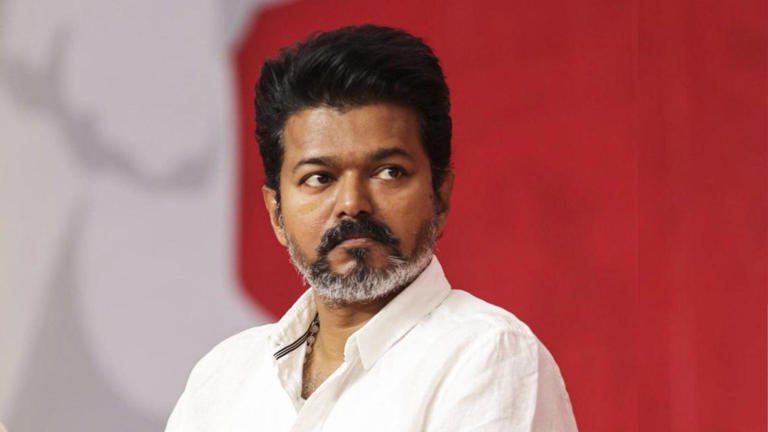
The Tamil Nadu unit of the Bharatiya Janata Party (BJP) has approached Governor Rajendra Arlekar, seeking action over the alleged presence of two “private individuals” at an official meeting chaired by Chief Minister C. Joseph Vijay. Describing the incident as a “transgression,” the party alleged that individuals holding no official government position were allowed to participate in a confidential government meeting, raising questions about administrative protocol and governance.
A BJP delegation submitted a representation to the Governor, urging him to examine the matter and take appropriate action. The party argued that official government meetings should be attended only by authorized public servants and individuals who are legally entitled to participate in such deliberations.
The development has added to the political debate surrounding allegations about the presence of non-government individuals in official state proceedings.
BJP Seeks Governor’s Intervention
According to BJP leaders, the memorandum submitted to the Governor highlights concerns over the reported attendance of two private individuals during a government meeting chaired by the Chief Minister. The party maintained that allowing persons without any official designation to participate in confidential administrative discussions could undermine established governmental procedures and accountability.
The BJP urged Governor Rajendra Arlekar to examine whether existing administrative rules and constitutional conventions were followed and to ensure that appropriate safeguards are maintained in future official meetings.
Party representatives also emphasized the importance of preserving confidentiality in high-level government deliberations involving policy decisions and administrative matters.
Concerns Over Governance and Transparency
The BJP described the alleged incident as a matter concerning governance, transparency, and institutional integrity. According to the party, official government meetings involve sensitive discussions, policy decisions, and confidential documents that should remain accessible only to authorized officials.
The party argued that participation by individuals without a formal constitutional, statutory, or administrative role could raise questions regarding confidentiality, decision-making processes, and administrative accountability.
BJP leaders stated that adherence to established governmental procedures is essential for maintaining public confidence in state institutions and ensuring transparent governance.
They called for clarity regarding the circumstances under which the alleged individuals were present during the meeting.
Allegations Follow Earlier Political Complaints
The BJP’s representation comes days after the principal opposition, the DMK, lodged a separate complaint with the Tamil Nadu Director General of Police alleging that two individuals reportedly close to Chief Minister Vijay had attended Cabinet meetings and official review meetings despite not holding any government office. The DMK had also sought legal action, alleging that the individuals participated in confidential government deliberations and influenced administrative functioning.
The BJP’s latest move before the Governor has added another dimension to the ongoing political controversy.
While both parties have raised concerns regarding the alleged participation of private individuals, the complaints have been made through different constitutional and administrative channels.
Official Protocol Under Scrutiny
The controversy has brought renewed attention to the importance of official protocol governing high-level government meetings. Cabinet meetings and official administrative reviews generally involve elected representatives, ministers, senior civil servants, and authorized government officials responsible for policy formulation and implementation.
Political observers note that adherence to established administrative procedures helps ensure confidentiality, accountability, and institutional integrity within the functioning of government.
The BJP maintained that any departure from these established norms deserves careful examination by the competent constitutional authorities.
The issue has also generated wider public discussion regarding transparency and governance standards within executive administration.
Constitutional and Administrative Dimensions
The BJP’s memorandum reportedly emphasizes that official government meetings should function strictly within the constitutional and legal framework governing executive administration. Party leaders argued that access to confidential discussions and official records should remain restricted to those legally empowered to participate.
Constitutional experts often note that executive decision-making operates within established administrative procedures designed to protect confidentiality while ensuring accountability and responsible governance.
The Governor, as the constitutional head of the state, may examine representations submitted by political parties in accordance with constitutional provisions and established legal procedures.
Any future action, if warranted, would follow the applicable legal and administrative framework.
Political Reactions Expected to Continue
The issue is expected to remain an important topic in Tamil Nadu’s political discourse as various parties continue presenting their respective positions.
The BJP has maintained that its representation is intended to uphold institutional integrity and ensure that official government procedures are followed without exception.
Political analysts believe the matter could generate further debate within the state regarding executive accountability, administrative transparency, and constitutional conventions governing official meetings.
The controversy may also prompt broader discussions on governance practices and the functioning of executive institutions in the state.
Matter Awaits Further Developments
With the BJP formally approaching Governor Rajendra Arlekar, attention is now focused on the next course of action regarding the representation submitted by the party. No official response from the Governor’s office or the Tamil Nadu government regarding the BJP’s latest memorandum had been reported at the time of writing.
The issue continues to draw political attention due to its implications for governance, administrative procedures, and constitutional accountability. As developments unfold, any further action will depend on the examination of the representations submitted before the appropriate authorities.
The controversy underscores the importance of transparency, adherence to official protocol, and institutional accountability in the functioning of democratic governments. Whether the matter results in administrative clarification, legal proceedings, or further political debate, it has already become a significant issue in Tamil Nadu’s evolving political landscape, with both ruling and opposition parties closely watching its outcome.