


India’s youngest voters are rapidly emerging as one of the most important political groups ahead of the 2029 Lok Sabha elections. Generation Z, broadly referring to young people who have grown up in the internet and social media age, is changing not only the way politics is consumed but also the way political movements are created.
Unlike previous generations, many young voters do not depend primarily on television debates, newspaper headlines or traditional political rallies to understand politics. They increasingly engage with political issues through Instagram, YouTube, short videos, memes, podcasts and campus discussions. More importantly, social media is no longer just a platform for political parties to broadcast messages. It has become a space where young people can question governments, organise protests and build movements independently.
The youth protests witnessed in 2026, particularly around education and employment concerns, have underlined the political power of digitally connected young Indians. The developments have forced major political parties to rethink how they communicate with first-time and young voters.
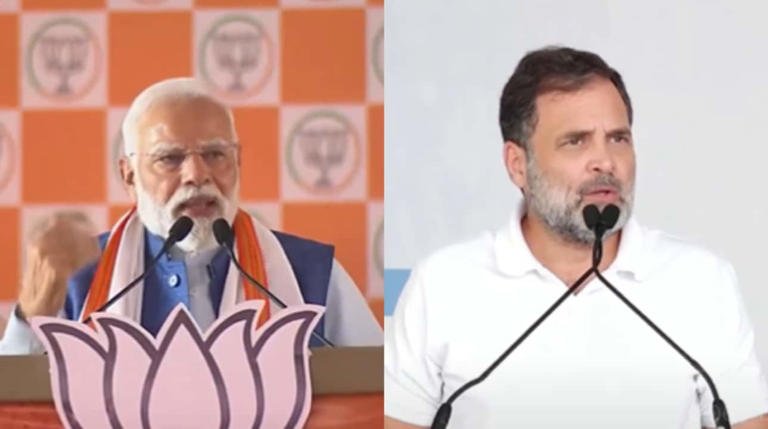
As the battle for 2029 slowly begins, both the BJP and Congress appear to be adapting their political strategies to connect with a generation that values direct communication, authenticity and participation.
Why Gen Z Has Become Politically Important
India remains a young country, with more than half of its population below the age of 35. Gen Z is expected to form one of the largest and most politically significant voting blocs by the time the country goes to the polls in 2029. Reuters has reported that political outreach is increasingly being shaped around the potential influence of hundreds of millions of younger voters.
However, winning Gen Z may not be as simple as creating viral videos or using popular internet language.
For many young Indians, politics is closely connected to everyday concerns. Jobs, competitive examinations, paper leaks, higher education, skill development, rising living costs and career opportunities are issues that directly affect their lives. The recent youth-led mobilisation showed that frustration over such issues can quickly move from online platforms to streets and campuses.
This is why the battle for young voters ahead of 2029 is likely to be about more than social media popularity. Political parties will have to convince Gen Z that they understand their concerns and are willing to respond.
BJP’s Shift From Digital Messaging to Direct Engagement
The BJP has been one of India’s most successful political users of digital communication over the past decade. Its strong online presence helped it reach millions of voters across different platforms.
But the changing political environment has presented a new challenge. The same social media ecosystem that once allowed political parties to communicate directly with citizens is now being used by young people to organise independently and challenge established narratives.
In response, the BJP and the Narendra Modi government have increased their focus on Gen Z outreach. One major initiative is the reported “One Day, One University” programme, under which Union ministers are expected to visit universities and interact directly with students. The idea is to move beyond one-way online messaging and create direct conversations with young people on campuses.
The BJP has also been experimenting with a more informal digital style. Prime Minister Narendra Modi has used selfie-style videos, humour and popular cultural references on Instagram as part of an effort to communicate in a format that feels more familiar to younger audiences.
The party’s recent organisational changes have also highlighted the importance being given to youth outreach as it prepares for upcoming state elections and the larger “Mission 2029” political battle.
The challenge for the BJP will be to ensure that its digital outreach does not appear overly scripted. Younger audiences often respond more positively to content that feels spontaneous and genuine rather than heavily produced political messaging.
Congress Bets on Conversations and Student Issues
The Congress, meanwhile, is attempting to strengthen its connection with younger voters by placing greater emphasis on student concerns, public interactions and youth movements.
Rahul Gandhi has increasingly used direct interactions, public meetings and digital question-and-answer formats to communicate with young people. His political outreach has moved beyond conventional rallies towards conversations with students, farmers and other groups.
A major part of the Congress strategy is to highlight the concerns surrounding education, employment and economic opportunities. The party has also intensified efforts to connect with student movements following the recent youth protests, which demonstrated that young people can organise and influence political debate outside traditional party structures.
The Congress campaign “Chhatron Ki Goonj” has emerged as part of this broader attempt to build a direct relationship with students and bring their concerns into mainstream political discussion. The approach reflects an effort to make young voters feel that their personal experiences, including struggles related to education and employment, are central to the party’s political message.
For Congress, the opportunity lies in converting youth frustration into long-term political support. However, criticism of the government alone may not be enough. Young voters are also likely to demand clear alternatives, practical policies and visible solutions.
Social Media Is Becoming the New Political Battleground
The political battle for Gen Z is also transforming the way campaigns are designed.
Instagram reels, YouTube videos, memes and short-form content are becoming important tools for political communication. But unlike television advertisements or traditional campaign speeches, digital platforms allow young voters to immediately react, criticise, remix and challenge political messaging.
This creates both an opportunity and a risk for political parties.
A video can reach millions within hours, but a poorly received campaign can also become the subject of jokes and criticism just as quickly. Gen Z is therefore difficult to reach through simple advertising alone. Political communication increasingly requires interaction.
The recent youth protests demonstrated how quickly digital networks can convert individual frustration into collective political action. Campus groups and social media communities can now mobilise people without relying entirely on established political organisations.
The Real Battle Will Be Over Jobs and Education
While social media may be the medium, real-life issues will remain at the centre of the fight for Gen Z voters.
Employment is likely to remain one of the biggest concerns. Young people are entering a competitive job market while also dealing with questions surrounding examinations, skills, automation and changing career opportunities.
Education will also remain politically sensitive. The 2026 youth mobilisation demonstrated how strongly students can react when they believe their academic and professional futures are at risk.
Both BJP and Congress are therefore likely to focus heavily on policies related to jobs, education, skill development and economic opportunities.
The party that succeeds may not necessarily be the one with the most viral reels. It could be the one that convinces young voters that it understands the uncertainty they face.
Gen Z May Not Vote as a Single Bloc
Despite the growing attention around young voters, Gen Z should not be treated as one uniform political group.
India’s young population is diverse. A student in Delhi may have different concerns from a first-time voter in rural Uttar Pradesh, a young professional in Bengaluru or a graduate searching for work in West Bengal.
Caste, class, region, language, education and economic background will continue to influence voting decisions. This means political parties cannot depend on a single nationwide message.
The challenge will be to combine national communication with local issues. Digital campaigns may create visibility, but ground-level organisation and direct engagement will remain equally important.
The Road to 2029 Has Already Begun
The battle for India’s youngest voters is still in its early stages, but the direction is becoming increasingly clear. Both BJP and Congress recognise that Gen Z cannot simply be treated as an audience that listens quietly to political speeches.
This generation wants to participate, question and respond.
For the BJP, the task is to combine its powerful organisational machinery with a more direct and youth-friendly style of communication. For Congress, the challenge is to transform its growing engagement with student and youth concerns into sustained political trust.
The events of 2026 have shown that young Indians can influence the national political conversation through campuses, protests and digital platforms.
As 2029 approaches, Instagram reels, university interactions and online campaigns will undoubtedly play a larger role. But ultimately, India’s Gen Z voters may judge political parties on a much simpler question: Who understands their problems, listens to their voices and offers a believable future?
That question could make India’s youngest voters one of the most closely watched forces in the race for power in 2029.