


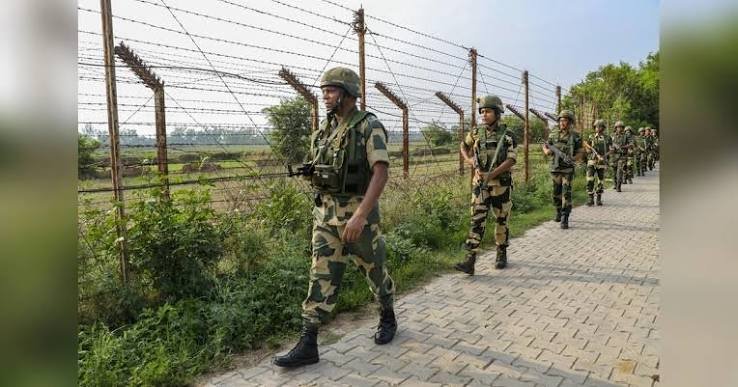
High-level administrative and political representatives from Tripura and Mizoram have convened in Agartala to discuss a long-pending inter-state border dispute and explore a permanent resolution. The meeting reflects renewed efforts by both states to address boundary-related disagreements through dialogue and institutional mechanisms.
The talks bring renewed attention to a dispute that has affected relations between communities along the Tripura-Mizoram border. Moreover, sustained engagement between the two state governments could help establish clearer arrangements and reduce the possibility of recurring tensions.
The discussions also highlight the importance of cooperation between neighbouring northeastern states in resolving sensitive boundary matters.
Khneng Embroidery Wins National Spotlight as Air India Express Showcases Meghalaya Craft
Tripura Mizoram Border Talks Begin
The Tripura Mizoram border talks in Agartala brought senior officials and political representatives together to discuss the unresolved boundary issue.
The meeting provides a formal platform for both sides to present their concerns and examine possible solutions. Furthermore, high-level participation indicates the importance both governments attach to finding a durable settlement.
The talks could establish the foundation for further negotiations.
Long-Standing Boundary Dispute
The Tripura-Mizoram border issue has remained sensitive for years.
Boundary disagreements can affect land use, administrative jurisdiction, movement, and relations between communities living near disputed areas. Additionally, uncertainty over boundaries can complicate government service delivery and development planning.
Resolving these questions requires detailed examination of historical records and existing administrative arrangements.
Dialogue Preferred Over Confrontation
The latest meeting demonstrates an emphasis on dialogue rather than confrontation.
Direct discussions allow both governments to address disagreements through established administrative channels. Moreover, negotiations can help identify mutually acceptable arrangements without allowing local disputes to escalate.
A sustained political commitment will remain important throughout the process.
Administrative Coordination Could Help
Officials from both states can play a key role in resolving practical aspects of the dispute.
Joint surveys, historical map comparisons, land-record verification, and field assessments could help clarify contested areas. Furthermore, regular communication between district administrations can prevent misunderstandings from developing into larger disputes.
Technical assessments could complement political negotiations.
Communities Remain Central to Resolution
Residents living along the border will ultimately experience the consequences of any settlement.
Their concerns regarding land, livelihoods, access, and administrative services will need consideration. Additionally, community representatives can provide valuable information about local conditions and longstanding patterns of land use.
A durable settlement will therefore require sensitivity to local interests.
Need for Clear Boundary Arrangements
A permanent solution would require clarity regarding the exact boundary and administrative responsibilities.
Authorities could examine existing records and historical agreements while considering present-day realities. Moreover, clear demarcation can reduce uncertainty and make it easier for both states to manage their respective territories.
Such clarity could also reduce future disputes.
Development Can Benefit From Stability
Border stability can support economic and social development.
Clear administrative arrangements can make it easier to plan roads, public services, markets, and other infrastructure. Furthermore, communities can benefit when government agencies can operate without recurring boundary-related uncertainty.
A peaceful settlement could therefore have economic benefits alongside political significance.
Northeast States Seek Cooperative Solutions
Inter-state boundary disputes remain an important issue across parts of Northeast India.
Tripura and Mizoram’s decision to pursue negotiations demonstrates how neighbouring states can use institutional dialogue to address disagreements. Additionally, successful agreements can provide useful examples for resolving other regional boundary disputes.
Cooperation can strengthen stability across the Northeast.
Permanent Resolution Requires Continued Talks
A single meeting may not resolve a dispute that has remained unsettled for years.
Negotiators may need multiple rounds of discussions, technical assessments, and consultations with affected communities. Moreover, both governments will need to maintain political commitment even when disagreements arise during negotiations.
Patience and sustained engagement will therefore remain essential.
What Happens Next?
The two states could continue discussions following the Agartala meeting and establish mechanisms for further negotiations.
Officials may examine disputed areas, review historical documents, and develop possible boundary arrangements. Furthermore, regular political and administrative communication could help maintain momentum toward a final settlement.
The success of the process will depend on both sides finding mutually acceptable solutions.
Conclusion
The Tripura Mizoram border talks in Agartala mark a renewed effort by the two neighbouring states to address their long-pending boundary dispute through high-level political and administrative dialogue.
Moreover, continued negotiations could help clarify territorial arrangements, address community concerns, and reduce the possibility of future tensions. At the same time, a permanent solution will require careful examination of historical records, local realities, and administrative requirements.
Overall, sustained dialogue, joint verification, and community-sensitive boundary management could provide the foundation for a durable resolution between Tripura and Mizoram.
FAQs
1. Why did Tripura and Mizoram hold talks?
The two states convened high-level discussions to seek a permanent solution to their long-pending border dispute.
2. Where were the talks held?
The reported high-level meeting took place in Agartala, Tripura.
3. Why are these border disputes difficult to resolve?
They can involve historical boundaries, land records, administrative jurisdiction, and the interests of communities living along the border.
4. How could the dispute be resolved?
Possible measures include joint surveys, historical-record verification, field assessments, political negotiations, and community consultations.
5. Why is a permanent settlement important?
A clear settlement could reduce recurring tensions, improve administrative coordination, and support infrastructure and economic development in border communities.