


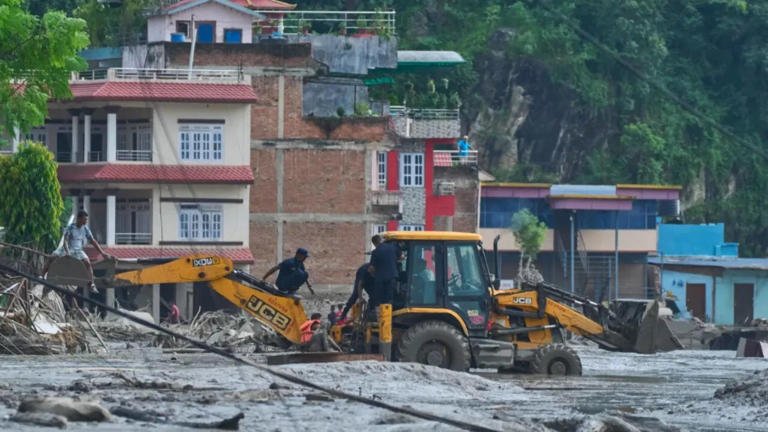
Chinese professional rescue teams reached the core disaster zone near Gyirong dry port on the Nepal-Tibet border more than 50 hours after devastating flash floods and mudslides struck the region, marking a major breakthrough in the search and rescue operation.
The first specialised team reached the worst-hit border area on Friday afternoon after navigating severely damaged roads, deep mud and dangerous terrain. Rescuers had to use a combination of inflatable boats, mountain trails, ropes and heavy-lift drones to overcome infrastructure that had been destroyed by the massive flood.
21 Firefighters Reach Worst-Hit Area
The first professional team to reach the core rescue site consisted of 21 firefighters and a search dog.
Six firefighters came from the Tibet Fire and Rescue Corps, while 15 firefighters and the search dog were deployed from Sichuan.
The team reached the border-gate area at approximately 4:30 pm on Friday, more than two days after the disaster struck.
Their arrival provided rescuers with direct access to one of the areas that had suffered the most extensive destruction from the flood and mudslide.
The breakthrough came after emergency teams spent hours trying to overcome damaged roads and hazardous conditions that had prevented vehicles from reaching the site.
Destroyed Roads Force Rescuers to Use Multiple Routes
The scale of infrastructure damage made conventional rescue operations extremely difficult.
Roads leading to the disaster zone were buried under mud and debris, while parts of the route were washed away completely.
Rescuers therefore adopted a combined “water, land and air” approach.
Inflatable boats were used to negotiate waterways, rescue personnel crossed mountainous terrain on foot and ropes were deployed in difficult sections. Heavy-lift drones were also used to survey the destruction and transport equipment and supplies into areas inaccessible to vehicles.
The multi-route strategy allowed emergency teams to gradually move closer to the core disaster area despite the destruction.
Barrier Lake Creates Additional Danger
The rescue operation was further complicated by the formation of a barrier lake upstream.
The lake was created when debris from the disaster obstructed the natural flow of water. Rising water levels raised concerns that an overflow or breach could trigger another dangerous flood.
At one point on Friday, rescue teams were forced to withdraw to safer ground because of the increased risk from the overflowing lake.
Operations resumed later after authorities determined that the immediate danger had eased.
The situation remained closely monitored because the surrounding region continued to face risks from flooding, landslides and unstable geological conditions.
Gyirong Border Area Devastated
The Gyirong area suffered extensive destruction after the flash flood swept through the border region.
The flood carried huge quantities of water, mud, rocks and debris through the area, damaging roads, buildings and infrastructure around the important trading hub.
Images and footage from the region showed sections of roads buried under thick layers of mud and debris.
The Gyirong border crossing, which plays an important role in trade between China and Nepal, was among the worst-affected locations.
The destruction has also disrupted transport and commercial activity along the border.
Hundreds Remain Missing in Tibet
The disaster has left a large number of people missing on the Chinese side of the border.
Chinese authorities reported that 558 people remained missing in Tibet, while the number of confirmed deaths on the Tibetan side had risen to five by Friday.
The figures remain subject to change as rescue teams gain access to previously isolated areas and authorities establish contact with people who may have survived but remain uncontactable.
The scale of the missing-persons list has increased the urgency of the rescue operation.
China Mobilises Large Rescue Force
China has deployed a substantial emergency response to the affected region.
By Friday evening, 681 national fire and rescue personnel and 113 vehicles had been mobilised to Gyirong, including teams from Tibet and Sichuan.
Authorities had also sent more than 6,600 pieces or sets of rescue and support equipment to assist the operation.
The deployment reflects the scale of the challenge facing rescue teams as they search through damaged infrastructure and unstable terrain.
The operation is expected to continue as teams gain access to additional parts of the disaster zone.
Premier Li Qiang Visits Affected Region
Chinese Premier Li Qiang travelled to Gyirong County on Thursday after being assigned by President Xi Jinping to oversee the emergency response.
Li inspected affected areas, met rescue personnel and visited temporary shelters where survivors had been taken.
He stressed the need to make every possible effort to save lives, even as rescue teams faced extremely difficult conditions.
The Chinese leadership has also directed authorities to strengthen monitoring of geological and environmental risks in the region.
Rescue Efforts Complicated by Weather
Weather conditions remain another major obstacle to the rescue operation.
Heavy rain and thunderstorms were forecast in the Gyirong area, increasing the risk of additional flash floods and landslides.
The combination of saturated ground, damaged roads and unstable slopes could create new hazards for rescue personnel.
Authorities have therefore been required to balance the urgency of reaching missing people with the need to protect rescuers from secondary disasters.
Thousands Evacuated From Disaster Zone
Despite the difficulties, authorities have managed to evacuate hundreds of people from the affected area.
Chinese state media reported that 499 Chinese nationals and 555 foreign nationals had been transported out of the disaster zone by Friday.
The evacuation has helped move survivors away from areas vulnerable to additional flooding and geological hazards.
Those evacuated are being provided with temporary assistance while authorities continue searching for people who remain missing.
Nepal Also Faces Massive Flood Disaster
The devastation on the Tibetan side is part of a much larger disaster affecting both sides of the Nepal-China border.
In Nepal, catastrophic flash floods and mudslides have killed hundreds of people and left thousands missing.
The disaster has damaged roads, bridges and settlements, severely complicating rescue and relief operations.
The destruction of transport links on both sides of the border has also disrupted cross-border trade and movement.
Search and Rescue Enters Critical Phase
The arrival of professional rescuers at the core Gyirong disaster zone represents an important development in the search operation.
For more than 50 hours, destroyed infrastructure and dangerous environmental conditions prevented rescue teams from reaching the worst-hit location.
Now that specialised personnel have reached the area, authorities can begin a more detailed search of the ruins and assess the full extent of the destruction.
However, the continuing risk of secondary floods, landslides and unstable terrain means the operation remains highly dangerous.
Race Against Time to Find Survivors
The rescue operation is now effectively a race against time as teams search for people who may still be trapped or stranded.
The use of drones, boats, ropes and specialised rescue equipment will remain important in areas where conventional vehicles cannot operate.
Authorities are also expected to continue restoring roads and other infrastructure to improve access to the disaster zone.
For families waiting for information about missing relatives, the arrival of the first professional rescue team at the core area offers a measure of hope.
Chinese Rescue Operation Faces Huge Challenge
The arrival of Chinese rescuers at the core disaster zone more than 50 hours after the flood marks a significant step in the response to one of the most destructive disasters to hit the Nepal-Tibet border region in recent years.
The operation demonstrates the extraordinary logistical challenges created by the destruction of roads and infrastructure.
With hundreds still missing on the Tibetan side and the risk of further flooding remaining, rescue teams face an extremely difficult task.
As authorities continue searching the devastated Gyirong border area, the priority remains finding survivors, accounting for missing people and preventing further loss of life from secondary disasters.