


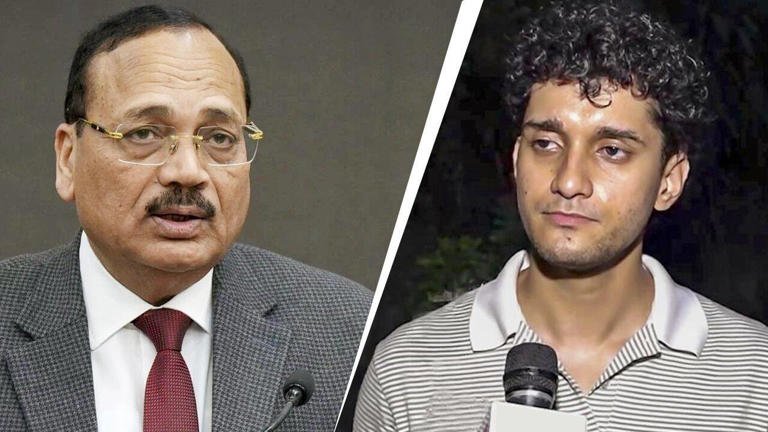
CJP co-convenor and spokesperson Saurav Das thanked the Supreme Court after a bench led by Chief Justice of India Surya Kant ordered the quashing of FIRs registered against students who participated in protests held across the country between July 20 and July 25.
Describing the development as historic, Das expressed gratitude to the court after the CJI-led bench invoked its extraordinary powers under Article 142 of the Constitution to ensure that criminal proceedings linked to the protests would not affect the future of students and young participants who had joined the demonstrations bona fide.
Saurav Das Calls Supreme Court’s Decision Historic
Following the Supreme Court’s order, Saurav Das thanked the bench for its decision and described the day as historic for the student protest movement.
“I just want to thank the court for what it did today. It’s historic,” Das told the bench after the order was passed.
The CJI-led bench also acknowledged the response from the protesters, with the Chief Justice noting that constructive gestures from both sides could help create an environment beneficial for young people. The proceedings marked a significant resolution to the dispute over criminal cases registered in connection with the nationwide student protests.
Supreme Court Quashes FIRs Across India
The Supreme Court ordered that FIRs registered in connection with the student protests held between July 20 and July 25 should be quashed and that any other FIRs related to the same incidents, even if not specifically placed before the court, should not be pursued or investigated.
The bench invoked Article 142, stating that the decision was taken while keeping in mind the future of young protesters who had participated in the demonstrations in good faith.
The court’s order extended across states and Union Territories, providing relief to students who had faced criminal proceedings for their participation in the protests. The court said such cases should be treated as closed for all intents and purposes, subject to the exceptions specified in its order.
Centre and States Move to Withdraw Cases
During the hearing, Solicitor General Tushar Mehta informed the Supreme Court that the Centre, through Delhi Police, along with Bihar, Assam, West Bengal and Maharashtra, had moved applications seeking the quashing of FIRs linked to the protests.
The government also assured the court that no fresh FIRs would be registered in connection with protest-related incidents that took place between July 20 and July 25.
The Supreme Court subsequently extended relief on a pan-India basis, ensuring that cases relating to the same protest incidents would not continue merely because they had not been individually brought before the court.
CJP Withdraws September 5 Protest March
Following the Centre’s assurances and the Supreme Court’s order, the CJP withdrew its proposed protest march scheduled for September 5.
Saurav Das informed the court that the organisation had decided to call off the march in view of the government’s positive assurances and the judicial backing given to them through the Supreme Court’s order.
In his statement before the court, Das said the CJP would look forward to compliance with the order and also thanked the court and the lawyers representing both sides for their efforts towards resolving the matter.
The proposed march had been announced after concerns were raised over the continued existence of cases against students who had participated in the earlier protests.
Article 142 Invoked to Protect Students’ Future
A major aspect of the Supreme Court’s decision was its emphasis on protecting the future of young protesters.
The bench observed that the powers available under Article 142 could be invoked in the particular circumstances of the case to ensure complete justice. The court noted that students who had participated in the protests bona fide should not face long-term consequences merely because of their participation in demonstrations.
The ruling is being viewed as significant because of the Supreme Court’s decision to extend the relief beyond the FIRs specifically listed in the applications filed before it.
Any FIR connected to the same protest incidents during the specified period was directed not to be pursued or investigated, effectively giving nationwide relief to eligible student protesters.
Exception for Individuals With Serious Criminal Antecedents
The Supreme Court’s order, however, did not provide blanket immunity to every individual present during the protests.
The court permitted authorities to pursue a fresh case against 2,873 individuals identified in the proceedings as having serious criminal antecedents. The exception was intended to distinguish between students and young people participating in protests and individuals alleged to have been involved in serious criminal activities.
Reports said the court’s approach sought to ensure that peaceful protesters were not unnecessarily subjected to criminal proceedings while allowing law enforcement agencies to take action against individuals accused of serious offences.
Compensation Policy Also Discussed
The Supreme Court also directed the Centre to formulate a framework for compensation on a pan-India basis for families of students affected by the wider NEET-related crisis.
The court directed the government to work out the modalities within a specified period, with the broader aim of establishing a structured compensatory mechanism.
The issue formed part of the assurances discussed during the hearing and was among the concerns raised during the student-led movement.
Major Relief for Student Protesters
The decision marks a significant development for students who participated in the nationwide protests and subsequently faced criminal cases.
The Supreme Court quashes FIRs against student protesters decision has been welcomed by the CJP, with Saurav Das describing the order as historic and thanking the CJI-led bench for its intervention.
With the FIRs linked to the specified protest incidents ordered to be closed and the September 5 march withdrawn, the development has brought an important phase of the dispute to an end. At the same time, the Supreme Court’s distinction between bona fide student protesters and individuals accused of serious criminal conduct is expected to remain a key aspect of the order as authorities proceed with further action.