


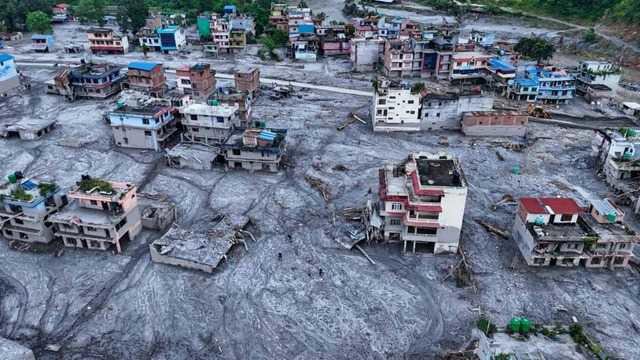
Climate change is increasing the risk of destructive floods, landslides, avalanches and other disasters across Nepal and the wider Himalayan region, with experts warning that warming temperatures are making high mountain environments increasingly unstable.
The devastating floods that recently struck Nepal have once again drawn global attention to the growing vulnerability of Himalayan communities. While scientists are still investigating the precise factors behind the latest catastrophe, experts say rising temperatures are creating conditions that can increase the likelihood of glacier-related hazards and compound the impacts of extreme weather events.
Warming Himalayas Create New Disaster Risks
The Himalayas are particularly vulnerable to climate change because rising temperatures affect glaciers, snow cover, frozen ground and high-altitude rock and ice formations.
As temperatures increase, glaciers melt and retreat, while ice and frozen material that once helped stabilise mountain slopes can weaken. This can increase the risk of rockslides, ice avalanches and other sudden high-altitude events.
Scientists say such hazards can trigger a chain reaction. A rock or ice avalanche may block a river temporarily before the accumulated water bursts through, causing destructive flash floods downstream. Heavy rainfall can further worsen the situation, creating multiple overlapping hazards for communities in mountain valleys.
Nepal Floods Highlight Growing Climate Concerns
The recent Nepal disaster demonstrated how rapidly a high-altitude event can develop into a devastating humanitarian crisis downstream.
The August 26 floods were linked to the collapse of rock and glacial ice in the Himalayan region, unleashing a destructive flow of water, ice, mud and debris. The disaster killed more than 1,000 people, left thousands missing and caused extensive destruction to homes, roads, bridges and energy infrastructure.
Experts caution that it is important to distinguish between the specific cause of an individual disaster and the broader influence of climate change. However, the scientific consensus is increasingly clear that a warming climate is changing the Himalayan environment and increasing the frequency and severity of several natural hazards.
Floods, landslides, avalanches and droughts are already becoming more frequent and destructive across the Hindu Kush Himalayas, according to experts monitoring environmental changes in the region.
Melting Glaciers Increase High-Mountain Hazards
One of the most serious concerns is the rapid transformation of glaciers and glacial lakes.
Warmer temperatures cause glaciers to melt and retreat, often leading to the formation or expansion of glacial lakes. In some cases, these lakes are held back by unstable natural barriers of ice, rock or moraine.
If such barriers collapse or are disrupted by an avalanche, landslide or earthquake, enormous volumes of water and debris can rush downstream in a Glacial Lake Outburst Flood, or GLOF.
Climate experts say warming is also affecting the stability of mountain slopes. As ice and frozen ground melt, rocks and other material can become less stable, increasing the possibility of sudden collapses in high-altitude areas.
Himalayan Disasters Can Trigger a Chain Reaction
The danger in the Himalayas is not limited to individual hazards occurring separately. Experts increasingly warn that climate change can intensify cascading disasters, where one event triggers another.
For example, an ice or rock avalanche may fall into a valley and block a river. Water can then accumulate behind the blockage before eventually breaking through, producing a sudden and powerful flood.
Similarly, intense rainfall can occur after an avalanche or landslide, worsening flooding and making rescue operations more difficult.
These cascading risks make the Himalayan region particularly challenging because communities, roads and hydropower infrastructure are often located in narrow valleys directly downstream from high-altitude hazard zones.
Early Warning Systems Become Increasingly Important
The growing frequency of extreme events has strengthened calls for improved scientific monitoring and early warning systems across Nepal and neighbouring Himalayan countries.
Experts say satellite monitoring, ground sensors and real-time weather and glacier observations can help authorities identify developing threats. However, effective disaster preparedness also requires information to reach vulnerable communities quickly.
Following the recent disaster, Nepal renewed efforts to strengthen cooperation and improve access to cross-border data and early warning information. The issue is particularly important because Himalayan rivers and glaciers frequently extend across national boundaries.
Better land-use planning, stronger infrastructure and improved evacuation systems could also help reduce the human impact of future disasters.
Climate Action and Adaptation Needed
The Nepal floods have become another warning about the growing consequences of climate change in one of the world’s most environmentally fragile regions.
Experts warn that as global temperatures continue to rise, Himalayan countries may face increasingly frequent and destructive floods, landslides, avalanches and glacier-related disasters.
For Nepal, the challenge will be to combine stronger disaster preparedness with long-term climate adaptation. This includes monitoring vulnerable glaciers and mountain slopes, improving early warning systems and ensuring communities have the resources and information needed to respond quickly.
The recent floods have underlined a wider reality: disasters in the Himalayas can no longer be viewed simply as isolated events. As climate change continues to transform the region’s glaciers, rivers and mountain landscapes, reducing future risks will require urgent local, regional and global action.