


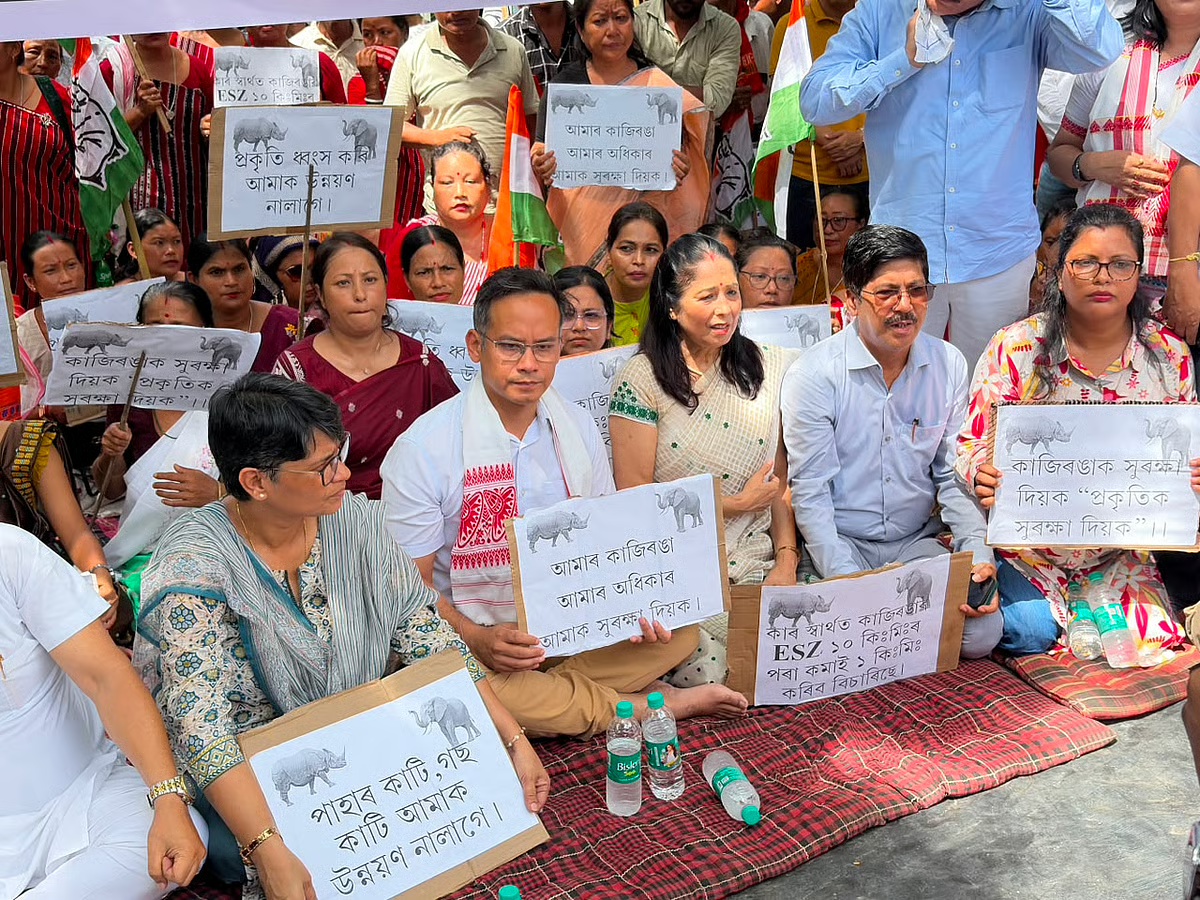
The Congress has reportedly staged protests near Kaziranga over the Assam government’s proposal to reduce the Eco-Sensitive Zone (ESZ) around Kaziranga National Park. Party leaders have alleged that reducing the protected buffer could facilitate corporate mining and weaken environmental safeguards.
The protest adds political pressure to an already contentious debate over the proposed ESZ change. Moreover, Congress has argued that conservation concerns should take priority over commercial interests in an ecologically sensitive region.
The allegations remain political claims, and any connection between the proposed ESZ reduction and specific mining activity would require evidence and official verification.
Walking Out of Unity Talks: Pradyut Bordoloi Exit Exposes Tensions in Assam Opposition Alliance
Congress Stages Protest Near Kaziranga
The Congress Kaziranga protest reportedly targeted the proposed reduction of the ESZ around the national park.
Party workers and leaders gathered near Kaziranga to oppose the government’s proposal. Furthermore, the demonstration sought to draw attention to what Congress described as potential threats to the region’s ecological security.
The protest reflects growing political opposition to changes in environmental regulations surrounding the park.
Corporate Mining Allegations Drive Opposition
Congress has alleged that reducing the ESZ could benefit corporate mining interests.
The party argues that a narrower protected zone could potentially make areas surrounding Kaziranga more accessible to commercial activities. However, the allegation that the proposal specifically aims to facilitate illegal corporate mining remains a political claim and requires independent verification.
Authorities have yet to establish such a connection based solely on the protest allegations.
Kaziranga’s Conservation Status
Kaziranga represents one of India’s most important wildlife conservation landscapes.
The national park supports the greater one-horned rhinoceros along with elephants, tigers, wild water buffalo, and numerous other species. Moreover, the surrounding landscape can play an important role in maintaining ecological connectivity and wildlife movement.
Consequently, changes to environmental regulations around the park attract considerable scrutiny.
ESZ Reduction Remains Controversial
The proposed reduction from 10 km to 1 km has generated strong reactions from political and environmental groups.
Supporters could argue that communities outside the core protected area need greater flexibility for infrastructure and economic development. On the other hand, opponents worry that a smaller buffer could expose environmentally sensitive areas to increased human activity.
The debate therefore involves competing conservation and development priorities.
Congress Questions Government Intent
Congress has challenged the rationale behind the proposed ESZ change.
Party representatives have demanded greater transparency regarding the environmental assessments and administrative reasoning behind the proposal. Additionally, they have questioned whether commercial interests could benefit from any reduction in regulatory protection.
The government may face increasing pressure to explain the proposal publicly.
Mining Concerns Need Evidence
Illegal mining can create serious environmental consequences when it occurs near protected ecosystems.
However, allegations involving specific companies or activities require credible evidence before they can be treated as established facts. Furthermore, environmental authorities and enforcement agencies have the responsibility to investigate suspected illegal mining.
A transparent investigation would help distinguish political allegations from verified violations.
Local Development Adds Complexity
Communities surrounding protected areas often depend on agriculture, tourism, transport, and other economic activities.
Environmental restrictions can affect these activities, while uncontrolled development can place additional pressure on wildlife habitats. Moreover, policymakers must consider both local livelihoods and long-term ecological protection.
The ESZ debate therefore requires a careful balance rather than a single-dimensional approach.
Environmental Review Remains Important
Any change to the ESZ should undergo the required regulatory and environmental scrutiny.
Authorities can examine wildlife movement, habitat sensitivity, existing land use, pollution risks, and development pressures before reaching a final decision. Additionally, public consultation can provide local communities and conservation groups with an opportunity to present concerns.
Such safeguards can strengthen confidence in the final decision.
Political Battle Could Intensify
The Congress protest could encourage further political mobilisation around the Kaziranga proposal.
Opposition parties may continue questioning the government’s environmental policies, while conservation organisations could demand greater protection for the park. Furthermore, the issue could become part of the wider political debate over development and natural-resource management in Assam.
The government’s response will likely influence the next stage of the controversy.
What Happens Next?
The state government is likely to face continued demands for clarification over the proposed ESZ reduction.
Congress and environmental groups may seek details of the proposal, including the scientific and administrative basis for changing the boundary. Moreover, authorities could face calls for consultations with conservation experts and affected communities.
Until the relevant process concludes, the proposed reduction remains subject to further consideration.
Conclusion
The Congress Kaziranga protest has intensified the political dispute over Assam’s proposed reduction of the Eco-Sensitive Zone around Kaziranga National Park. Congress has alleged that reducing the ESZ could facilitate illegal corporate mining and weaken environmental safeguards.
Moreover, the allegations have increased scrutiny of the government’s proposal. At the same time, claims linking the policy directly to illegal mining require evidence and official investigation rather than political assertions alone.
Overall, the Kaziranga mining controversy highlights the continuing tension between environmental protection, commercial development, and political accountability in Assam.
FAQs
1. Why is Congress protesting near Kaziranga?
Congress is reportedly protesting against the proposed reduction of the Kaziranga ESZ and alleging that it could benefit corporate mining interests.
2. What reduction has the government proposed?
The reported proposal would reduce the ESZ from 10 km to 1 km.
3. Has illegal corporate mining been proven?
The claim remains an allegation made by Congress. Specific links between the ESZ proposal and illegal mining would require credible evidence and official verification.
4. Why is Kaziranga environmentally important?
Kaziranga supports major wildlife populations and forms part of an important ecological landscape in Assam.
5. What could happen next?
The government could face further political pressure, environmental scrutiny, and demands for greater transparency before any final decision on the ESZ proposal.